
A recent SEJ analysis reveals that ChatGPT, Gemini and Claude now command roughly 78% of AI‑search citations, while Perplexity’s share has slipped to about 5%. Business owners should concentrate their AI‑visibility efforts on the three dominant models, but retain a modest presence on niche tools for highly specialized queries.

Even if your site lands on Google’s first page, large language models may still favor competitors in their responses. This article explains why AI citations stem from a distinct set of trusted domains and offers practical steps to secure your brand’s presence in AI‑driven answers.

The new AI search report shows ChatGPT holding 45% of AI‑driven queries, with Gemini at 15% and Perplexity at 10%. For local businesses, adapting SEO to these AI platforms is now essential to maintain visibility.
AI assistants are now recommending brands directly in their answers, but most businesses don’t know what’s being said. This guide shows how to monitor those mentions manually or with tools like Semrush, and how to act on the insights.
The article explains why traditional SEO tools miss a growing visibility gap in generative‑AI answers and offers a practical framework for choosing the right AI visibility platform. It outlines key metrics, outcome‑oriented categories, and a step‑by‑step process for local businesses to identify, fix, and measure AI‑driven brand exposure. By adopting a data‑driven tool, marketers can ensure their brand appears in trusted AI responses and drive qualified traffic beyond classic SERPs.
Best Fit Digital, a Baltimore-based agency, is leading the shift toward Generative Engine Optimization (GEO) by making it the cornerstone of their service model. This approach leverages AI to streamline citations and content, aiming to secure higher visibility for small businesses in AI assistant responses. By focusing on geo-centric data and predictive insights, the agency offers a new pathway to dominate local search results.
PhDr. Oliver Scharfenberg of Syntharis Group has released a free, 200‑page AI Visibility Playbook that demystifies Generative Engine Optimization (GEO). The guide busts common myths and offers practical steps for businesses to earn citations in AI‑driven search results.
Google’s AI‑powered Overview feature delivers concise answers for broad topics, but it can miss precise data. Business owners need to know when to trust the AI summary and when to rely on classic search results.

NOIR & BLANCO is expanding its Generative Engine Optimisation (GEO) practice to help local businesses appear in AI-driven search results. This new service targets platforms like ChatGPT and Google AI Overviews, offering a data-backed method to capture traffic that traditional SEO misses.
Mack Media Group’s audit uncovered nearly two million AI‑generated citations for local businesses across major LLM assistants. The study shows that structured data, fresh reviews, and accurate listings now drive visibility in AI‑powered answer cards, creating both new opportunities and fresh challenges for small‑business owners.
Best Fit Digital, a Baltimore-based digital marketing firm, has officially shifted to a Generative Engine Optimization (GEO)-first service model. This move prioritizes local search relevance for AI-driven visibility, promising small businesses a clearer path to being cited by tools like ChatGPT and Google AI Overviews.
AI Search Engineers announced the winners of its Q4 AI & Media Award and launched a mass‑deployment of AI‑optimized digital assets on Oct. 1, aiming to boost local businesses’ visibility in AI‑driven search tools. The initiative bundles custom websites, extensive schema markup, AI‑friendly press releases and feature articles into a managed service for SMBs.
Unveilr AI has closed a pre‑seed funding round to expand its AI‑search platform, highlighting the growing importance of Answer Engine Optimization (AEO). The capital raise signals that local businesses must now compete for AI‑generated citations to stay visible in emerging chat‑based search results.
Searchable has launched Prompt Universe, a new platform that lets businesses monitor how AI assistants such as ChatGPT, Perplexity and Google’s AI Overviews cite their content. By turning Answer Engine Optimization into measurable data, the tool replaces guesswork with actionable insight for marketers and local owners.
Syntharis Group has launched a complimentary 200‑page guide that teaches small businesses how to make their data AI‑friendly, improving visibility in tools like ChatGPT and Google AI. The resource blends theory, step‑by‑step tactics, and real‑world case studies, and is available for free on the company’s website.
AI Search Engineers has unveiled the winners of its Q4 AI and Media Award Program, awarding three local businesses custom AI‑optimized websites, schema markup, press releases, and a feature article in The Globe and Mail. This initiative marks a significant step forward in how small businesses can secure visibility within the rapidly growing ecosystem of AI assistants.
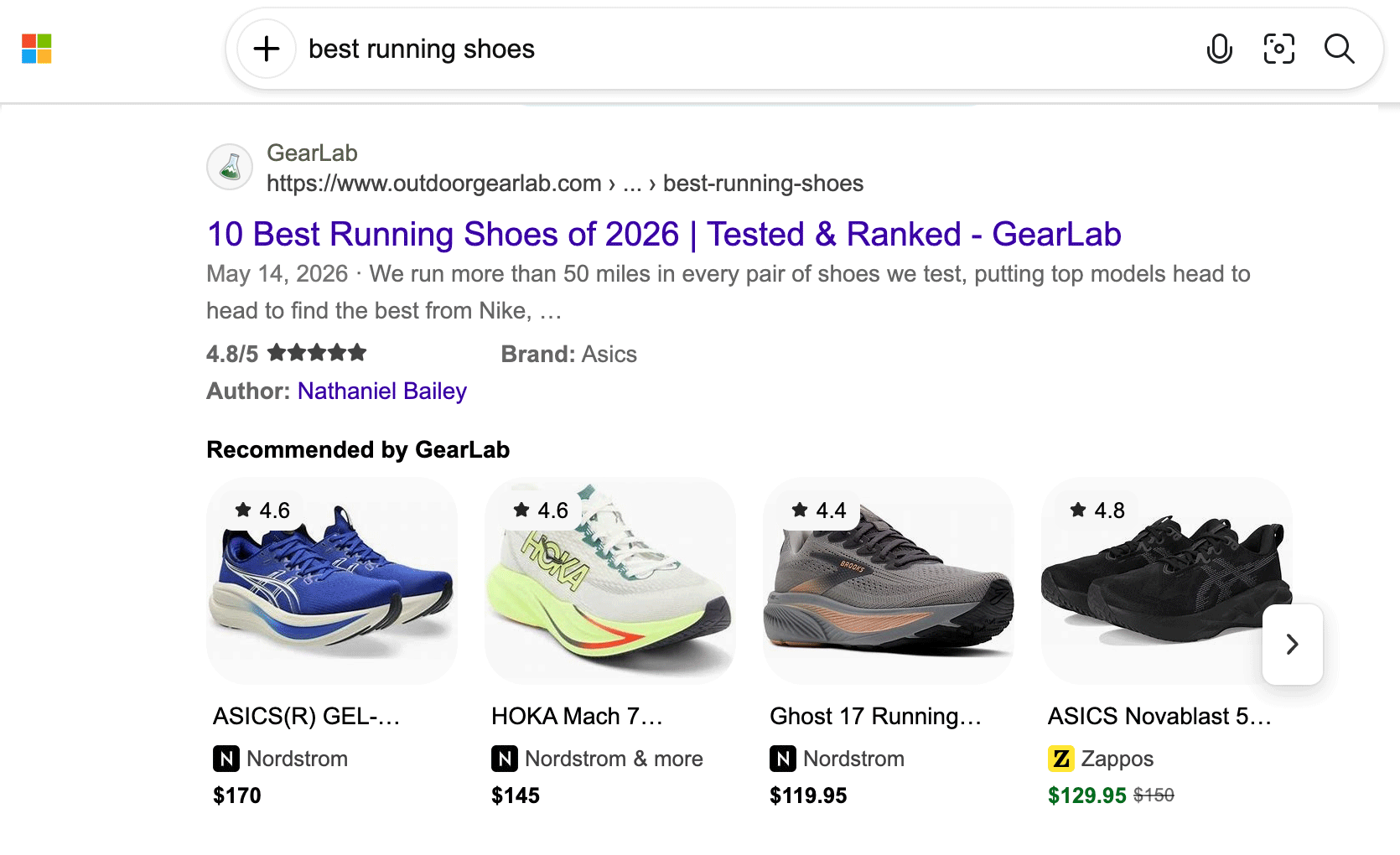
Microsoft Bing is piloting a “Recommended by” product strip that tags items with the name of a recommending brand, but sends users straight to a retailer’s page. The experiment could shift how local businesses appear in AI‑driven search results and influence brand visibility.
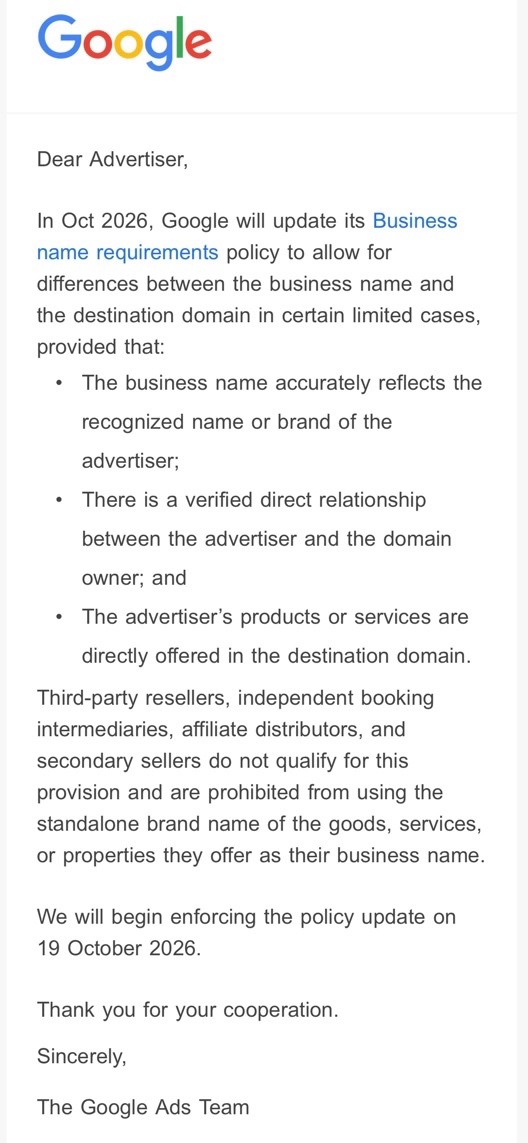
Google Ads is loosening its business‑name rule, letting verified brand owners display a brand name that differs from the landing‑page URL in three narrowly defined situations. The change excludes unverified third‑party sellers and will roll out in a phased rollout starting early November.
Business owners tracking AI search visibility should check their Amex Offers for a new discount on Perplexity AI. A targeted Amex Offer provides a $125 value, offering a significant saving for those evaluating AI tools for their operations.
Microsoft Bing is testing a new “Recommended By” row in its product search results, showing logos of brands that endorse each item. Although the thumbnail still leads to the retailer’s page, the visual endorsement can lift a local business’s profile in AI‑driven queries. This guide explains how to position your products to benefit from the feature.
Google’s new Local AI Ranking Signal (LARS) replaces the old Local Pack weight, making fresh, citation‑rich data the primary driver of local rankings. Real‑time inventory, hours and reviews now feed directly into Google’s Knowledge Graph, while AI assistants such as ChatGPT and Gemini rely on these signals to answer local queries. Small retailers can stay competitive by tightening structured data, synchronizing citations and publishing up‑to‑date content.
A D.C. federal judge dismissed the antitrust lawsuits filed by Chegg Inc. and Penske Media Corp. against Google, finding that the company’s AI‑generated search overviews do not constitute an antitrust violation. The decision lets Google continue shaping AI snippets, a result that directly affects businesses that rely on those results for local visibility.
A U.S. federal court dismissed antitrust claims from Chegg and Penske Media against Google’s AI Overviews feature, clearing the way for AI search engines to aggregate web content more freely. The ruling, while a win for AI developers, raises fresh considerations for local businesses on how their material is cited and monetized.
A federal judge has dismissed antitrust suits against Google's AI Overviews, ruling that publishers have no legal claim to traffic generated by the AI tool. The decision clears the way for Google to continue offering AI‑generated summaries across its services, reshaping how local businesses can be discovered online.

Shopify now automatically enrolls eligible stores in every new AI shopping channel— from Meta’s Muse to Google AI Shopping and Microsoft Copilot—without any manual setup. This expands product discoverability in AI chat apps, drives high‑intent traffic, and lets merchants track performance through the Agentic dashboard.
Get the top AI-search and GEO stories in your inbox once a day, no spam.