

OpenAI is currently testing a feature that adds descriptive headings to ads within ChatGPT responses. This initiative aims to enhance user experience and improve ad effectiveness, which could influence how businesses are discovered online.

OpenAI has updated its ad policies to allow some health and finance advertisers in ChatGPT, but with placement restrictions in sensitive conversations. This change impacts businesses trying to get discovered by AI search and offers new opportunities for increased visibility.

Common Crawl, the web dataset used to train major AI models like ChatGPT and Gemini, recently released guidelines on web visibility. Search expert Suganthan Mohanadasan has now automated these checks into a free tool, allowing business owners to verify if AI crawlers can index their sites.

The release of the 2026 top Generative Engine Optimization (GEO) agency shortlist highlights a critical shift in digital marketing: moving beyond simple SEO clicks toward direct pipeline attribution from AI search. Both B2B SaaS companies and local businesses are now investing heavily in strategies that earn explicit brand citations within platforms like ChatGPT, Perplexity, and Google AI Overviews.
Consumers are increasingly abandoning traditional search engines in favor of conversational AI tools like ChatGPT and Perplexity, making Generative Engine Optimization (GEO) essential for online visibility. Despite this fundamental shift, most regional and small business owners remain entirely unaware of the change. Proactive companies that optimize for AI answer engines today can establish a commanding market lead before competitors realize what happened.

Many business owners fear that AI search engines like ChatGPT, Perplexity, and Google AI Overviews have rewritten the rules of digital marketing. However, search experts point out that AI search only feels completely new if your previous SEO strategy relied on shallow tactics like keyword stuffing and thin content.

Consumer search habits are rapidly shifting toward conversational tools like ChatGPT, Perplexity, and Google AI Overviews, yet traditional analytics platforms fail to track this new customer journey. This disconnect leaves brands facing a growing attribution gap as AI heavily influences purchases offline and behind the scenes. To maintain visibility, small and local businesses must shift focus from old-school click tracking toward Generative Engine Optimization (GEO) and citation building.
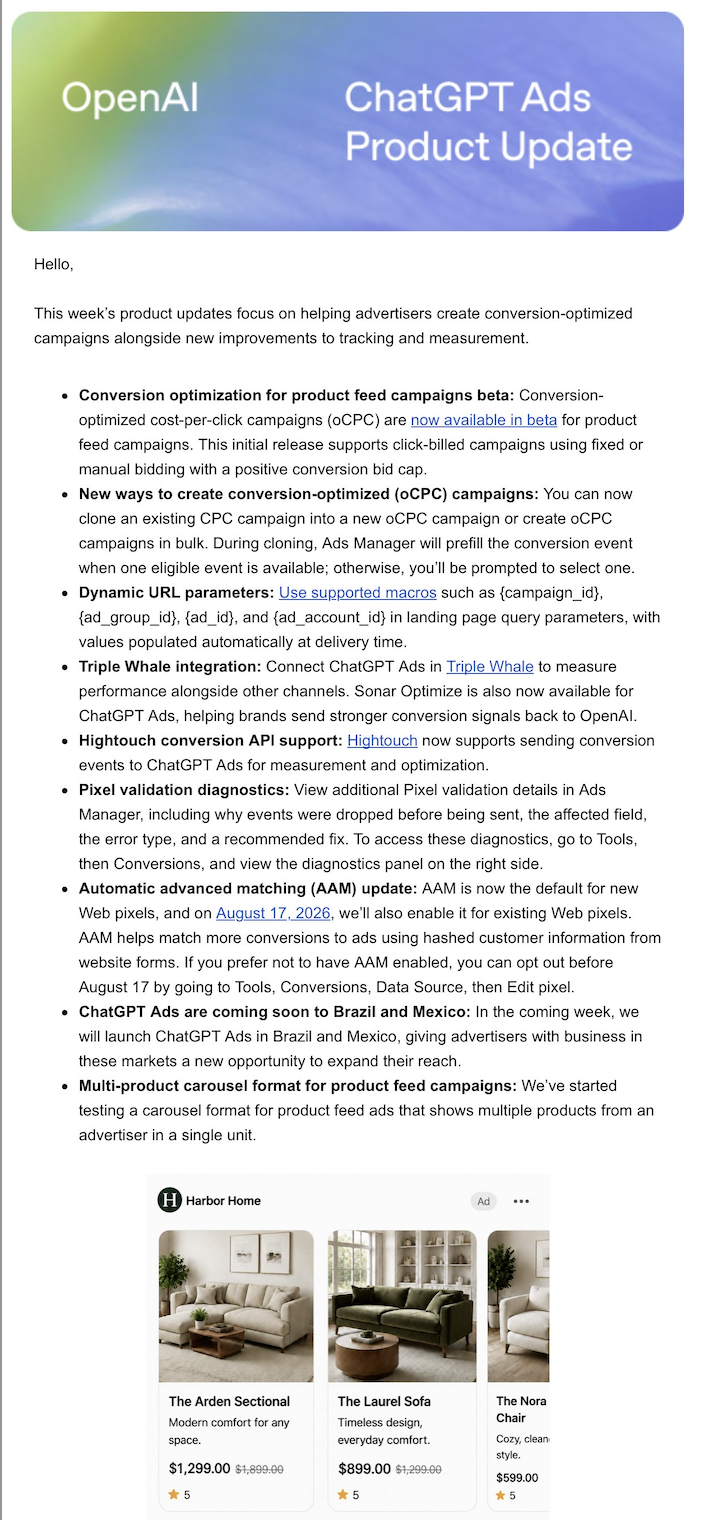
OpenAI expands ChatGPT Ads' conversion capabilities with new campaign types, measurement integrations, and optimization tools, benefiting ecommerce advertisers with improved conversion tracking, automated campaign creation, and scaled advertising.

A recent experiment revealed that AI models like ChatGPT, Claude, and Gemini provide different strategic recommendations based on the context provided. This highlights the importance of understanding the nuances of AI decision-making for businesses. By considering the context and objectives of a business, AI models can offer more tailored and effective guidance.
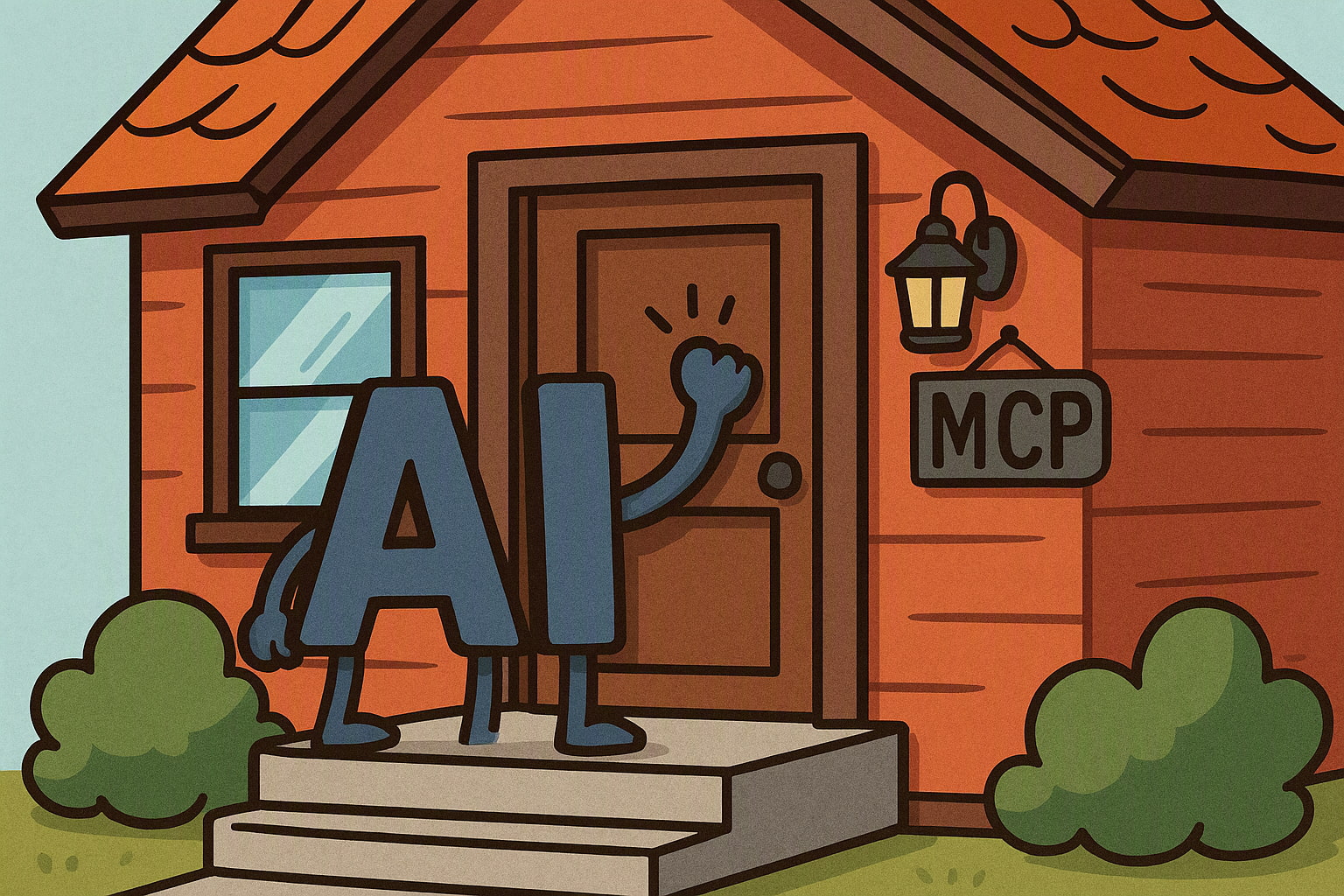
As AI tools like ChatGPT and Claude integrate into marketing systems, concerns are growing that traditional CRMs may become obsolete. However, these AI assistants function as reasoning engines that depend on structured business data to deliver accurate recommendations, emphasizing the continued importance of a solid CRM foundation for local businesses to enhance their visibility in AI search results.

AI search engines like ChatGPT, Gemini, and Perplexity rely heavily on local listing accuracy and review sentiment to recommend local businesses. Recent data reveals that data inconsistencies across web directories can completely erase your brand from AI answers. Learn how small businesses can optimize their local signals for generative engine optimization (GEO).

SEO veteran Bill Hartzer has released a free, 50-lesson link building masterclass detailing how modern link graphs and Digital PR work. For business owners and marketers, mastering these foundational strategies is essential to building the digital authority required for citations in AI engines like ChatGPT and Perplexity.

In a revealing Search Engine Journal interview, search veteran Kris Jones highlights 'synthesis' as the key driver behind AI brand recommendations. Jones explains how tools like ChatGPT, Perplexity, and Google AI Overviews decide who gets recommended and how small businesses can capture those high-converting AI citations.

Recent research reveals that ChatGPT and other leading AI platforms populate product recommendation carousels directly from Google Merchant Center feeds rather than scraping traditional web pages. With up to 83% of AI product recommendations mirroring top Google Shopping organic results, feed optimization has quickly become the primary battlefield for AI visibility. For e-commerce brands and local retailers, feed quality now determines whether your products get recommended—or overlooked.

OpenAI is experimenting with a new ChatGPT advertising format that replaces traditional destination websites with conversational AI agents tailored to each business, potentially revolutionizing the way businesses interact with customers online.
Google has officially introduced social platform properties to help brands track their entity reach across TikTok, YouTube, X, and Instagram, even as site owners handle ongoing search ranking volatility and page indexing delays. At the same time, new developments in ChatGPT Ads and strict Google review guidelines point to an evolving landscape for local search visibility and AI-driven business discovery.
New data from Similarweb reveals that AI search tools like ChatGPT and Perplexity are not replacing traditional search engines—they are layering on top of them. To capture modern consumers, local business owners must execute a dual strategy combining traditional Google SEO with Generative Engine Optimization (GEO).
Search industry veteran Duane Forrester warns that entity mapping tactics built for Google's Knowledge Graph don't directly transfer to language models like ChatGPT. Understanding the distinction between structured databases and LLM probability models is critical for building a cost-effective AI search strategy.
Recent analysis of over 600,000 ChatGPT citations has revealed that 89% of AI search categories lack a dominant brand leader. This insight underscores a fleeting opportunity for small and local businesses to establish topical authority in AI search, positioning themselves advantageously before competitors catch on.

ChatGPT Ads has introduced several new tools aimed at improving advertising performance, conversion optimization, and campaign management. These updates bring ChatGPT Ads closer to the level of more mature ad platforms.
Get the top AI-search and GEO stories in your inbox once a day, no spam.