
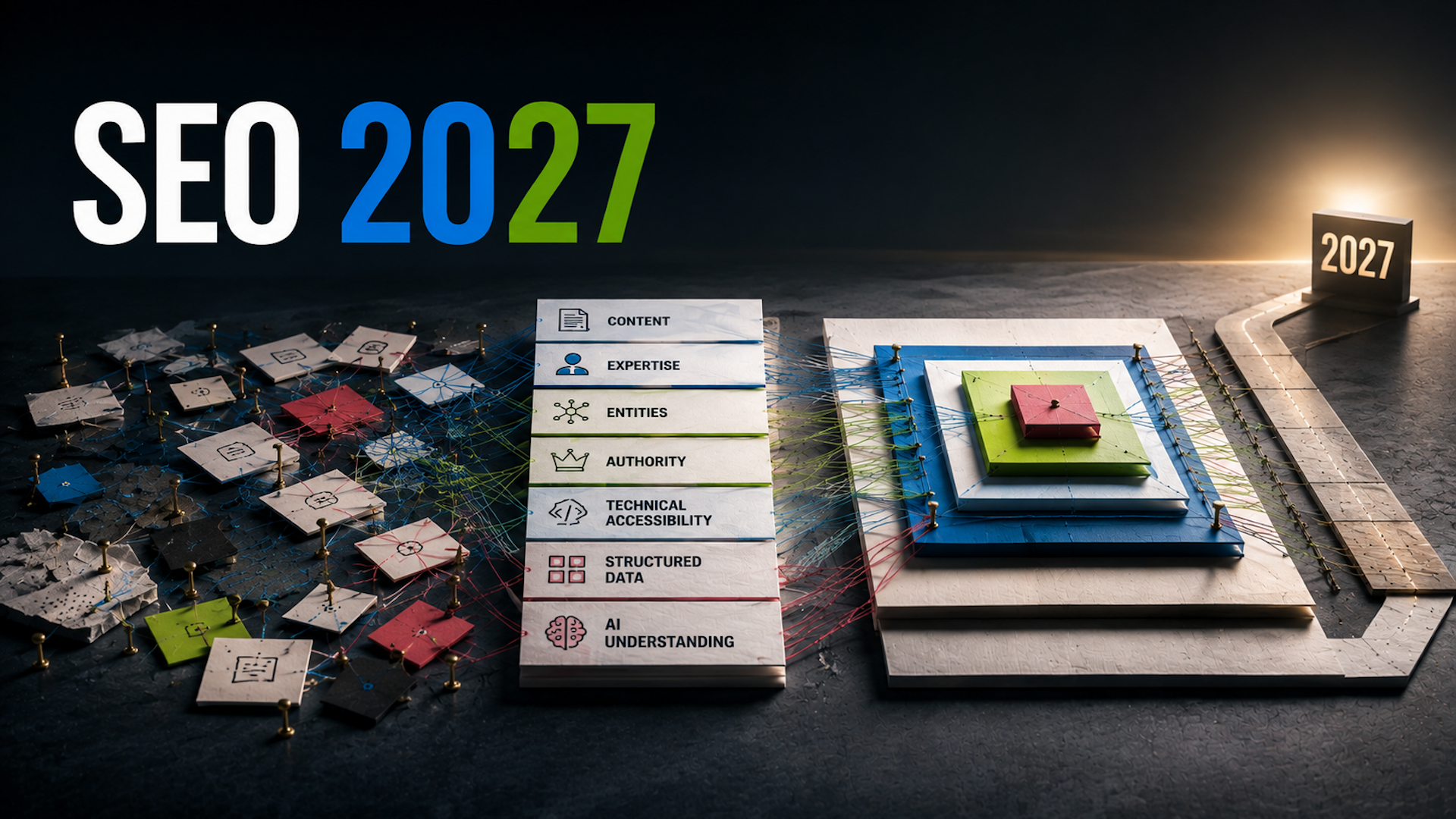
As AI search tools become increasingly prevalent, businesses must evolve their SEO strategies to remain visible and engaging in 2027. This article outlines the essential priorities for adapting to the changing landscape of digital marketing.
Modern searchers rarely follow a straight path to conversion, making cross-channel visibility essential. A 26-week case study published in Search Engine Land demonstrates how aligning SEO and PPC efforts eliminates friction points and builds brand authority across every buyer touchpoint.

RK Web Solutions has launched a free AI Visibility Checker, a tool designed to help businesses enhance their online presence amidst the rise of generative search. This initiative targets small and local businesses, empowering them to improve their discoverability by AI tools.
Pallix has introduced an innovative AI visibility tool designed specifically for Indian brands, allowing them to track mentions and recommendations from AI platforms such as ChatGPT and Google AI. This tool helps businesses pinpoint visibility gaps and enhance their digital presence in a rapidly evolving market.
Google's August 2026 Spam Update is now underway, impacting the rankings and visibility of local businesses. Understanding these updates is essential for optimizing your online presence and maintaining search visibility.


Google is integrating Local Services Ads into Performance Max, preserving the pay-per-lead model and Google Guaranteed badge while overhauling campaign management, bidding, and reporting. To maintain predictable costs and steady visibility, business owners must export historical data, establish target bidding strategies, and adapt to the unified Google Ads platform.

Treating YouTube like a search or Meta campaign quickly burns budget because the platform demands a storytelling‑first approach and a different attribution model. Small businesses that align creative, landing pages, and sales processes with YouTube’s unique audience can turn video views into qualified leads and boost AI‑driven search visibility.

AI‑driven search tools are turning the classic SEO goal of merely attracting clicks into a conversion challenge. To stay competitive, businesses must align their content with the post‑click journey so that every visit moves toward a lead or sale.

AI tools such as ChatGPT, Google AI Mode, and Perplexity frequently recommend specific brands while rarely linking back to their official websites. A recent industry study revealed that only 2.8% of generative search citations point directly to brand-owned domains, directing valuable customer traffic to third-party publishers instead. Here is a look at why generative models bypass official storefronts and how merchants can optimize their content to win direct citations.
Google has transformed its Search engine into an AI‑powered study companion, letting users generate visuals, quizzes, and concise PDFs from uploaded materials. Small businesses that serve students or parents should adapt their online presence for AI‑driven results to stay visible.

A federal judge called Google’s AI Overview feature “really unfair,” raising antitrust concerns about how the company leverages publisher content. The decision could reshape how local businesses appear in AI‑driven answers, making it crucial to adapt your online visibility strategy.
Search engines are evolving beyond classic blue links. Now, the top answers come from generative AI tools like ChatGPT and Perplexity. Local businesses must adapt or risk being invisible to the next wave of consumers.

Google has introduced link carousels in AI Mode, offering a horizontal row of clickable links inside AI‑generated answers. The update should boost click‑through rates for businesses that appear in the carousel, especially those listed as Preferred Sources. While click data remains limited, the feature makes AI Mode results more engaging and potentially drives more traffic to local businesses.

Cloudflare’s EmDash CMS, a lightweight successor to WordPress, is gearing up for its 1.0 release after proving itself on the company’s high‑traffic blog. The new version promises speed, security, and built‑in AI tools that could help local businesses reach customers through AI assistants like ChatGPT and Google Gemini.

Webflow now integrates OpenAI’s Codex, allowing business owners to manage sites with plain‑language commands. New “Skills” automate tasks like adding products or updating copy without any coding, speeding updates and keeping content fresh for AI‑driven search.

An empty promo‑code box at checkout can unintentionally steer shoppers to coupon‑affiliate sites, draining margins and muddying attribution. By providing a clear, brand‑owned savings option you can plug the leak, boost checkout completion, and keep AI assistants citing your own offers.

Google’s August Spam Update sharpens its focus on AI‑generated SEO pages that exist solely to rank, not to serve users. Small and local businesses must audit their content, reinforce trust signals, and prioritize human‑crafted value to stay visible in an AI‑driven search landscape.

Search Engine Journal reveals that AI models no longer inherit a brand’s authority across borders. To rank internationally, businesses must embed machine‑recognizable Experience, Expertise, Authoritativeness, and Trustworthiness signals in each local site.

A new YouGov study shows Claude is the clear favorite among Gen Z AI users, outpacing OpenAI by more than seven‑to‑one. Local businesses must adapt their AI strategy to capture this younger audience and stay visible in AI‑driven search results.

A 2026 analysis reveals that organic clicks have slumped 42% since Google’s AI Overviews began delivering full answers in SERPs. While top‑of‑funnel (TOFU) content still attracts traffic, its value now hinges on intent‑focused, schema‑rich pieces. Small businesses that adapt can preserve visibility across both classic and AI‑driven search.

Google’s latest algorithm tweak has pushed self‑serving listicles down in search rankings, reducing their visibility for AI‑powered tools. Local businesses must adapt by focusing on high‑quality, original content that satisfies user intent rather than chasing listicle formats.

Recent research by Wix reveals that .org domains generate 34% more eCommerce revenue than .com sites, challenging the long-standing preference for .com. For local businesses, selecting the right domain extension could significantly enhance AI visibility and sales performance.

Google’s newest AI‑Search update adds a carousel of recent articles to AI‑generated answers for developing topics, giving local businesses a fresh way to appear directly in the answer box. By publishing timely, authoritative content and optimizing for news schema, brands can secure spots in the carousel and stay ahead of competitors.

Google’s Gemini‑powered ad formats let e‑commerce brands appear inside AI Mode’s conversational search. By tightening your Merchant Center feed, even small businesses can capture high‑intent traffic without heavy copywriting. Here’s how to get noticed and compete in AI‑driven discovery.

Wix has launched Symphony, an AI platform that lets local SMBs automate workflows, integrate with existing tools, and receive daily performance insights—all without writing code. The system uses a central Maestro agent to coordinate specialized agents, helping businesses improve consistency, visibility, and operational efficiency.
Get the top AI-search and GEO stories in your inbox once a day, no spam.