In 2026, AI chat engines like ChatGPT and Google AI Overviews prioritize a handful of trusted sources, making citation the new key to visibility. Startups that earn these citations can drive 40‑70% more direct traffic without relying solely on Google rankings.
Somantra’s latest AEO and GEO metrics suite extends AI search visibility measurement beyond simple citation counts, introducing Brand Mindshare, Brand Consideration, and Brand Engagement scores that capture whether AI assistants recommend a brand or merely mention it. The platform now covers major AI engines—including ChatGPT, Google AI, Claude, Gemini, and Perplexity—helping businesses identify where their brands truly resonate in multi‑turn conversations.

Digital Otters, a Lahore‑based agency, has positioned itself as Pakistan’s premier AI Search and Answer Engine Optimization (AEO) provider. Its new AI Search Visibility service helps local businesses appear directly in AI‑generated answers from platforms such as ChatGPT, Google Gemini, Perplexity and Google AI Overviews.
AI chatbots are increasingly determining which sources to cite, making it essential for businesses to secure a presence in those citations to avoid being overlooked by a significant segment of consumers. This guide provides insights on how to position your business as a trusted source for AI platforms like ChatGPT, Claude, Perplexity, Gemini, and Google AI Overviews, ultimately unlocking new avenues for organic traffic.
Creative Repute’s latest press release explains how Generative Engine Optimization (GEO) is reshaping online visibility by enabling businesses to be cited directly in AI answers from tools like ChatGPT, Gemini, and Perplexity. The agency clarifies that GEO complements, rather than replaces, traditional SEO, urging owners to structure their digital presence for both search engines and AI‑powered interfaces.
Yelp, Delta Air Lines, JPMorgan Chase, and Charles Schwab have all announced new rules that block AI agents from pulling data directly from their platforms. The move reshapes how AI‑driven search tools gather business information, putting greater pressure on local marketers to own and optimize their digital footprints.
Carvana's Google Business Profile listings are erroneously directing customers to unrelated websites, while the Niello-backed CARS Act is gaining momentum. These developments highlight a crucial lesson for local businesses: maintaining accurate Google Business Profile data is essential for AI-driven search visibility.
Google has activated Gemini 4 Argon in AI Mode for Search and the Gemini app, unlocking a 1 million‑token output limit, faster coding performance, and a new enterprise‑grade API. Small‑business owners and marketers should reassess their SEO and content strategies to capitalize on longer, AI‑generated answers and richer schema opportunities.
KSMModel.ai launched KSMModel.app, a web‑based platform that scores and improves local businesses’ visibility on AI‑driven search engines such as ChatGPT, Gemini, Perplexity and Google AI. By merging AI Engine Optimization (AEO) and Google Engine Optimization (GEO) data, the tool delivers a unified dashboard, automated citation syncing, real‑time alerts and tailored action plans.
OpenAI has introduced a groundbreaking parallel agent feature in GPT‑6 Pro, enabling users to manage multiple tasks simultaneously while tracking each agent's progress in real time. This enhancement is set to accelerate workflows for businesses focused on citation building, content creation, and AI chatbot interactions, ultimately aiding small and local businesses in boosting their visibility in AI-driven search engines.
AI chatbots are beginning to replace traditional Google searches, forcing local businesses to rethink how they achieve visibility. The new landscape rewards structured data, conversational content, and authoritative citations over simple keyword rankings.
As users abandon traditional search engines for AI chatbots, the rules of discovery have shifted. Businesses must adapt by becoming a reliable source for AI citations to maintain visibility.
Google’s new AI chatbot delivers instant, conversational answers that are reshaping how local businesses appear in search. To stay visible, owners must optimize content for AI, strengthen local citations, and monitor performance through specialized analytics. By aligning with AI logic, businesses can maintain—and even boost—visibility in the next generation of online discovery.
The National Law Review’s AI Search Visibility Report finds that 53% of B2B firms are invisible to the major AI search tools—ChatGPT, Perplexity, Gemini, and Google AI. Business owners must act quickly to add structured data, citations, and local listings so their brands appear in AI‑driven queries.
AI chatbots are reshaping how users find information, shifting away from traditional search results toward instant conversational answers. Small businesses must adapt by structuring content for AI, adding schema markup, and building trust signals to stay visible in this new landscape.
Click Intelligence has launched AI‑powered SEO services that help local and small businesses appear directly in the answers generated by ChatGPT, Google AI Overviews, and Gemini. The solution bundles AI keyword research, schema markup, citation management, and a real‑time dashboard to align with how AI agents pull and present information. Businesses can now surface before users click a traditional search result, boosting trust and traffic.
In September 2026 Google’s AI Overviews surged nearly threefold for branded queries, reshaping how customers discover businesses. The shift forces small and local brands to rethink SEO, content, and citation strategies to stay visible in AI‑driven search results.
Slack’s 2026 guide demystifies how conversational AI chatbots use large language models, NLP, and contextual awareness to provide natural, accurate answers in the workplace. Small businesses can now deploy these tools to boost local visibility, cut support costs, and enhance customer engagement.
Slack’s latest guide explains how conversational AI chatbots blend large language models, natural‑language understanding, and live data to create human‑like conversations. Small businesses can use this technology to speed customer support, boost employee productivity, and improve AI‑search visibility.
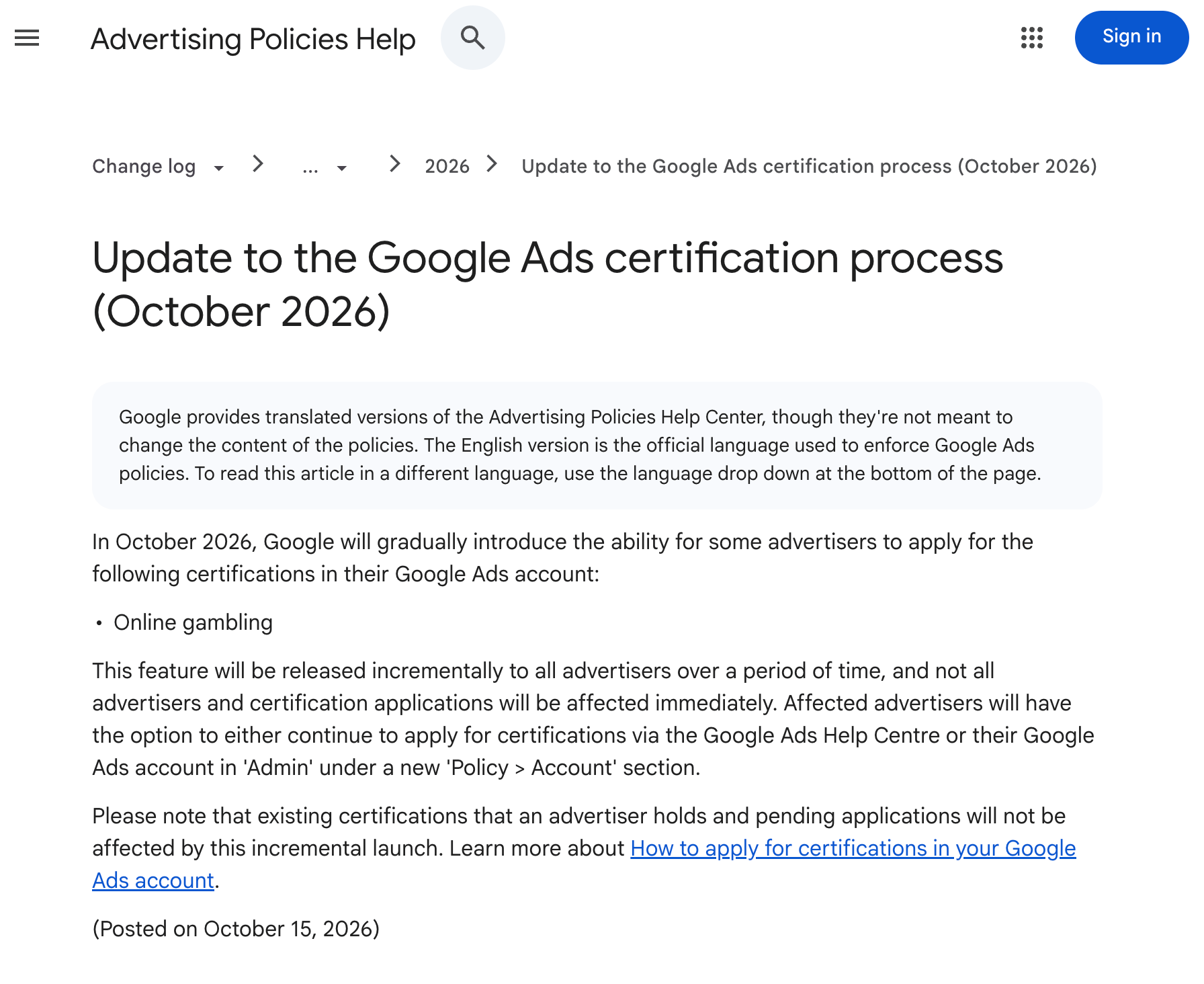
Google Ads has launched a certification program for eligible online gambling advertisers, paving the way for enhanced campaign opportunities and visibility. This new initiative stands to benefit local businesses by ensuring compliance and leveraging AI-driven discovery.
A brand‑new guide walks you through every Google Business Profile ranking factor for 2026, the updated compliance rules, and a step‑by‑step suspension recovery plan. Follow the 90‑day action plan to stay visible in AI‑driven local searches.
USA Today has released a pivotal 2026 guide contrasting Answer Engine Optimization (AEO) with traditional SEO. It provides business owners with a framework to allocate marketing budgets between these evolving strategies, helping them navigate the shift from link-based search to AI-driven answers.
ChatGPT logged 5.32 billion visits in June 2026, outpacing the combined 4.7 billion visits of the next 14 AI tools. This dominance reshapes how small‑business owners must approach AI‑driven search visibility.
Cloudflare’s July 1, 2025 update now blocks AI crawlers for every new domain by default. The change can hide fresh sites from ChatGPT, Gemini and other AI assistants, but a simple toggle in the dashboard lets you restore visibility.
KSMModel.ai has launched KSMModel.app, a SaaS tool that scores and boosts a business’s AI visibility across the emerging AEO and GEO paradigms. The platform delivers a 0‑100 score and actionable recommendations, helping local firms get cited by AI assistants such as ChatGPT, Gemini, and Google AI Overviews.
Get the top AI-search and GEO stories in your inbox once a day, no spam.