
Modern searchers rarely follow a straight path to conversion, making cross-channel visibility essential. A 26-week case study published in Search Engine Land demonstrates how aligning SEO and PPC efforts eliminates friction points and builds brand authority across every buyer touchpoint.

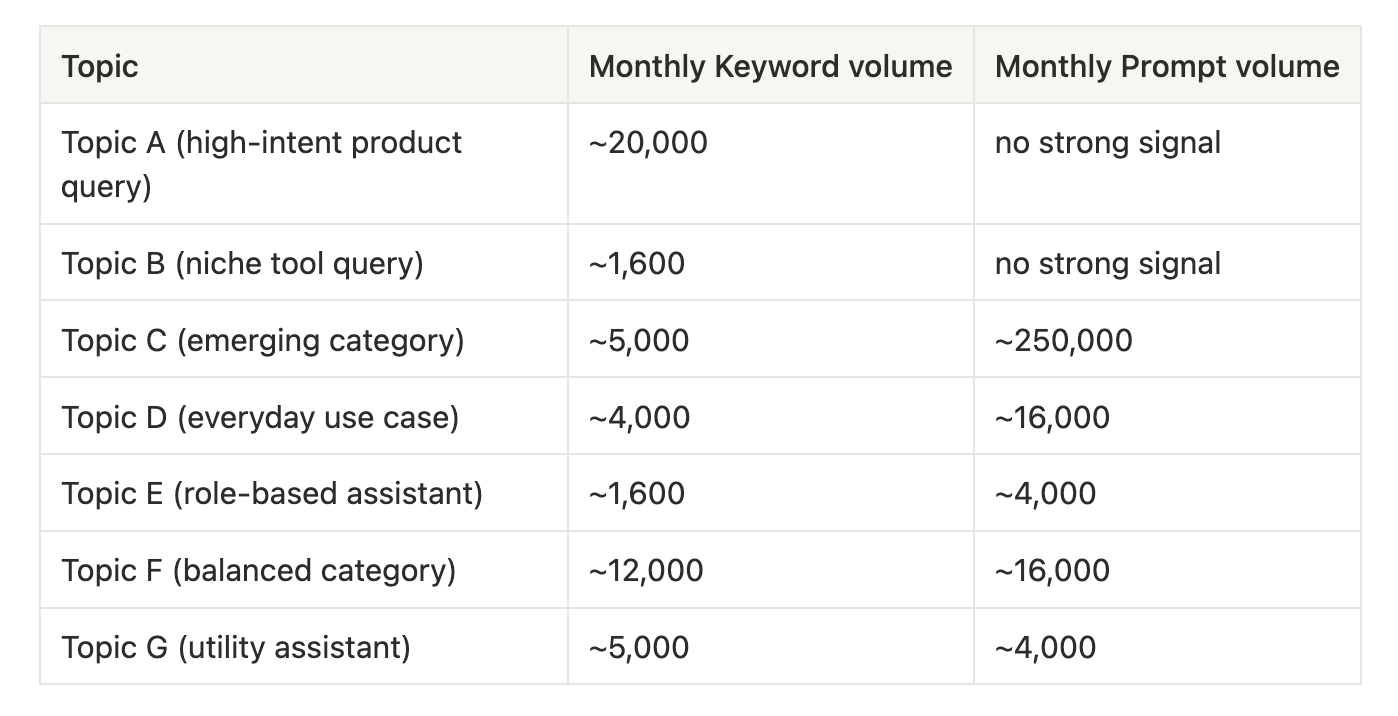
A game-changing approach to SEO strategy combines keyword research with prompt research to uncover demand signals that traditional keyword research may miss.
A new study from Writesonic reveals that roughly 40% of AI search citations fail to mention the source brand in their generated text. This phenomenon—dubbed 'ghost citations'—varies significantly across platforms, affecting engines like Perplexity, Google AI Mode, and ChatGPT. Consequently, tracking citation counts alone no longer provides business owners with an accurate picture of actual brand visibility.

Explore how AI systems interpret your business and learn effective strategies to enhance your online visibility. This article provides actionable insights on auditing your AI entity footprint and optimizing your presence for AI-driven search engines.

A recent study by João da Silva and a VisibilityAI researcher reveals that framing your brand's category correctly can significantly impact its visibility on AI-powered search engines like ChatGPT and Google AI Overviews. The study tested 12 athletic apparel brands in the U.K. under two different category framings: athleisure and athletic footwear. By optimizing category framing, businesses can increase their chances of being recommended by AI search engines.

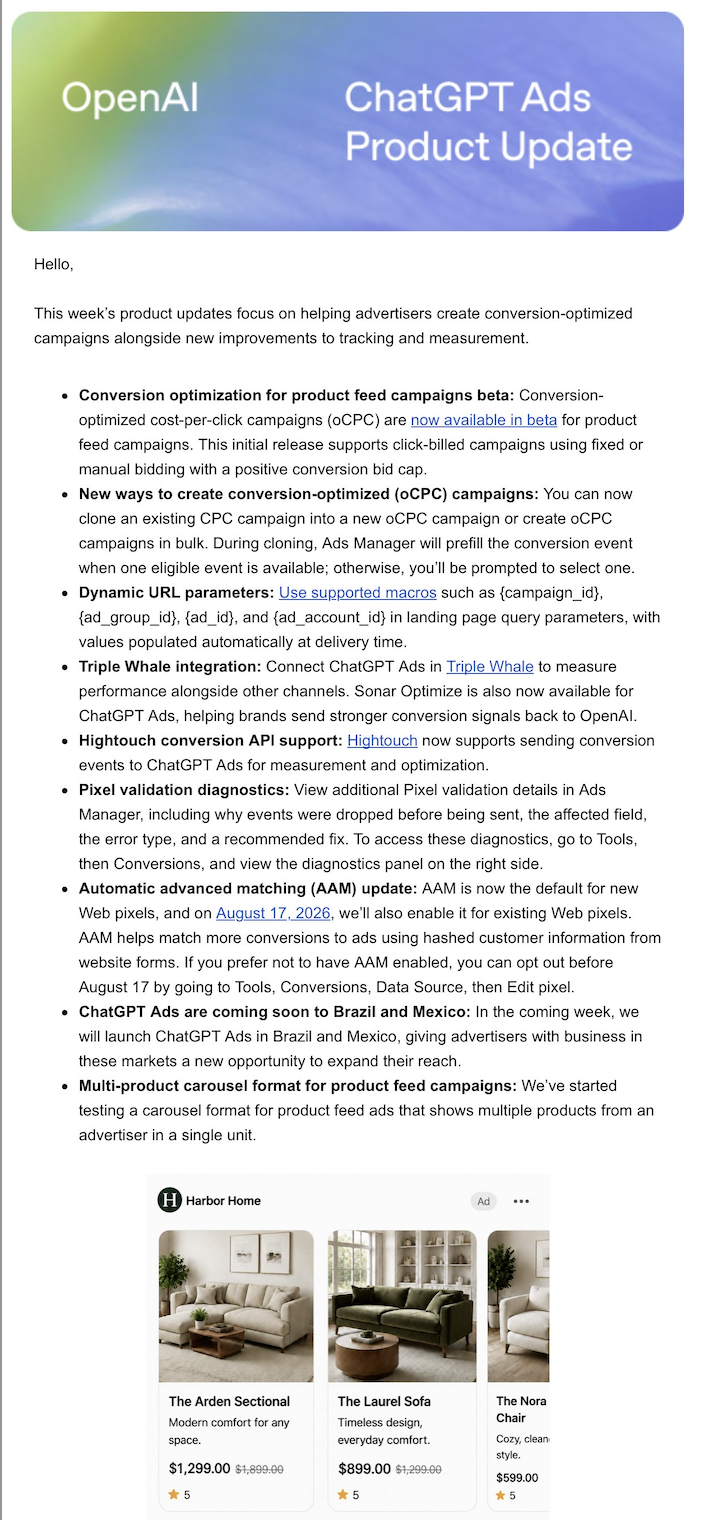
OpenAI expands ChatGPT Ads' conversion capabilities with new campaign types, measurement integrations, and optimization tools, benefiting ecommerce advertisers with improved conversion tracking, automated campaign creation, and scaled advertising.

As AI tools like ChatGPT and Claude integrate into marketing systems, concerns are growing that traditional CRMs may become obsolete. However, these AI assistants function as reasoning engines that depend on structured business data to deliver accurate recommendations, emphasizing the continued importance of a solid CRM foundation for local businesses to enhance their visibility in AI search results.

Google's limited test of a sign-in feature could significantly impact local businesses' online visibility, as users may be discouraged from accessing more search results, leading to a decrease in traffic to websites that rely on organic search.

Google is beta testing a new Handle Swapping feature for Google Search Profiles, enabling businesses to synchronize their primary Google handle with linked, verified social accounts. This update enhances brand flexibility and strengthens entity authority in an era dominated by AI-driven search tools.

Google's recent AI image generator rollout in Google Earth was swiftly pulled after users exploited it to create fake explosions and disasters, underscoring the need for authentic brand representation and strict AI safety controls in AI search. This incident highlights the growing scrutiny around AI safety, synthetic imagery, and the importance of trust in AI-driven search engines. Local business owners must ensure their online presence is accurate and trustworthy to avoid being penalized in AI search results.

Google's refreshed crawl budget optimization guide enhances SEO strategies for business owners by emphasizing clarity and precision in its documentation, providing actionable insights to improve content visibility.

The EU's Article 50 AI Transparency Law introduces essential labeling requirements for AI-generated content. However, specific exemptions may provide strategic advantages for businesses navigating these new regulations.

AI search engines like ChatGPT, Gemini, and Perplexity rely heavily on local listing accuracy and review sentiment to recommend local businesses. Recent data reveals that data inconsistencies across web directories can completely erase your brand from AI answers. Learn how small businesses can optimize their local signals for generative engine optimization (GEO).

Google has updated its official crawl budget guidance with two key technical clarifications: all specialized Google crawlers draw from a single shared capacity pool, and websites should implement HTTP 304 'Not Modified' response codes. Serving 304 responses for static pages conserves server resources, allowing search engines and AI platforms to discover and index new content faster.

SEO veteran Bill Hartzer has released a free, 50-lesson link building masterclass detailing how modern link graphs and Digital PR work. For business owners and marketers, mastering these foundational strategies is essential to building the digital authority required for citations in AI engines like ChatGPT and Perplexity.

In a revealing Search Engine Journal interview, search veteran Kris Jones highlights 'synthesis' as the key driver behind AI brand recommendations. Jones explains how tools like ChatGPT, Perplexity, and Google AI Overviews decide who gets recommended and how small businesses can capture those high-converting AI citations.

Google's Open Knowledge Format (OKF) v0.2 introduces a trust layer to help structure web content into clear, interconnected concepts. Although AI search agents do not actively crawl OKF bundles on websites yet, adopting this framework offers local businesses a powerful blueprint to audit and refine how AI models interpret their brand.

Snapchat is no longer recommending fully AI-generated videos in its Spotlight feed, prioritizing genuine human storytelling and original creator content instead. Driven by regulatory obligations like the EU AI Transparency Law and mounting Gen Z anxiety around synthetic media, the move signals a platform-wide turn toward authenticity. For businesses dependent on automated AI video tools, adapting visual strategies is now essential to safeguarding both social reach and AI search visibility.

A maximum-severity 9.8 security vulnerability in the WooCommerce Social Login WordPress plugin allows unauthenticated attackers to gain full administrator access to e-commerce stores. Exploiting a flaw in the Apple login authentication process, hackers can bypass passwords using just an email address. Immediate updates are required to protect store data, customer trust, and AI search engine visibility.

Google has expanded the availability of Search Console social reporting globally, enabling businesses to track the performance of their social media posts in search results. Additionally, recent data indicates that while AI-generated content can still rank in Google's top 10, those with higher AI detection scores tend to occupy lower search positions.

Cloudflare's PACT (Private Access Control Tokens) is a new protocol designed to separate human users from automated agents, replacing traditional CAPTCHAs and improving online security. Although PACT is not yet live, local business owners must prepare their websites for the evolving landscape of AI traffic and agentic search. By understanding this transition, businesses can ensure their sites stay secure and visible to AI search engines.

Recent research reveals that ChatGPT and other leading AI platforms populate product recommendation carousels directly from Google Merchant Center feeds rather than scraping traditional web pages. With up to 83% of AI product recommendations mirroring top Google Shopping organic results, feed optimization has quickly become the primary battlefield for AI visibility. For e-commerce brands and local retailers, feed quality now determines whether your products get recommended—or overlooked.
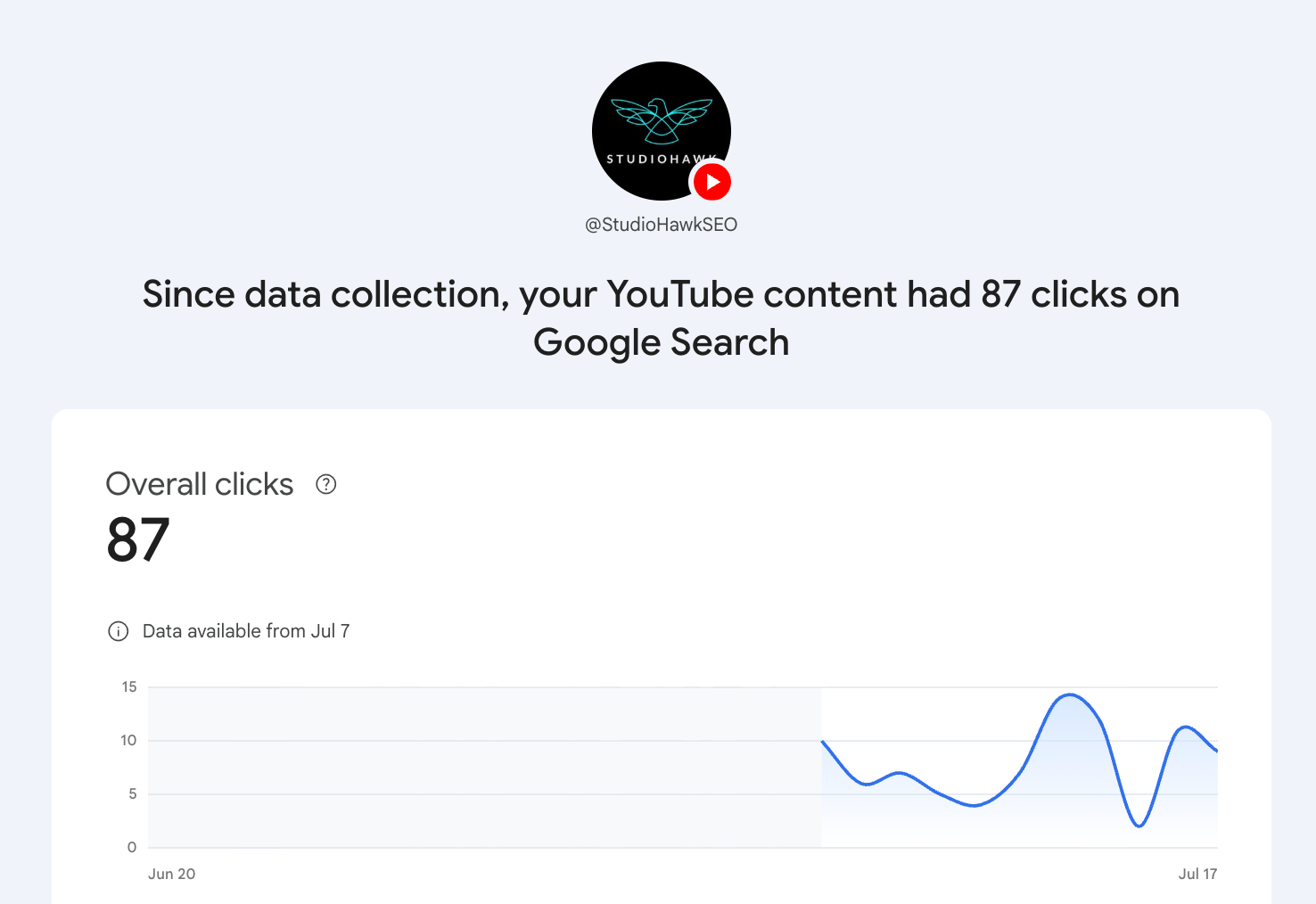
Google's introduction of Platform Properties in Search Console bridges the gap between search engine optimization (SEO) and social media marketing. This feature allows businesses to track YouTube, TikTok, and Instagram search performance directly, exposing massive, previously invisible search traffic. To dominate modern search and earn citations in AI engines, businesses must build a unified social topical map.

OpenAI is experimenting with a new ChatGPT advertising format that replaces traditional destination websites with conversational AI agents tailored to each business, potentially revolutionizing the way businesses interact with customers online.

Discover how SEO can optimize your acquisition system, reduce blended customer acquisition costs, and drive business efficiency. Learn the importance of measuring customer acquisition costs (CAC), the challenges of attribution, and how SEO can influence other channels. With the rise of AI-powered search engines, understanding CAC is crucial for businesses to stay ahead of the competition.
Get the top AI-search and GEO stories in your inbox once a day, no spam.