
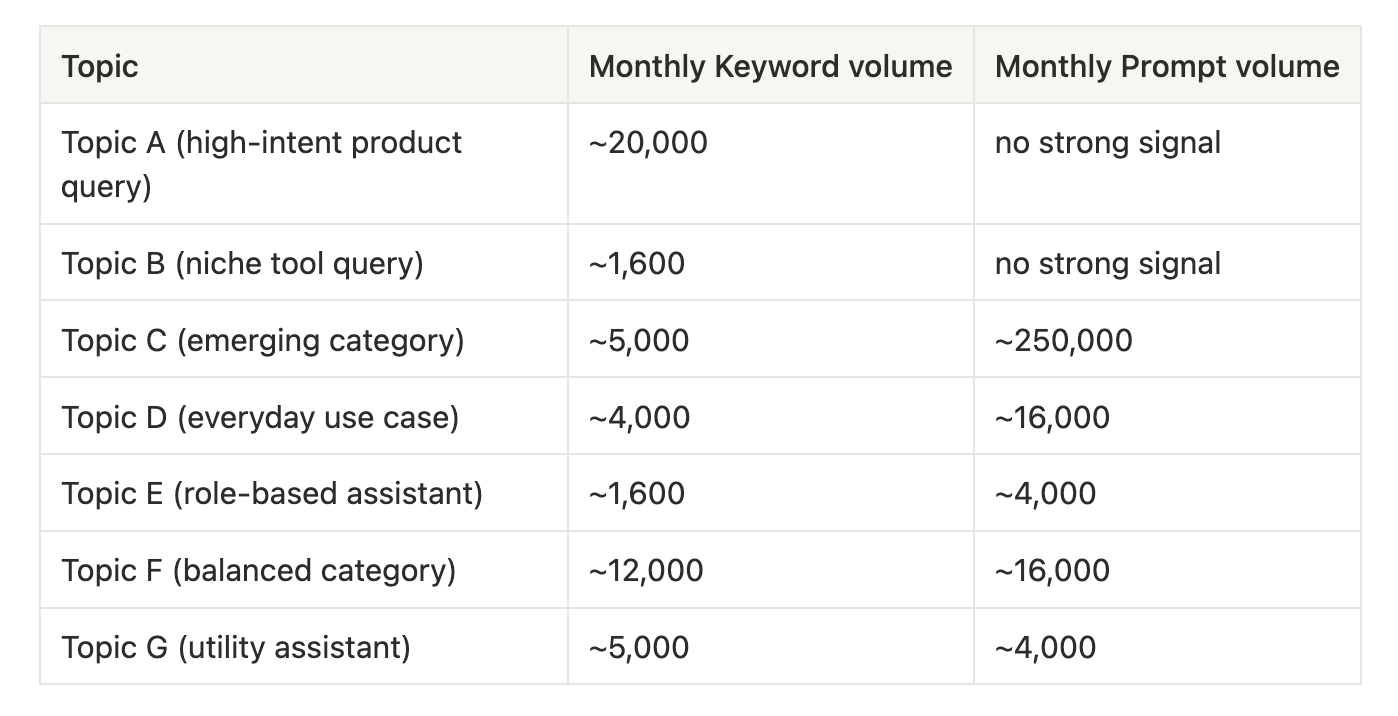
A game-changing approach to SEO strategy combines keyword research with prompt research to uncover demand signals that traditional keyword research may miss.

Recent research reveals that ChatGPT and other leading AI platforms populate product recommendation carousels directly from Google Merchant Center feeds rather than scraping traditional web pages. With up to 83% of AI product recommendations mirroring top Google Shopping organic results, feed optimization has quickly become the primary battlefield for AI visibility. For e-commerce brands and local retailers, feed quality now determines whether your products get recommended—or overlooked.
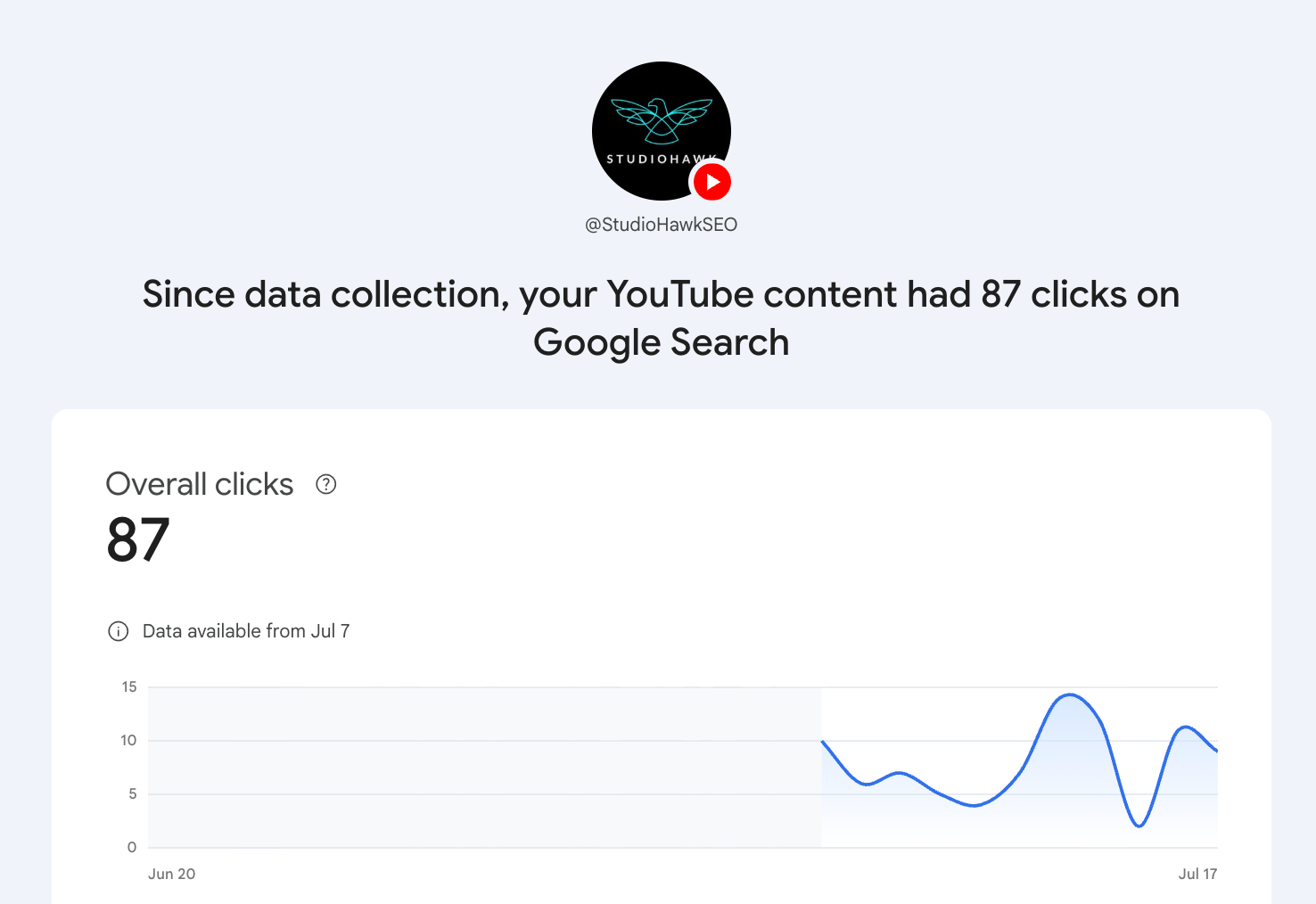
Google's introduction of Platform Properties in Search Console bridges the gap between search engine optimization (SEO) and social media marketing. This feature allows businesses to track YouTube, TikTok, and Instagram search performance directly, exposing massive, previously invisible search traffic. To dominate modern search and earn citations in AI engines, businesses must build a unified social topical map.
A federal judge's ruling allows Reddit's DMCA lawsuit against web scraper SerpApi to proceed, exposing the complex battle behind AI search engine data gathering and its implications for online business discovery.
Google's new Search Console setting gives site owners the option to exclude content from AI Overviews, AI Mode, and Discover's AI features without sacrificing standard organic search rankings. Toggling this off isn't a clear-cut win, though. Recent tracking reveals that opting out could inadvertently strip your business from high-visibility search carousels embedded inside AI modules.

Balancing AI-driven efficiency with human expertise is key to SEO success, as Google increasingly rewards original thinking and distinctive perspectives. AI can streamline tasks, but relying on it alone can lead to poor-quality content and decreased visibility. By using AI to support strategy and keeping human expertise at the center, businesses can create high-quality content that meets Google's expectations and improves their online presence.
New data from Similarweb reveals that AI search tools like ChatGPT and Perplexity are not replacing traditional search engines—they are layering on top of them. To capture modern consumers, local business owners must execute a dual strategy combining traditional Google SEO with Generative Engine Optimization (GEO).
Search industry veteran Duane Forrester warns that entity mapping tactics built for Google's Knowledge Graph don't directly transfer to language models like ChatGPT. Understanding the distinction between structured databases and LLM probability models is critical for building a cost-effective AI search strategy.
As buyers trade traditional Google searches for conversational tools like ChatGPT and Perplexity, businesses face a new optimization challenge. Search experts at Bodhium Labs warn that mass-producing low-quality AI content will only damage existing search rankings, offering practical strategies to earn AI citations while protecting hard-won Google SEO authority.
A deep dive into Perplexity AI's backend stream reveals how the engine retrieves, filters, and selects web sources before writing answers. Discover what this means for your business's AI search visibility.
A groundbreaking study analyzing 38,000 AI queries across ChatGPT, Perplexity, Gemini, and Claude reveals that top Google rankings no longer guarantee recommendations in AI search engines. This shift in digital discovery means businesses relying solely on traditional SEO risk becoming invisible to consumers using generative AI tools.

A new study from Writesonic reveals that roughly 40% of AI search citations fail to mention the source brand in their generated text. This phenomenon—dubbed 'ghost citations'—varies significantly across platforms, affecting engines like Perplexity, Google AI Mode, and ChatGPT. Consequently, tracking citation counts alone no longer provides business owners with an accurate picture of actual brand visibility.

Discover how SEO can optimize your acquisition system, reduce blended customer acquisition costs, and drive business efficiency. Learn the importance of measuring customer acquisition costs (CAC), the challenges of attribution, and how SEO can influence other channels. With the rise of AI-powered search engines, understanding CAC is crucial for businesses to stay ahead of the competition.
Discover how robotics and automation businesses can enhance their visibility in AI search platforms like ChatGPT, Gemini, and Perplexity by leveraging Generative Engine Optimization (GEO) strategies and trusted tools.
A recent study by Ahrefs reveals that while heavily AI-flagged pages can reach Google's top 10 search results, human-driven content overwhelmingly dominates the top three positions. In fact, over 54% of these top-tier pages carry less than 20% AI-generated text. For local business owners relying on unedited, automated copy, this trend poses a direct threat to search visibility and AI answer engine citations.
Google AI Overviews now show up in 43% of search queries, cementing generative AI summaries as the standard Google search experience. Although legacy publishers are seeing organic search traffic plummet, search AI is linking directly to primary web sources at five times the rate seen last year. For local business owners, earning a spot inside these AI-generated answers has quickly become the primary pathway to customer discovery.
The shift from traditional search engines to AI-powered 'Answer Engines' like ChatGPT, Perplexity, and Gemini is redefining online visibility. To stay discoverable, local and small businesses must transition from keyword matching to becoming trusted structured data sources that generative AI models cite directly.
A significant technical oversight recently revealed thousands of private Claude AI chats and documents in Google Search results. This incident underscores a vital principle of technical SEO: a robots.txt Disallow rule can prevent search engines from reading your Noindex tags, leading to unintended public exposure.

Understanding the historical context of your Google Business Profile address is vital for maintaining your local rankings. Changes to your address can have significant effects on visibility, particularly for service-based businesses where address accuracy is a key component of strategy.
According to new research from Similarweb, ChatGPT includes web citations in an average of just 6.8% of U.S. desktop answers, though link frequencies vary dramatically by industry. Travel and retail lead all categories with citation rates of 22.6% and 13.5%, respectively. Understanding these vertical attribution benchmarks is vital for local business owners building a competitive AI search visibility strategy.
Get the top AI-search and GEO stories in your inbox once a day, no spam.