

Google's Open Knowledge Format (OKF) v0.2 introduces a trust layer to help structure web content into clear, interconnected concepts. Although AI search agents do not actively crawl OKF bundles on websites yet, adopting this framework offers local businesses a powerful blueprint to audit and refine how AI models interpret their brand.

Google has expanded the availability of Search Console social reporting globally, enabling businesses to track the performance of their social media posts in search results. Additionally, recent data indicates that while AI-generated content can still rank in Google's top 10, those with higher AI detection scores tend to occupy lower search positions.

Cloudflare's PACT (Private Access Control Tokens) is a new protocol designed to separate human users from automated agents, replacing traditional CAPTCHAs and improving online security. Although PACT is not yet live, local business owners must prepare their websites for the evolving landscape of AI traffic and agentic search. By understanding this transition, businesses can ensure their sites stay secure and visible to AI search engines.
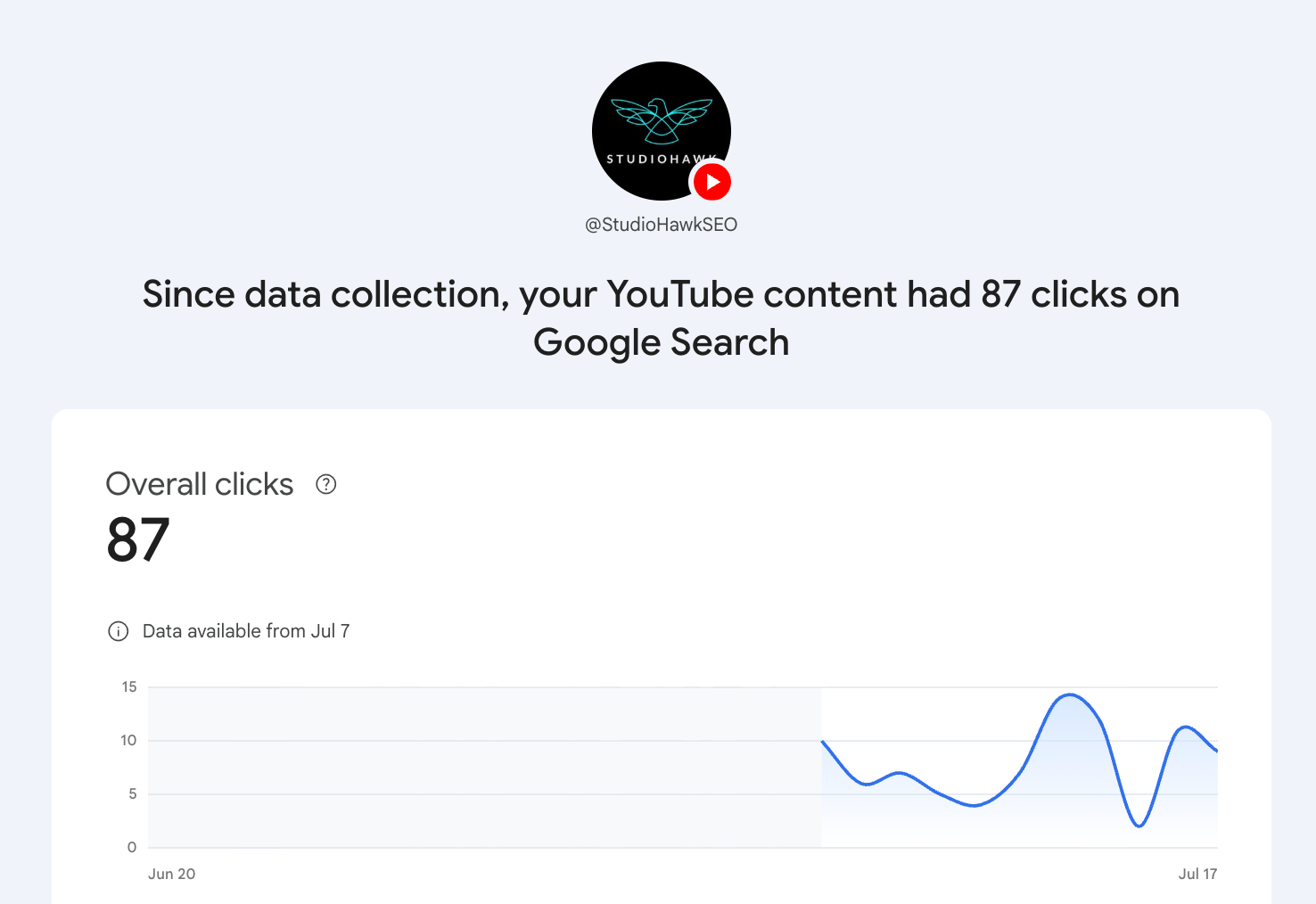
Google's introduction of Platform Properties in Search Console bridges the gap between search engine optimization (SEO) and social media marketing. This feature allows businesses to track YouTube, TikTok, and Instagram search performance directly, exposing massive, previously invisible search traffic. To dominate modern search and earn citations in AI engines, businesses must build a unified social topical map.
Google has officially introduced social platform properties to help brands track their entity reach across TikTok, YouTube, X, and Instagram, even as site owners handle ongoing search ranking volatility and page indexing delays. At the same time, new developments in ChatGPT Ads and strict Google review guidelines point to an evolving landscape for local search visibility and AI-driven business discovery.
Google's new Search Console setting gives site owners the option to exclude content from AI Overviews, AI Mode, and Discover's AI features without sacrificing standard organic search rankings. Toggling this off isn't a clear-cut win, though. Recent tracking reveals that opting out could inadvertently strip your business from high-visibility search carousels embedded inside AI modules.
New data from Similarweb reveals that AI search tools like ChatGPT and Perplexity are not replacing traditional search engines—they are layering on top of them. To capture modern consumers, local business owners must execute a dual strategy combining traditional Google SEO with Generative Engine Optimization (GEO).
Recent analysis of over 600,000 ChatGPT citations has revealed that 89% of AI search categories lack a dominant brand leader. This insight underscores a fleeting opportunity for small and local businesses to establish topical authority in AI search, positioning themselves advantageously before competitors catch on.
Discover the secrets to ranking high in AI search platforms like ChatGPT, Gemini, and Google AI Overviews with our expert guide. Learn how to optimize your content for AI search and increase your online visibility, drive more traffic to your website, and boost sales.
A recent study by Ahrefs reveals that while heavily AI-flagged pages can reach Google's top 10 search results, human-driven content overwhelmingly dominates the top three positions. In fact, over 54% of these top-tier pages carry less than 20% AI-generated text. For local business owners relying on unedited, automated copy, this trend poses a direct threat to search visibility and AI answer engine citations.
Google has begun nesting its Top Stories carousel inside AI Overviews instead of displaying it as a standalone module lower on search results pages. Consequently, businesses that use Google's Search Console controls to opt out of AI Overviews risk forfeiting access to prime, top-of-page search real estate.
Google AI Overviews now show up in 43% of search queries, cementing generative AI summaries as the standard Google search experience. Although legacy publishers are seeing organic search traffic plummet, search AI is linking directly to primary web sources at five times the rate seen last year. For local business owners, earning a spot inside these AI-generated answers has quickly become the primary pathway to customer discovery.
The shift from traditional search engines to AI-powered 'Answer Engines' like ChatGPT, Perplexity, and Gemini is redefining online visibility. To stay discoverable, local and small businesses must transition from keyword matching to becoming trusted structured data sources that generative AI models cite directly.
OpenAI's sudden shutdown of its Sora app and YouTube's sweeping purge of mass-produced AI channels signal a major turning point in video marketing. For small business owners, publishing raw, unvetted AI videos now poses a direct threat to brand credibility and AI search visibility.
According to new research from Similarweb, ChatGPT includes web citations in an average of just 6.8% of U.S. desktop answers, though link frequencies vary dramatically by industry. Travel and retail lead all categories with citation rates of 22.6% and 13.5%, respectively. Understanding these vertical attribution benchmarks is vital for local business owners building a competitive AI search visibility strategy.
Google's Business Profile dashboard has transitioned to a blue background, which may impact how local businesses manage their online presence.
As AI-driven search tools become integral to consumer interactions, understanding how to track your brand's share of voice and mentions is crucial for visibility. Businesses must adapt their strategies to ensure they are visible in these new search ecosystems.
A recent study by Meltwater's GEO highlights GCash and Maya as the top Philippine e-wallets in AI chatbot results, emphasizing the importance of digital finance in search engine optimization for local businesses.
Google's AI-organized search results are rolling out globally, impacting local businesses' search visibility and potentially requiring adjustments to SEO strategies.
Google's John Mueller reveals a robots.txt quirk that can cause Googlebot to ignore rules, potentially harming SEO. This issue affects local businesses and online marketers trying to optimize their websites for search engine visibility. Understanding this quirk is crucial for maintaining a strong online presence.
Get the top AI-search and GEO stories in your inbox once a day, no spam.