

Google's latest update to its AI overviews has profound implications for publishers and brands aiming to enhance their visibility in AI search results. With top stories now featured prominently, businesses must adapt their content strategies to capitalize on this opportunity for greater discovery and citation.

As AI Overviews continue to evolve, local businesses must adapt their content strategies to remain visible in search results and AI responses. Google's integration of Top Stories into AI Overviews has significant implications for publishers and brands, requiring them to prioritize SEO and adapt to AI's content preferences. By understanding these changes, businesses can refine their marketing tactics and increase their chances of being featured in AI-generated results.

Google's limited test of a sign-in feature could significantly impact local businesses' online visibility, as users may be discouraged from accessing more search results, leading to a decrease in traffic to websites that rely on organic search.

Google is beta testing a new Handle Swapping feature for Google Search Profiles, enabling businesses to synchronize their primary Google handle with linked, verified social accounts. This update enhances brand flexibility and strengthens entity authority in an era dominated by AI-driven search tools.

Google's recent AI image generator rollout in Google Earth was swiftly pulled after users exploited it to create fake explosions and disasters, underscoring the need for authentic brand representation and strict AI safety controls in AI search. This incident highlights the growing scrutiny around AI safety, synthetic imagery, and the importance of trust in AI-driven search engines. Local business owners must ensure their online presence is accurate and trustworthy to avoid being penalized in AI search results.

Google's refreshed crawl budget optimization guide enhances SEO strategies for business owners by emphasizing clarity and precision in its documentation, providing actionable insights to improve content visibility.

Google has updated its official crawl budget guidance with two key technical clarifications: all specialized Google crawlers draw from a single shared capacity pool, and websites should implement HTTP 304 'Not Modified' response codes. Serving 304 responses for static pages conserves server resources, allowing search engines and AI platforms to discover and index new content faster.

In a revealing Search Engine Journal interview, search veteran Kris Jones highlights 'synthesis' as the key driver behind AI brand recommendations. Jones explains how tools like ChatGPT, Perplexity, and Google AI Overviews decide who gets recommended and how small businesses can capture those high-converting AI citations.

Google's Open Knowledge Format (OKF) v0.2 introduces a trust layer to help structure web content into clear, interconnected concepts. Although AI search agents do not actively crawl OKF bundles on websites yet, adopting this framework offers local businesses a powerful blueprint to audit and refine how AI models interpret their brand.

Standard analytics tools like Google Search Console fail to capture when Google Gemini recommends your business to prospective buyers. To stay competitive, business owners must learn how to directly track brand mentions, gauge share of voice, and optimize their presence across the emerging AI search landscape.

Google has expanded the availability of Search Console social reporting globally, enabling businesses to track the performance of their social media posts in search results. Additionally, recent data indicates that while AI-generated content can still rank in Google's top 10, those with higher AI detection scores tend to occupy lower search positions.

Recent research reveals that ChatGPT and other leading AI platforms populate product recommendation carousels directly from Google Merchant Center feeds rather than scraping traditional web pages. With up to 83% of AI product recommendations mirroring top Google Shopping organic results, feed optimization has quickly become the primary battlefield for AI visibility. For e-commerce brands and local retailers, feed quality now determines whether your products get recommended—or overlooked.
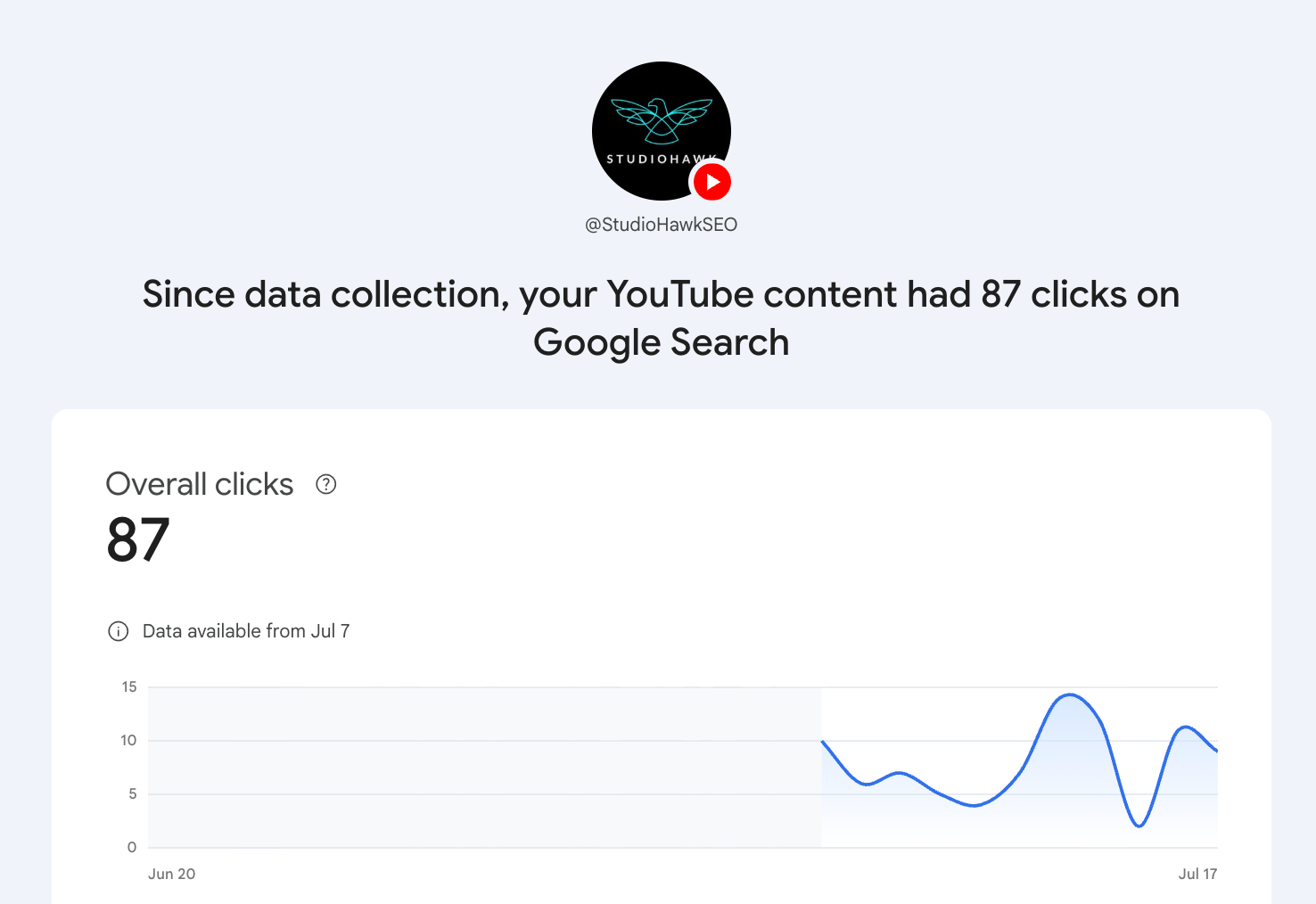
Google's introduction of Platform Properties in Search Console bridges the gap between search engine optimization (SEO) and social media marketing. This feature allows businesses to track YouTube, TikTok, and Instagram search performance directly, exposing massive, previously invisible search traffic. To dominate modern search and earn citations in AI engines, businesses must build a unified social topical map.
Google has officially introduced social platform properties to help brands track their entity reach across TikTok, YouTube, X, and Instagram, even as site owners handle ongoing search ranking volatility and page indexing delays. At the same time, new developments in ChatGPT Ads and strict Google review guidelines point to an evolving landscape for local search visibility and AI-driven business discovery.
Google's new Search Console setting gives site owners the option to exclude content from AI Overviews, AI Mode, and Discover's AI features without sacrificing standard organic search rankings. Toggling this off isn't a clear-cut win, though. Recent tracking reveals that opting out could inadvertently strip your business from high-visibility search carousels embedded inside AI modules.

Balancing AI-driven efficiency with human expertise is key to SEO success, as Google increasingly rewards original thinking and distinctive perspectives. AI can streamline tasks, but relying on it alone can lead to poor-quality content and decreased visibility. By using AI to support strategy and keeping human expertise at the center, businesses can create high-quality content that meets Google's expectations and improves their online presence.
New data from Similarweb reveals that AI search tools like ChatGPT and Perplexity are not replacing traditional search engines—they are layering on top of them. To capture modern consumers, local business owners must execute a dual strategy combining traditional Google SEO with Generative Engine Optimization (GEO).
Search industry veteran Duane Forrester warns that entity mapping tactics built for Google's Knowledge Graph don't directly transfer to language models like ChatGPT. Understanding the distinction between structured databases and LLM probability models is critical for building a cost-effective AI search strategy.
Google's new Search Console reports for AI Overviews display impressive impression growth, but digital marketers warn the data is misleading, often yielding zero website clicks and hiding real traffic drops.
As buyers trade traditional Google searches for conversational tools like ChatGPT and Perplexity, businesses face a new optimization challenge. Search experts at Bodhium Labs warn that mass-producing low-quality AI content will only damage existing search rankings, offering practical strategies to earn AI citations while protecting hard-won Google SEO authority.
Get the top AI-search and GEO stories in your inbox once a day, no spam.