
Google has amended its lawsuit against SerpApi, a company that provides web scraping services to businesses. This development could impact how local businesses are discovered and cited by AI tools. Learn how to adapt your SEO strategy to stay ahead.

OpenAI is currently testing a feature that adds descriptive headings to ads within ChatGPT responses. This initiative aims to enhance user experience and improve ad effectiveness, which could influence how businesses are discovered online.

In the age of AI, understanding decision drivers is crucial for SEOs to enhance local business visibility. This article explores essential metrics that can help businesses adapt to the changing landscape. By focusing on decision drivers, companies can improve their visibility and engagement with potential customers.
Search forum discussions highlight major shifts in how AI search tools process local business data. With platforms like Google AI Overviews, Gemini, and Perplexity refining their citation models, local business owners need to adjust their optimization tactics to stay discoverable. Here is a breakdown of these industry changes alongside actionable steps to protect your AI search presence.

Meta is aggressively crawling the web, signaling the development of its own AI-powered search engine for Facebook, Instagram, and WhatsApp. As social and search converge, local businesses must optimize their online presence for Meta's crawlers to capture conversational AI traffic. Learn how this shift impacts Generative Engine Optimization (GEO) and your local discovery strategy.

The release of the 2026 top Generative Engine Optimization (GEO) agency shortlist highlights a critical shift in digital marketing: moving beyond simple SEO clicks toward direct pipeline attribution from AI search. Both B2B SaaS companies and local businesses are now investing heavily in strategies that earn explicit brand citations within platforms like ChatGPT, Perplexity, and Google AI Overviews.

Consumer search habits are rapidly shifting toward conversational tools like ChatGPT, Perplexity, and Google AI Overviews, yet traditional analytics platforms fail to track this new customer journey. This disconnect leaves brands facing a growing attribution gap as AI heavily influences purchases offline and behind the scenes. To maintain visibility, small and local businesses must shift focus from old-school click tracking toward Generative Engine Optimization (GEO) and citation building.

Google Search results are undergoing intense ranking volatility around August 5th and 6th, signaling a major unconfirmed algorithm update. Business owners are seeing sharp rank swings that impact both traditional Google rankings and AI Overview citations. Here is what small businesses need to know to protect their digital footprint.
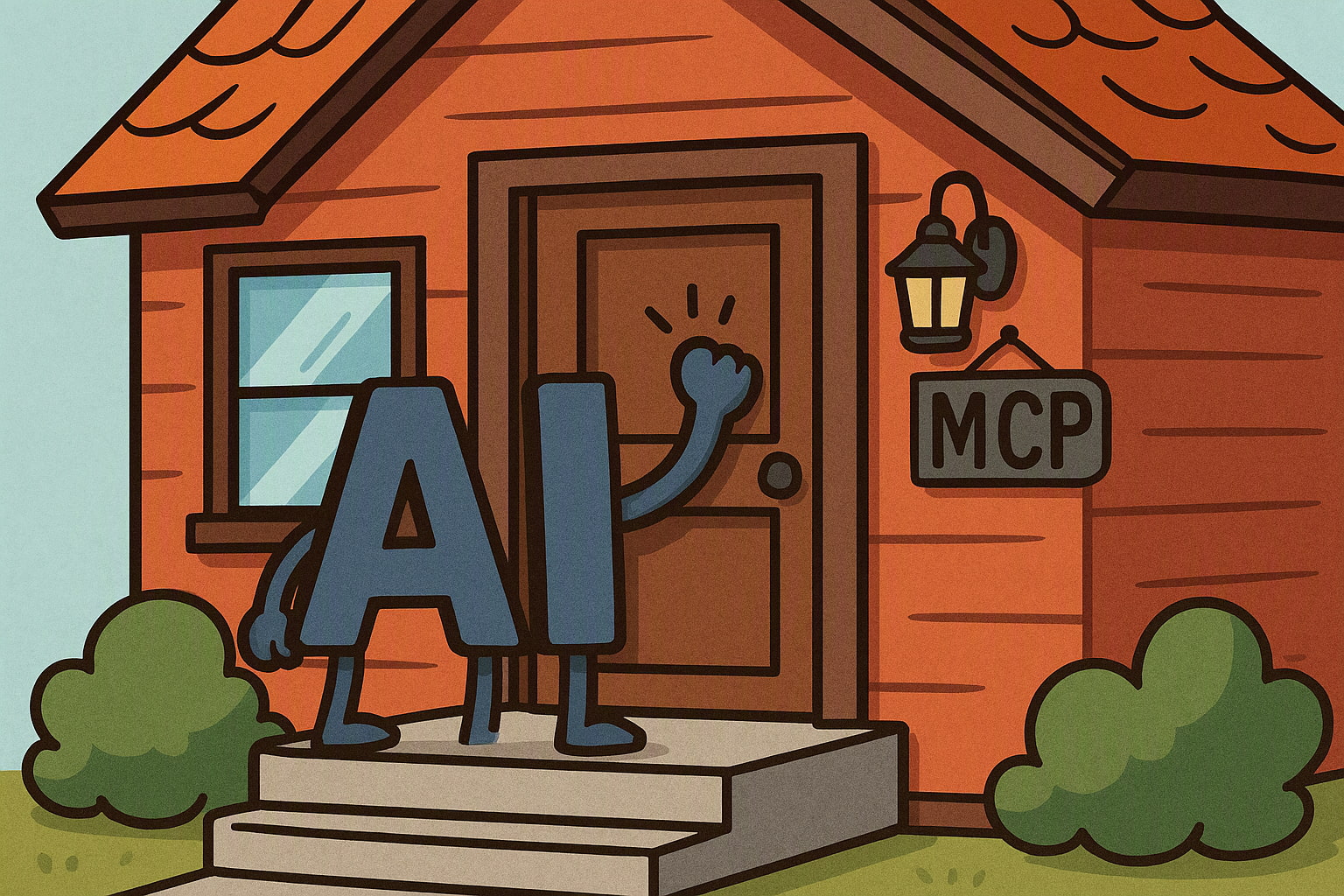
As AI tools like ChatGPT and Claude integrate into marketing systems, concerns are growing that traditional CRMs may become obsolete. However, these AI assistants function as reasoning engines that depend on structured business data to deliver accurate recommendations, emphasizing the continued importance of a solid CRM foundation for local businesses to enhance their visibility in AI search results.

Google's limited test of a sign-in feature could significantly impact local businesses' online visibility, as users may be discouraged from accessing more search results, leading to a decrease in traffic to websites that rely on organic search.

Google's recent AI image generator rollout in Google Earth was swiftly pulled after users exploited it to create fake explosions and disasters, underscoring the need for authentic brand representation and strict AI safety controls in AI search. This incident highlights the growing scrutiny around AI safety, synthetic imagery, and the importance of trust in AI-driven search engines. Local business owners must ensure their online presence is accurate and trustworthy to avoid being penalized in AI search results.

The EU's Article 50 AI Transparency Law introduces essential labeling requirements for AI-generated content. However, specific exemptions may provide strategic advantages for businesses navigating these new regulations.

AI search engines like ChatGPT, Gemini, and Perplexity rely heavily on local listing accuracy and review sentiment to recommend local businesses. Recent data reveals that data inconsistencies across web directories can completely erase your brand from AI answers. Learn how small businesses can optimize their local signals for generative engine optimization (GEO).

Google's Open Knowledge Format (OKF) v0.2 introduces a trust layer to help structure web content into clear, interconnected concepts. Although AI search agents do not actively crawl OKF bundles on websites yet, adopting this framework offers local businesses a powerful blueprint to audit and refine how AI models interpret their brand.

Google has expanded the availability of Search Console social reporting globally, enabling businesses to track the performance of their social media posts in search results. Additionally, recent data indicates that while AI-generated content can still rank in Google's top 10, those with higher AI detection scores tend to occupy lower search positions.

Cloudflare's PACT (Private Access Control Tokens) is a new protocol designed to separate human users from automated agents, replacing traditional CAPTCHAs and improving online security. Although PACT is not yet live, local business owners must prepare their websites for the evolving landscape of AI traffic and agentic search. By understanding this transition, businesses can ensure their sites stay secure and visible to AI search engines.
Google has officially introduced social platform properties to help brands track their entity reach across TikTok, YouTube, X, and Instagram, even as site owners handle ongoing search ranking volatility and page indexing delays. At the same time, new developments in ChatGPT Ads and strict Google review guidelines point to an evolving landscape for local search visibility and AI-driven business discovery.
New data from Similarweb reveals that AI search tools like ChatGPT and Perplexity are not replacing traditional search engines—they are layering on top of them. To capture modern consumers, local business owners must execute a dual strategy combining traditional Google SEO with Generative Engine Optimization (GEO).
Recent analysis of over 600,000 ChatGPT citations has revealed that 89% of AI search categories lack a dominant brand leader. This insight underscores a fleeting opportunity for small and local businesses to establish topical authority in AI search, positioning themselves advantageously before competitors catch on.
A recent study by Ahrefs reveals that while heavily AI-flagged pages can reach Google's top 10 search results, human-driven content overwhelmingly dominates the top three positions. In fact, over 54% of these top-tier pages carry less than 20% AI-generated text. For local business owners relying on unedited, automated copy, this trend poses a direct threat to search visibility and AI answer engine citations.
Get the top AI-search and GEO stories in your inbox once a day, no spam.