

Standard analytics tools like Google Search Console fail to capture when Google Gemini recommends your business to prospective buyers. To stay competitive, business owners must learn how to directly track brand mentions, gauge share of voice, and optimize their presence across the emerging AI search landscape.

Google has expanded the availability of Search Console social reporting globally, enabling businesses to track the performance of their social media posts in search results. Additionally, recent data indicates that while AI-generated content can still rank in Google's top 10, those with higher AI detection scores tend to occupy lower search positions.

Recent research reveals that ChatGPT and other leading AI platforms populate product recommendation carousels directly from Google Merchant Center feeds rather than scraping traditional web pages. With up to 83% of AI product recommendations mirroring top Google Shopping organic results, feed optimization has quickly become the primary battlefield for AI visibility. For e-commerce brands and local retailers, feed quality now determines whether your products get recommended—or overlooked.
Google has officially introduced social platform properties to help brands track their entity reach across TikTok, YouTube, X, and Instagram, even as site owners handle ongoing search ranking volatility and page indexing delays. At the same time, new developments in ChatGPT Ads and strict Google review guidelines point to an evolving landscape for local search visibility and AI-driven business discovery.

Balancing AI-driven efficiency with human expertise is key to SEO success, as Google increasingly rewards original thinking and distinctive perspectives. AI can streamline tasks, but relying on it alone can lead to poor-quality content and decreased visibility. By using AI to support strategy and keeping human expertise at the center, businesses can create high-quality content that meets Google's expectations and improves their online presence.
New data from Similarweb reveals that AI search tools like ChatGPT and Perplexity are not replacing traditional search engines—they are layering on top of them. To capture modern consumers, local business owners must execute a dual strategy combining traditional Google SEO with Generative Engine Optimization (GEO).
Search industry veteran Duane Forrester warns that entity mapping tactics built for Google's Knowledge Graph don't directly transfer to language models like ChatGPT. Understanding the distinction between structured databases and LLM probability models is critical for building a cost-effective AI search strategy.
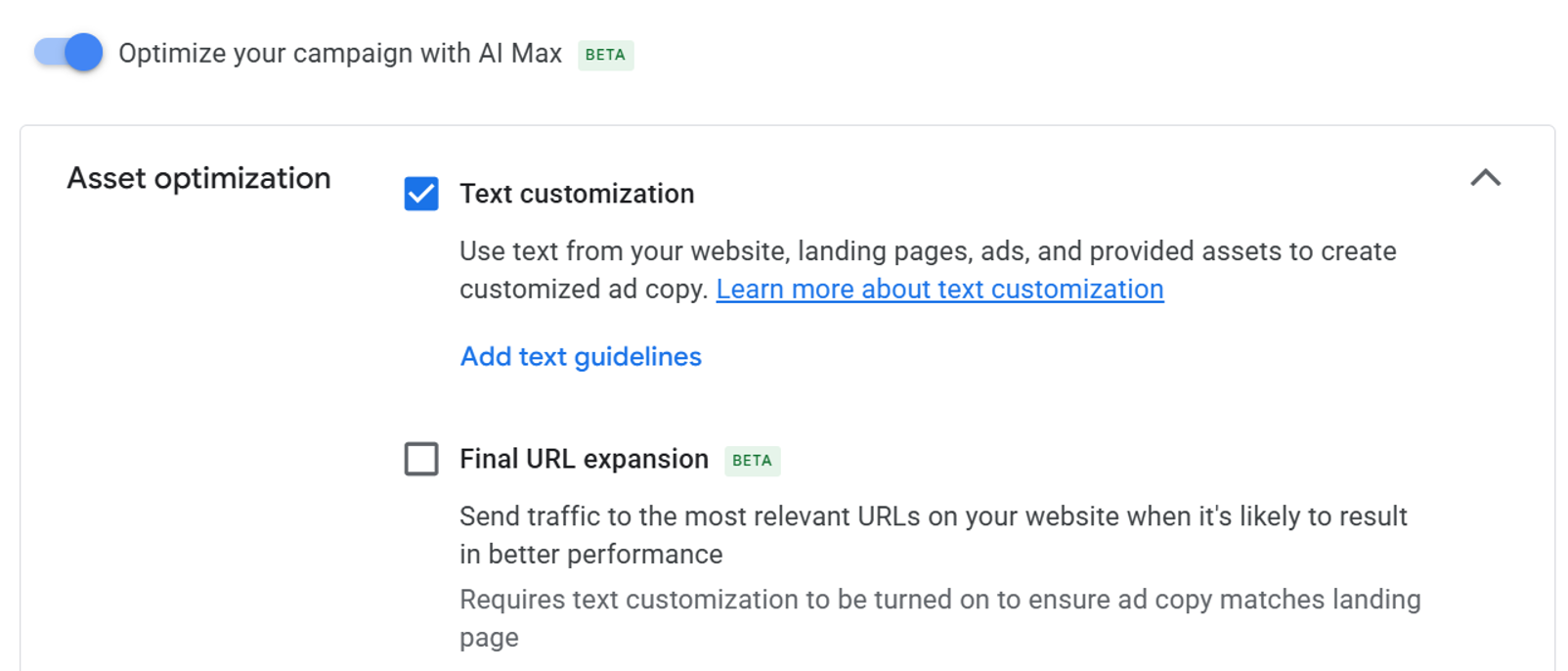
Google Ads AI Max can generate customized ad copy across individual ad groups, reducing the manual workload on your PPC team. However, testing shows that auto-generated copy requires strict guardrails to prevent off-brand messaging or false promotional claims. Here is how to apply messaging restrictions so you can scale ad performance while protecting your brand.
A recent study by Ahrefs reveals that while heavily AI-flagged pages can reach Google's top 10 search results, human-driven content overwhelmingly dominates the top three positions. In fact, over 54% of these top-tier pages carry less than 20% AI-generated text. For local business owners relying on unedited, automated copy, this trend poses a direct threat to search visibility and AI answer engine citations.
A significant technical oversight recently revealed thousands of private Claude AI chats and documents in Google Search results. This incident underscores a vital principle of technical SEO: a robots.txt Disallow rule can prevent search engines from reading your Noindex tags, leading to unintended public exposure.

Google is rolling out household income exclusions for Performance Max campaigns, giving advertisers a new level of audience control. This feature allows advertisers to exclude specific household income segments directly at the campaign level, potentially improving campaign delivery and ROI.
Google's John Mueller reveals a robots.txt quirk that can cause Googlebot to ignore rules, potentially harming SEO. This issue affects local businesses and online marketers trying to optimize their websites for search engine visibility. Understanding this quirk is crucial for maintaining a strong online presence.

Google has updated its review snippet structured data guidelines to prohibit fake or undisclosed incentivized reviews, aiming to improve the accuracy and trustworthiness of review snippets in Google Search. Business owners must ensure their review snippets comply with the new guidelines to maintain eligibility for rich results and Google Knowledge Panels. This is crucial for maintaining a positive online reputation and improving online visibility.
Google has introduced an email notice system for local businesses when a review is not posted on their Google Maps profile, aiming to provide transparency and accountability in the review submission process.
Several large publishers are considering blocking Google Search entirely due to declining click-through rates and a perceived imbalance in the value exchange with Google. This move could significantly impact businesses trying to get discovered and cited by AI search tools.
Google's AI search is sending billions of clicks to websites every week, but publishers are fed up with the volatile ranking system. This news highlights the importance of adapting to AI-driven search and optimizing your online presence to stay ahead.
Google's search growth has slowed, and major publishers are considering leaving the platform due to a €890 million fine from the EU and disputes over DMCA claims. This shift could have significant implications for businesses relying on Google's search engine optimization (SEO) for visibility.
Alphabet's Q2 earnings report has made headlines with a whopping $5.85 billion negative free cash flow, largely due to Google's infrastructure spending. This unexpected financial outcome may have significant implications for local businesses looking to get discovered through AI-powered search engines. As AI continues to shape the digital landscape, understanding the financial dynamics of tech giants like Google is crucial for businesses seeking online visibility.
YouTube has clarified its rules for monetization, explaining what types of content can prevent a channel from earning money. This update aims to clarify existing rules, not change them, and affects business owners who rely on the platform for revenue.
Discover why AI browsers are inherently flawed and how you can optimize your website for AI search engines like ChatGPT, Perplexity, and Google AI Overviews. Learn how to create a website that AI machines can read.
Get the top AI-search and GEO stories in your inbox once a day, no spam.