
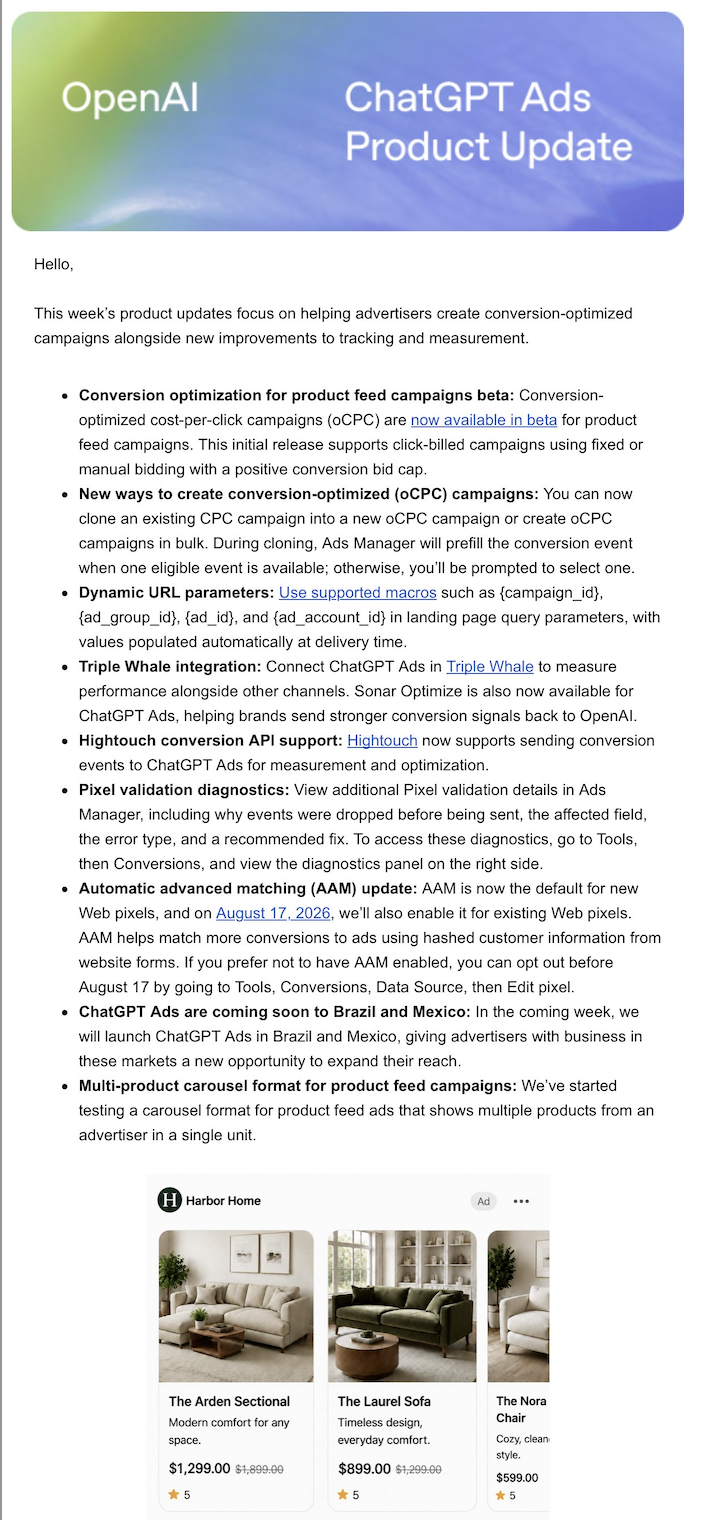
OpenAI expands ChatGPT Ads' conversion capabilities with new campaign types, measurement integrations, and optimization tools, benefiting ecommerce advertisers with improved conversion tracking, automated campaign creation, and scaled advertising.

A recent experiment revealed that AI models like ChatGPT, Claude, and Gemini provide different strategic recommendations based on the context provided. This highlights the importance of understanding the nuances of AI decision-making for businesses. By considering the context and objectives of a business, AI models can offer more tailored and effective guidance.
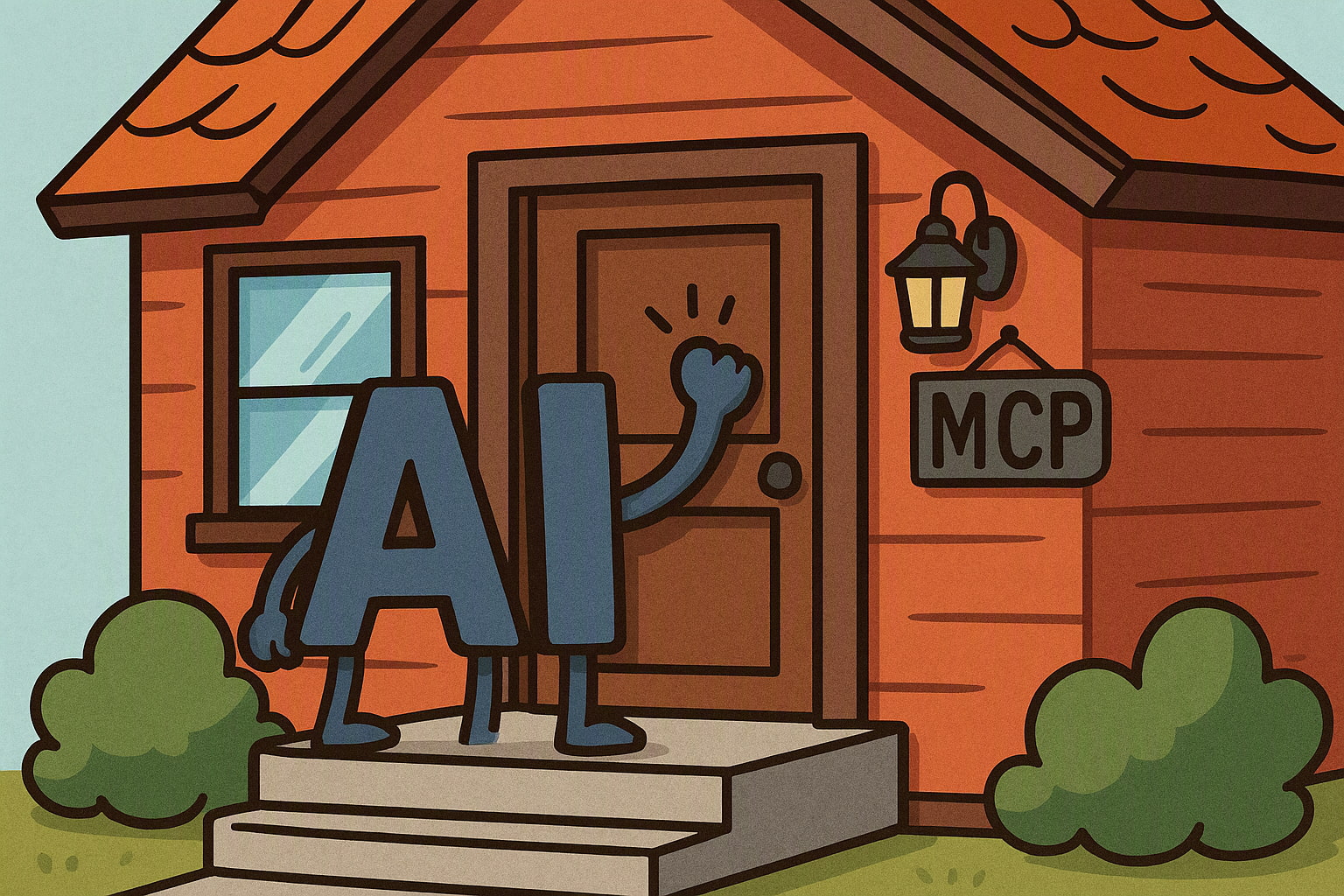
As AI tools like ChatGPT and Claude integrate into marketing systems, concerns are growing that traditional CRMs may become obsolete. However, these AI assistants function as reasoning engines that depend on structured business data to deliver accurate recommendations, emphasizing the continued importance of a solid CRM foundation for local businesses to enhance their visibility in AI search results.

Google's limited test of a sign-in feature could significantly impact local businesses' online visibility, as users may be discouraged from accessing more search results, leading to a decrease in traffic to websites that rely on organic search.

Standard analytics tools like Google Search Console fail to capture when Google Gemini recommends your business to prospective buyers. To stay competitive, business owners must learn how to directly track brand mentions, gauge share of voice, and optimize their presence across the emerging AI search landscape.

Recent research reveals that ChatGPT and other leading AI platforms populate product recommendation carousels directly from Google Merchant Center feeds rather than scraping traditional web pages. With up to 83% of AI product recommendations mirroring top Google Shopping organic results, feed optimization has quickly become the primary battlefield for AI visibility. For e-commerce brands and local retailers, feed quality now determines whether your products get recommended—or overlooked.

Balancing AI-driven efficiency with human expertise is key to SEO success, as Google increasingly rewards original thinking and distinctive perspectives. AI can streamline tasks, but relying on it alone can lead to poor-quality content and decreased visibility. By using AI to support strategy and keeping human expertise at the center, businesses can create high-quality content that meets Google's expectations and improves their online presence.
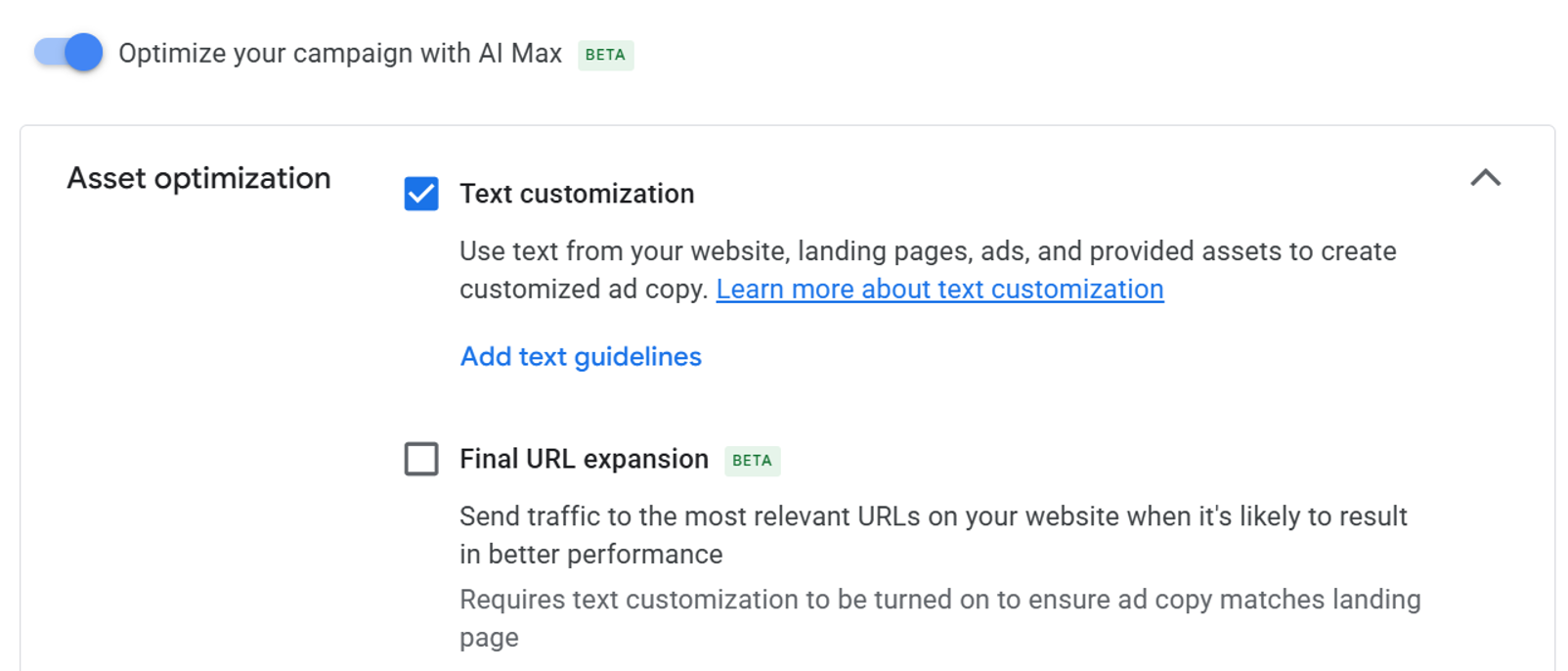
Google Ads AI Max can generate customized ad copy across individual ad groups, reducing the manual workload on your PPC team. However, testing shows that auto-generated copy requires strict guardrails to prevent off-brand messaging or false promotional claims. Here is how to apply messaging restrictions so you can scale ad performance while protecting your brand.

Google has updated its review snippet structured data guidelines to prohibit fake or undisclosed incentivized reviews, aiming to improve the accuracy and trustworthiness of review snippets in Google Search. Business owners must ensure their review snippets comply with the new guidelines to maintain eligibility for rich results and Google Knowledge Panels. This is crucial for maintaining a positive online reputation and improving online visibility.

Learn how to identify and fix common mistakes that can undermine your SEO experiments, ensuring reliable and actionable results. Discover the importance of choosing the right testing methodology and avoiding flaws in your testing framework. Improve your SEO testing programs with a 70% average success rate.

Yelp's partnership with OpenAI is set to revolutionize local search by integrating Yelp content into ChatGPT searches, making it easier for users to find and interact with local businesses. This integration will give users access to real-time local recommendation data, increasing the competition for online visibility. As a business owner, it's crucial to stay ahead of the curve and optimize your online presence to take advantage of this new development.

The European Commission is expected to rule that Google unfairly favors its own services in search results, potentially leading to significant fines and changes in how Google displays search results.

A recent shift in consumer behavior sees people discovering brands on TikTok before actively searching for them on Google. This change has significant implications for SEO, local visibility, and content strategy.
Get the top AI-search and GEO stories in your inbox once a day, no spam.