
Home / News / Updated Google Maps Policy: What Merchants Can't Post In Listings Or Posts
Updated Google Maps Policy: What Merchants Can't Post In Listings Or Posts
Google has refreshed its Maps guidelines, clarifying which types of content merchants may no longer include in business listings or posts. The changes affect everything from promotional language to visual assets, and non‑compliant listings risk being downgraded or removed. Business owners should review the new rules promptly to keep their local presence visible.
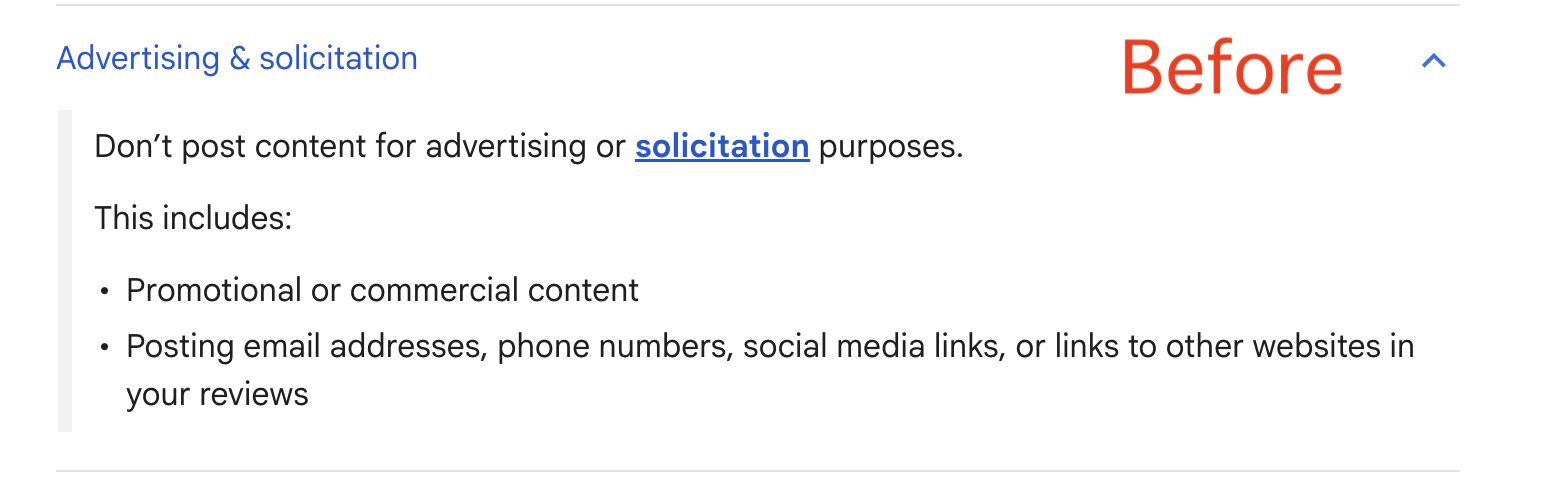
# Updated Google Maps Policy: What Merchants Can't Post In Listings Or Posts
Oct 6, 2026 – 7:51 am
Barry Schwartz / Executive Editor

Barry Schwartz is the CEO of RustyBrick, a New York‑based web‑services firm that helps companies cut costs and boost sales through custom technology. He founded the Search Engine Roundtable and serves as News Editor for Search Engine Land. Schwartz is widely respected for his deep expertise in search marketing and frequently consults with senior SEOs and acts as a search‑marketing expert witness.
---
Google has announced a revision to the content standards that apply to business listings and posts on Google Maps. The updated policy enumerates specific categories of material that merchants are now prohibited from publishing, ranging from certain promotional claims to imagery that could be considered misleading or infringing.
Key takeaways for local businesses include:
- Prohibited promotional language – claims that guarantee results, such as “#1 in the city,” or offers that conflict with Google’s advertising policies must be removed.
- Restricted imagery – photos that contain copyrighted logos, overly edited visuals, or content that could be interpreted as political or religious messaging are no longer acceptable.
- Misleading information – any description that could deceive users about pricing, availability, or business hours must be corrected.
- Spam‑like posts – repetitive or overly promotional posts that add little value to the user experience will be flagged and may be suppressed.
Google advises merchants to audit existing listings and posts within 30 days of the policy’s effective date. Non‑compliant entries may be demoted in search results or removed entirely, which can have a direct impact on foot traffic and online visibility.
For a complete list of prohibited content, see the official Google Maps Business Profile Help Center.
---
What to do next
1. Run a quick audit – Scan your business profile for any language or images that fall into the categories above.
2. Edit or remove – Update offending items promptly; the changes are reflected in Google’s index within a few hours.
3. Monitor performance – Keep an eye on local pack rankings and user engagement metrics after the edits to ensure visibility remains strong.
Staying aligned with Google’s guidelines not only protects your listing from penalties but also reinforces trust with potential customers who rely on accurate, up‑to‑date information when making purchasing decisions.
Why This Matters For Your Business
For business owners, a Google Maps listing is often the first point of contact with local customers. When a profile violates the platform’s content rules, Google can lower its ranking or remove it altogether, which translates into fewer impressions, calls, and in‑store visits. The revised policy therefore has a direct line to revenue. Beyond immediate visibility, compliance signals professionalism. Users are more likely to trust a business that presents clear, honest information, and Google’s algorithms reward that trust with higher placement in the local pack. Ignoring the new restrictions can erode that trust, leading to a gradual decline in click‑through rates and, ultimately, sales. Finally, the policy change underscores a broader shift toward higher-quality, user‑centric content across Google’s ecosystem. By proactively aligning listings with the new standards, merchants position themselves to benefit from future algorithm updates that favor authenticity and relevance.
Is your business showing up in AI search?
Get your free AI visibility audit - see if ChatGPT, Perplexity, and Google AI actually recommend you.