
Home / News / Tactical Solutions to Overcome AI Search Measurement Challenges
Tactical Solutions to Overcome AI Search Measurement Challenges
Search Engine Journal’s latest recap offers practical tactics for measuring AI-driven search performance. Marketers can now track how ChatGPT, Gemini, and Google AI citations impact their bottom line by understanding data gaps and attribution models.
Key Highlights
- ✓Traditional SERP metrics miss AI‑driven visibility
- ✓Hybrid attribution model blends first‑touch and AI citation data
- ✓Local schema and accurate business info are critical for AI answers
- ✓Content depth and structured data increase chances of AI citation
What Happened
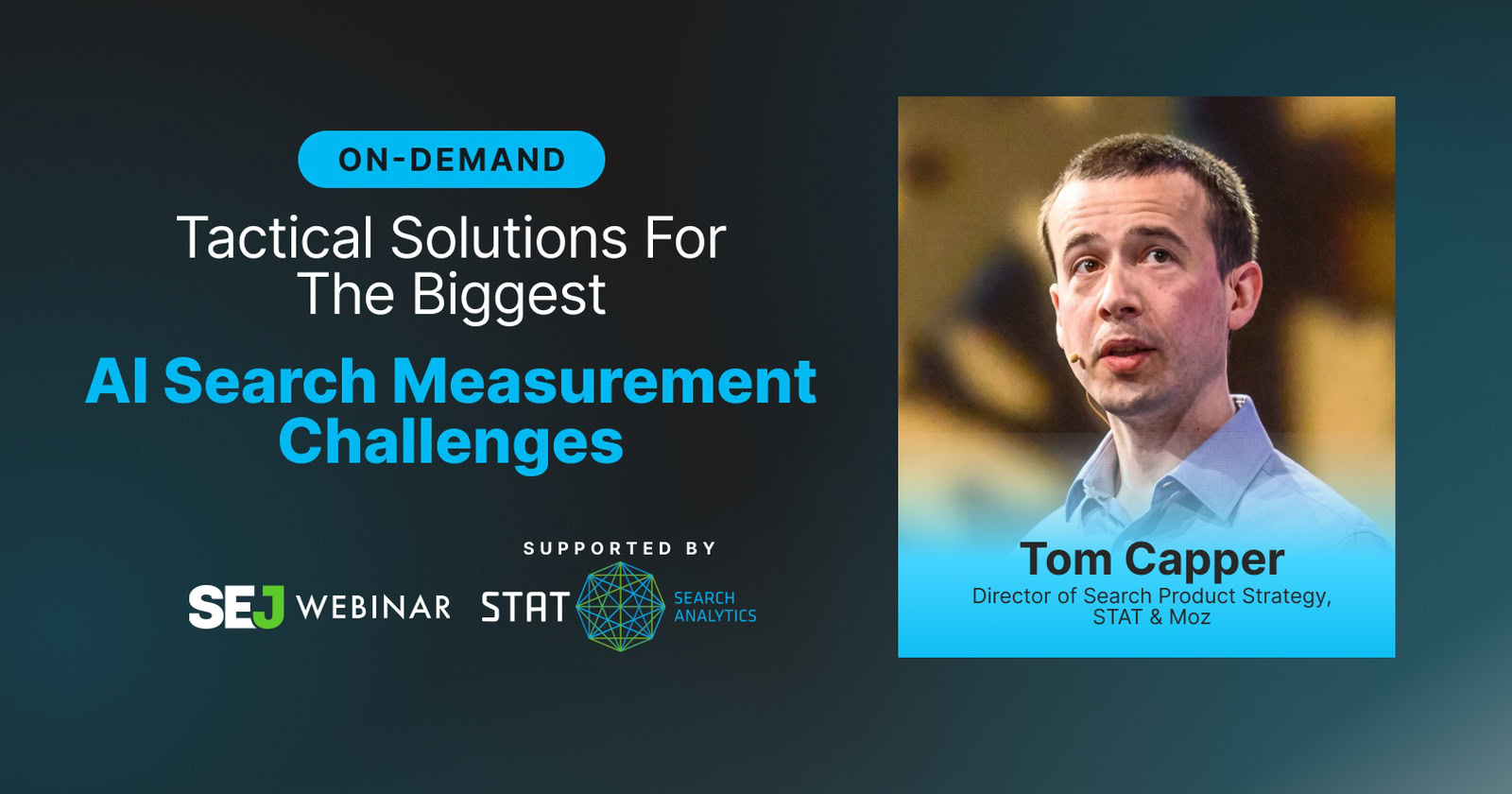
Search Engine Journal recently hosted an on-demand webinar titled Tactical Solutions For The Biggest AI Search Measurement Challenges, led by industry veteran Loren Baker. The session explored the significant roadblocks marketers face when trying to measure AI-powered results, specifically focusing on data gaps and attribution models. The discussion highlighted how AI tools like ChatGPT, Perplexity, Gemini, and Google AI Overviews surface content, moving beyond the traditional link-click paradigm. This recording is now available for businesses of all sizes, offering actionable insights for local shops, e-commerce sites, and service-based firms seeking discovery through AI assistants.
---
Key Details
- Measurement blind spots – Traditional SERP metrics like rank, click‑through rate, and impressions often fall short. AI answers frequently aggregate information from multiple sources without displaying a classic list of links, creating blind spots in standard analytics.
- New attribution models – Speakers recommended a hybrid model that blends first‑touch, assist‑touch, and AI‑citation metrics to understand how often your content appears in AI responses.
- Data sources to tap – Leverage Google Search Console, Bing Webmaster Tools, and emerging AI citation dashboards (e.g., OpenAI’s usage reports) to collect raw data.
- Testing frameworks – Implement A/B tests on schema markup, structured data, and content depth to identify which signals AI models prioritize.
- Tool stack – Combine VisibilityAI, SurferSEO, and ChatGPT Prompt Analytics to monitor real‑time changes in AI‑driven visibility.
---
What It Means For Your Business
1. **Visibility Goes Beyond Page Rank Alone**
AI assistants synthesize answers from multiple pages, often displaying a concise paragraph with a link or two. If your business isn’t optimized for structured data and authoritativeness, you may remain invisible despite a high ranking on Google’s traditional SERP.
2. **Citations Act as the New Backlinks**
When an AI model cites your website in its response, that citation functions like a high‑quality backlink—boosting trust and driving traffic. Tracking these citations requires a shift from traditional link‑building to AI‑citation tracking.
3. **Local Signals Are Critical**
For small businesses, local schema (address, phone, hours) and Google Business Profile data are primary signals AI models use for “near me” queries. Ensuring this information is accurate can significantly increase AI‑driven referrals.
4. **Content Depth Beats Keyword Stuffing**
AI models favor comprehensive, well‑structured content that answers a question fully. Investing in topic clusters, FAQs, and rich snippets can improve the likelihood of being quoted.
5. **Measure, Iterate, and Scale**
Adopt the hybrid attribution model suggested in the webinar to set KPIs such as:
- AI citation count per month
- Referral traffic from AI‑generated links
- Conversion rate of AI‑driven visits
Regularly review these metrics in VisibilityAI’s dashboard to refine your strategy.
---
Tactical Steps to Implement Today
1. Audit Structured Data – Run a quick scan with Google’s Rich Results Test. Add missing schema for LocalBusiness, Product, and FAQ.
2. Set Up AI Citation Tracking – Enable the “AI Search” module in VisibilityAI to capture mentions from ChatGPT, Perplexity, and Gemini.
3. Create Topic Clusters – Identify core services (e.g., “organic lawn care”) and build pillar pages supported by blog posts that answer related questions.
4. Monitor with a Hybrid Dashboard – Combine Search Console data with VisibilityAI’s AI citation reports to visualize the full funnel.
5. Run Prompt Experiments – Use ChatGPT to generate prompts that mimic user questions. See which of your pages get cited and adjust content accordingly.
---
Bottom Line
The AI search landscape is evolving faster than traditional SEO. By embracing the tactical solutions shared by SEJ and adapting measurement frameworks, local and small businesses can finally see the impact of AI citations, drive more qualified traffic, and stay ahead of competitors who are still stuck in the old rank‑and‑click paradigm. Stay proactive: monitor AI citations, optimize structured data, and continuously test content depth. With the right tools—especially VisibilityAI—you’ll turn AI‑driven search from a mystery into a measurable growth engine.
---
Why It Matters
For businesses trying to get discovered by AI assistants, the old rulebook of SEO no longer applies. AI tools pull answers from a pool of sources and often surface a single citation rather than a list of links. That means a local bakery or a niche e‑commerce store can appear in a ChatGPT response even if it never ranks on the first page of Google. By understanding how to measure those AI citations, you can prove ROI, allocate budget to the tactics that actually drive AI‑driven traffic, and fine‑tune your content to match the way AI models evaluate relevance. VisibilityAI makes this measurable. Its AI‑search dashboard aggregates citation data from multiple large‑language‑model platforms, letting you see exactly which pages are being quoted and how that translates into clicks and conversions. Armed with this insight, you can prioritize the most effective content, improve local schema, and ultimately turn AI‑generated referrals into real customers.
---
FAQs
- How do I know if my site is being cited by ChatGPT or Gemini?
Use VisibilityAI’s AI citation module, which pulls data from OpenAI, Google, and Perplexity APIs to list every time your URL appears in an AI‑generated answer.
- Do traditional SEO tools still matter?
Yes. Traditional metrics like organic traffic and backlinks remain important, but they should be complemented with AI citation tracking for a complete picture.
- What’s the quickest way to improve AI visibility for a local business?
Ensure your Google Business Profile is up‑to‑date, add LocalBusiness schema, and create concise FAQ pages that directly answer common “near me” queries.
Why This Matters For Your Business
For businesses trying to get discovered by AI assistants, the old rulebook of SEO no longer applies. AI tools pull answers from a pool of sources and often surface a single citation rather than a list of links. That means a local bakery or a niche e‑commerce store can appear in a ChatGPT response even if it never ranks on the first page of Google. By understanding how to measure those AI citations, you can prove ROI, allocate budget to the tactics that actually drive AI‑driven traffic, and fine‑tune your content to match the way AI models evaluate relevance. VisibilityAI makes this measurable. Its AI‑search dashboard aggregates citation data from multiple large‑language‑model platforms, letting you see exactly which pages are being quoted and how that translates into clicks and conversions. Armed with this insight, you can prioritize the most effective content, improve local schema, and ultimately turn AI‑generated referrals into real customers.
Frequently Asked Questions
How do I know if my site is being cited by ChatGPT or Gemini?
Use VisibilityAI’s AI citation module, which pulls data from OpenAI, Google, and Perplexity APIs to list every time your URL appears in an AI‑generated answer.
Do traditional SEO tools still matter?
Yes. Traditional metrics like organic traffic and backlinks remain important, but they should be complemented with AI citation tracking for a complete picture.
What’s the quickest way to improve AI visibility for a local business?
Ensure your Google Business Profile is up‑to‑date, add LocalBusiness schema, and create concise FAQ pages that directly answer common “near me” queries.
Is your business showing up in AI search?
Get your free AI visibility audit - see if ChatGPT, Perplexity, and Google AI actually recommend you.