
Home / News / Microsoft Bing Adds Product Feature Labels for Local Business
Microsoft Bing Adds Product Feature Labels for Local Business
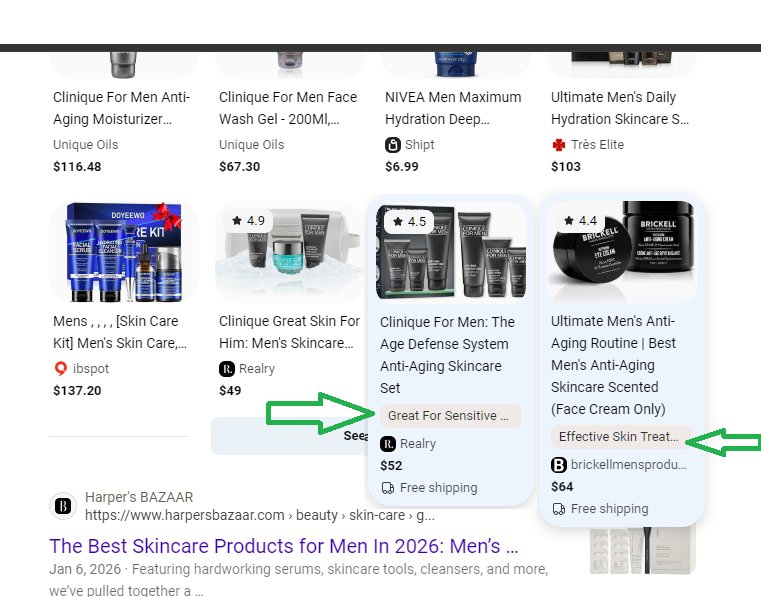
Microsoft Bing is testing a visual update that adds descriptive feature labels to product listings in search results. These snippets highlight specific benefits, such as 'lightweight' or 'effective,' helping users quickly gauge product value. For businesses, this represents a move toward AI-driven search that prioritizes user intent over simple keyword matching.
Key Highlights
- ✓Bing is testing feature labels like 'Great for...' and 'Effective' on product listings
- ✓This update signals a shift toward semantic intent over keyword matching
- ✓Businesses need to optimize Schema.org markup to qualify for these snippets
- ✓These labels act as citations for AI search engines like ChatGPT and Perplexity
What Happened: A New Visual Layer for Product Listings
Microsoft Bing is currently testing a visual update that adds descriptive feature labels to product listing cards. According to a report from Search Engine Roundtable, these labels appear directly on the search engine results pages (SERPs), aiming to provide more context than standard titles and prices. Instead of relying solely on product titles, prices, and standard snippets, these new labels act as descriptive badges. Early tests show labels such as "Great for...", "Effective", "Performs well", "Lightweight", and similar value propositions appearing alongside standard listing details. This suggests Bing is moving away from purely keyword-matching snippets toward displaying semantic meaning and user-centric benefits.
Key Details Behind the Test
This update goes beyond simple aesthetics, representing a deeper integration of how Bing processes structured data.
- Semantic Intent: The labels often mimic natural language queries. If a user searches for a tent, seeing a label like "Great for camping" immediately answers the user's intent without them needing to click through to a website.
- Visual Differentiation: The addition of these labels makes product snippets stand out in a crowded SERP, potentially increasing Click-Through Rates (CTR) by highlighting key selling points at a glance.
- Data Source: It is highly probable that these labels are being pulled from structured data markup, specifically Schema.org Product markup, or rich snippet data provided by e-commerce platforms.
What It Means For Your Business
For business owners and marketers, this test is a major signal. It confirms that search engines are prioritizing the "why" behind a product, not just the "what."
1. The Rise of Conversational Search
As search engines become more conversational, users are asking questions like, "What is the best running shoe for flat feet?" The labels tested by Bing—"Great for flat feet" or "Cushioned support"—are exactly the kind of answers users want to see. If Bing is showing these, it means the engine understands the specific attributes of your product.
2. The Importance of Structured Data
To appear in this new feature, your website needs to be speaking the same language as Bing. This means ensuring your Product Schema markup is comprehensive. You cannot simply stuff keywords into a meta description; you must explicitly define attributes like "features," "benefits," and "bestFor" in your code.
3. Competitive Advantage
If a competitor has a product labeled "Effective" and yours does not, you are losing a prime real estate opportunity on the SERP. Winning these "feature label spots" puts your business at the top of the information hierarchy, making it the default choice for both users and AI models looking for product citations.
Why This Matters For Your Business
This development is critical for VisibilityAI’s audience because it bridges the gap between traditional SEO and Generative Engine Optimization (GEO). When Bing displays a label like "Lightweight" next to a product, it is creating a high-confidence citation. AI tools like ChatGPT and Perplexity scrape these types of structured snippets to build their answers. If your business lacks these descriptive labels, you are invisible to the AI. This update forces businesses to move beyond basic listing management and focus on rich, descriptive content that answers the user's specific problems. It transforms a static listing into a dynamic answer, directly impacting discoverability in the next generation of search.
Frequently Asked Questions
Do I need to change my website to appear in these labels?
Yes. While this is a test, it indicates a strong preference for structured data. You should ensure your product pages use Schema.org Product markup to define features and benefits explicitly.
Will this update affect my Google rankings?
While this is a Bing test, successful structured data implementations often influence broader search trends. It also helps with Google's own rich snippets, potentially improving your click-through rate across all engines.
What types of businesses will benefit most?
E-commerce and local businesses selling physical goods will see the biggest impact. Any product with distinct attributes—like camping gear, electronics, or health supplements—can leverage these labels to stand out.
Is your business showing up in AI search?
Get your free AI visibility audit - see if ChatGPT, Perplexity, and Google AI actually recommend you.