
Home / News / How to Create Demand You Can Convert and Prove in the Age of AI Search
How to Create Demand You Can Convert and Prove in the Age of AI Search
Modern demand generation now demands more than funnel traffic; businesses must capture intent and prove attribution across fragmented AI‑driven search journeys. With tools like ChatGPT and Google AI Overviews delivering instant answers, marketers need to optimize for citations and track multi‑touch conversions accurately.
Key Highlights
- ✓Traditional click-driven lead generation is evolving toward multi-touch discovery across AI engines and conversational search.
- ✓Proving marketing ROI requires tracking high-intent interactions like inbound calls and offline conversions back to top-of-funnel touchpoints.
- ✓Businesses must adapt their content strategy to influence zero-click experiences in ChatGPT, Gemini, and Google AI Overviews.
- ✓Modern demand generation pairs authoritative brand citations with robust attribution modeling to ensure verifiable revenue growth.
Summary: Modern demand generation requires more than driving top‑of‑funnel traffic; businesses must convert intent and prove attribution across fragmented search journeys. In an era where AI platforms like ChatGPT and Google AI Overviews answer user questions instantly, creating verifiable demand requires optimizing for citation and tracking multi‑touch conversions accurately.
Content:
What Happened
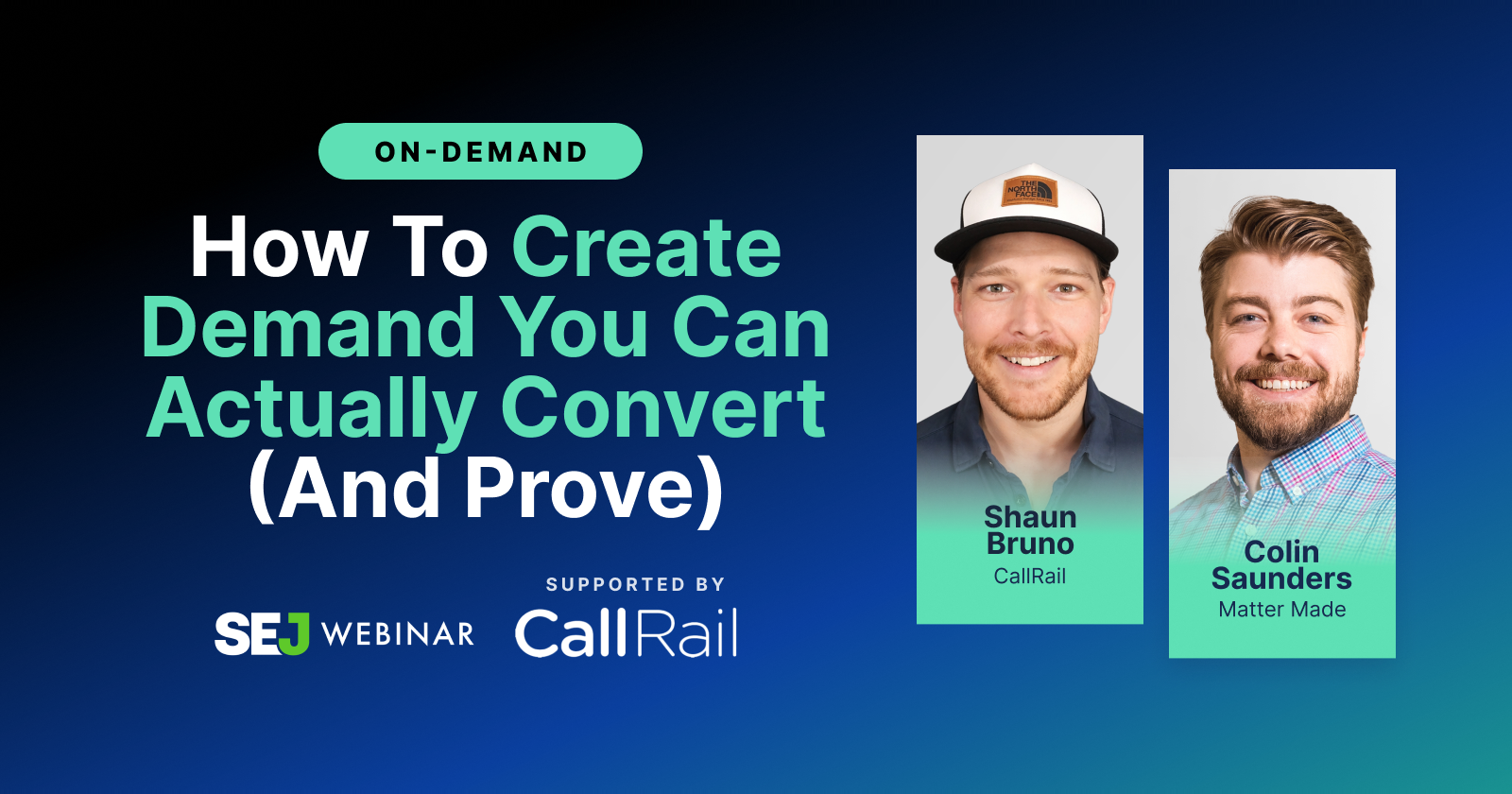
Search Engine Journal hosted a live presentation that zeroed in on a pressing dilemma for marketers and business owners: how to build demand that actually turns into paying customers and proves return on investment (ROI). As digital acquisition channels fragment and privacy rules tighten, traditional lead‑generation models are losing their edge.
Today’s buyer does not follow a straight‑line click‑and‑convert path. Prospects research products and services across conversational AI interfaces, zero‑click search snippets, and a web of multi‑channel touchpoints before they ever fill out a form or pick up the phone. The session underscored the urgent need for local and mid‑sized firms to rethink how they capture intent, nurture leads, and verify which marketing investments generate real revenue.
Key Details: Bridging Demand Generation and Conversion Proof
Creating demand is only half the battle; closing the attribution loop separates sustainable growth from wasted spend. Core takeaways include:
- Moving Beyond Vanity Metrics: Impressions, surface‑level clicks, and unassisted form fills no longer reveal the true cost of acquisition. Marketers should prioritize qualified pipeline velocity, phone calls, and direct buyer interactions.
- The Zero‑Click and AI Search Disruption: Consumers often consume brand content inside AI tools such as Google AI Overviews, Perplexity, and ChatGPT without ever visiting a website. Brands must ensure their narrative and value proposition appear directly within these AI‑generated answers.
- Connecting High‑Intent Conversions to Revenue: Whether a prospect converts via an inbound call, direct message, or online booking, businesses need to trace downstream revenue back to the original discovery touchpoint.
- Omnichannel Attribution Architecture: Relying solely on last‑click attribution blinds companies to early‑stage influence. Multi‑touch tracking gives credit to organic, local, and generative search that builds awareness.
What It Means For Your Business
For local businesses and growth‑focused marketers, the message is crystal clear: if you cannot track and attribute how prospective customers discover your brand, your marketing budget is operating in the dark.
1. Optimize for Generative Engine Optimization (GEO)
When a potential customer asks an AI assistant for recommendations—such as "Who is the top‑rated commercial HVAC contractor in Austin?"—your business must appear as the authoritative answer. GEO ensures that proprietary data, customer reviews, and service details are structured so large language models cite your business as a trusted solution.
2. Capture High‑Value, Offline and Inbound Conversions
Many of the highest‑converting leads still happen through direct human contact, including phone calls and personalized consultations. By integrating call‑tracking and lead‑attribution platforms, you can see whether an AI‑prompted discovery led straight to an inbound call and a closed contract.
3. Build Definitive Proof for Marketing Spend
Leadership teams demand clear ROI evidence. When strong brand presence across AI answers is paired with closed‑loop conversion analytics, you can definitively demonstrate which channels spark intent and which tactics reliably turn prospects into booked revenue.
Why This Matters For Your Business
The convergence of demand creation and conversion attribution marks the most significant strategic shift in modern digital marketing. When prospective clients turn to conversational search engines like Perplexity, Gemini, or ChatGPT, they often skip the traditional search engine results page entirely. If your brand is absent from those AI‑generated recommendations, you lose high‑intent demand before a single visitor lands on your site. Zero‑click AI responses also undermine legacy web analytics. An AI tool may recommend your service, prompting the customer to dial your phone number or walk into your store. Standard Google Analytics would label that activity as direct or unattributed traffic, masking the true source of the lead. Without an updated demand‑tracking approach, marketers risk cutting off the very channels that quietly drive their most valuable business. Mastering both Generative Engine Optimization and closed‑loop attribution gives small and local businesses a decisive edge. Your brand appears at the exact moment AI synthesizes recommendations, while you collect the hard data needed to justify spend and scale revenue predictably.
Frequently Asked Questions
How does AI search affect traditional demand generation?
AI search tools deliver synthesized recommendations instead of simple blue‑link lists, meaning brands must earn citations within AI answers to capture demand during the early research phase.
What is closed-loop attribution in local business marketing?
Closed‑loop attribution links the initial discovery channel—such as an AI Overview recommendation or paid ad—to final conversion events like phone calls, scheduled appointments, and closed sales.
How can businesses get cited by AI tools like ChatGPT and Perplexity?
Businesses improve AI citations by publishing structured, authoritative content, earning high‑reputation local reviews, keeping entity data consistent across directories, and directly answering specific consumer pain points.
Is your business showing up in AI search?
Get your free AI visibility audit - see if ChatGPT, Perplexity, and Google AI actually recommend you.