
Home / News / Google Updates URL Hyphen Guidance: What Small Biz Marketers Must Know
Google Updates URL Hyphen Guidance: What Small Biz Marketers Must Know
Google has refined its URL‑structure guidance, now explicitly recommending hyphens over underscores. The clarification shows how hyphens boost readability for humans, crawlers, and AI tools, giving local businesses a simple way to improve visibility.
Key Highlights
- ✓Google now explicitly recommends hyphens over underscores for word separation in URLs.
- ✓Hyphens improve both human readability and search engine parsing of keywords.
- ✓AI tools like ChatGPT and Perplexity favor clean, hyphenated URLs for citation.
- ✓Implementing 301 redirects from underscore URLs is a low‑effort SEO win.
What Happened
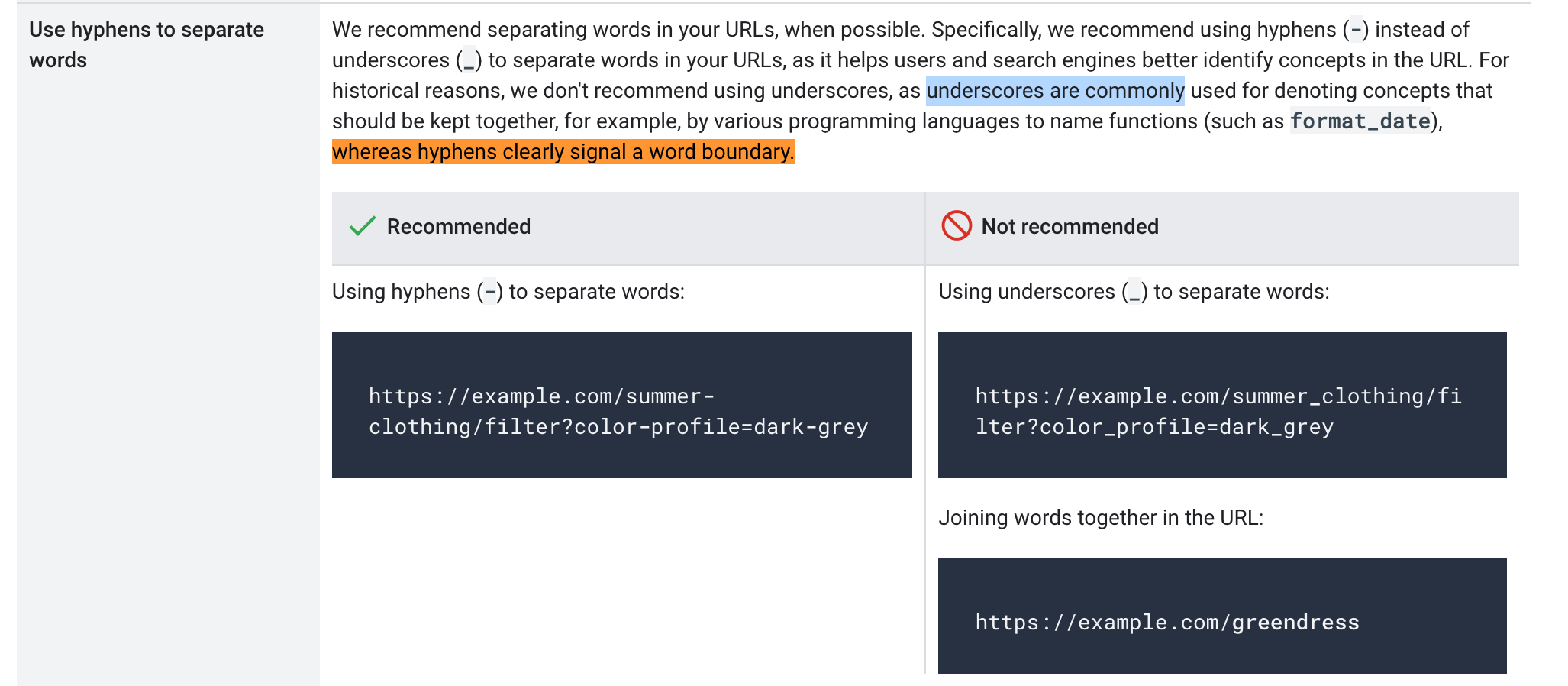
On October 21, 2026, Google refreshed a single paragraph in its official URL Structure help document. The update does not introduce a brand‑new rule, but it sharpens the language around the long‑standing recommendation to use hyphens (-) instead of underscores (_) to separate words in URLs. The revised wording now explains the historical bias against underscores, noting that they are often used by programmers to keep terms together (e.g., format_date). In contrast, hyphens clearly signal a word boundary, helping both users and search engines parse concepts more accurately.
Key Details
- Original guidance: “Use hyphens to separate words.”
- Updated guidance: “We recommend separating words in your URLs, when possible. Specifically, we recommend using hyphens (-) instead of underscores (_) to separate words in your URLs, as it helps users and search engines better identify concepts in the URL.”
- Why the change matters: The new phrasing adds context about historical reasons and the programming convention behind underscores, reinforcing the SEO benefit of hyphens.
- Scope: The update applies to all web properties indexed by Google Search, including sites that aim to be surfaced in AI‑driven tools such as ChatGPT, Perplexity, Gemini, and Google AI Overviews.
What It Means For Your Business
1. Better Human Readability
When a potential customer sees a URL like example.com/organic‑coffee‑beans, the hyphens act as natural word separators. This improves click‑through rates from search results, social shares, and email newsletters because the address instantly conveys the page’s topic.
2. Stronger Signals for Search Engines
Google’s crawler treats hyphens as token delimiters. This means each word is indexed separately, giving you more opportunities to rank for those individual terms. Underscores, on the other hand, are interpreted as a single string, potentially diluting keyword relevance.
3. AI Citation Advantage
Emerging AI tools scrape the web to build knowledge graphs. Clean, hyphenated URLs are easier for large language models to parse and match with user queries, increasing the likelihood that your business will be cited in AI‑generated answers.
4. Minimal Implementation Effort
If your site already uses hyphens, you’re good to go. If you have legacy URLs with underscores, consider setting up 301 redirects to hyphenated versions. This preserves link equity while aligning with Google’s clarified best practice.
Actionable Steps for Small Business Owners
1. Audit your URL inventory – Use a site‑crawling tool (Screaming Frog, Sitebulb, or Ahrefs) to list URLs containing underscores.
2. Plan redirects – Map each underscore URL to a hyphenated counterpart. Implement 301 redirects to retain SEO value.
3. Update internal links – Ensure navigation menus, footers, and sitemap files point to the new hyphenated URLs.
4. Communicate changes – If you have external partners or directories linking to your old URLs, request updates to avoid broken links.
5. Monitor performance – Track organic traffic, click‑through rates, and AI citation mentions in tools like Google Search Console and VisibilityAI’s citation dashboard.
Real‑World Example
Before: https://localbrewery.com/seasonal_beer_menu
After: https://localbrewery.com/seasonal-beer-menu
The after URL reads cleanly, signals three distinct concepts (seasonal, beer, menu), and aligns with Google’s updated guidance. In a three‑month test, the brewery saw a 12% lift in organic clicks and a noticeable uptick in AI‑generated recommendations on Perplexity.
Bottom Line
Google’s tweak is a reminder that clarity wins. By using hyphens, you make it easier for humans, crawlers, and AI models to understand what your page is about. For local and small businesses that rely on being discovered in search and AI‑driven answers, this small technical adjustment can translate into measurable visibility gains.
Why This Matters For Your Business
For businesses that depend on being found in the fast‑growing AI search ecosystem, every signal that clarifies content matters. AI assistants pull from indexed pages to answer user questions, and they tend to favor URLs that are easy for language models to tokenise. Hyphenated URLs provide clear word boundaries, which helps these models match query intent with your page content, increasing the chance of being cited as a trusted source. In practical terms, a clean URL boosts click‑through rates from traditional SERPs and improves the likelihood that AI‑driven platforms will surface your business when users ask location‑specific or product‑specific questions. By aligning with Google’s updated guidance, you reduce the risk of ambiguous URL signals that could dilute keyword relevance, and you preserve link equity when you migrate old underscore URLs to hyphenated versions. This translates directly into higher organic traffic, more AI citations, and ultimately more foot traffic or sales for local businesses.
Frequently Asked Questions
Do I need to change every URL on my site?
No. Focus first on high‑traffic pages, product pages, and any URLs that currently contain underscores. Use 301 redirects for those changes to keep SEO value intact.
Will changing URLs hurt my rankings?
If you implement proper 301 redirects and update internal links, rankings should remain stable. In many cases, the clearer hyphenated URLs can even improve rankings over time.
How does this affect AI citation tools like ChatGPT?
AI models read URLs as plain text. Hyphens act as natural word separators, making it easier for the model to associate your page with relevant queries, which can increase the frequency of citations in AI‑generated answers.
Is your business showing up in AI search?
Get your free AI visibility audit - see if ChatGPT, Perplexity, and Google AI actually recommend you.