
Home / News / Google Tests Sponsored Products in AI Mode – Impact for Small Biz
Google Tests Sponsored Products in AI Mode – Impact for Small Biz
Google is piloting a hybrid product list in its AI‑powered search mode that mixes paid placements with organic results. The experiment could shift how local retailers secure visibility, forcing a blend of SEO and advertising strategies.
Key Highlights
- ✓Google is testing a hybrid product list that mixes sponsored ads with organic results in AI Mode.
- ✓A label toggles between “Sponsored” and “All products,” indicating ongoing experimentation with disclosure.
- ✓Paid placements could appear directly within AI‑generated answers, shifting visibility dynamics.
- ✓Optimized product feeds and schema markup become even more critical for organic AI citations.
What Happened
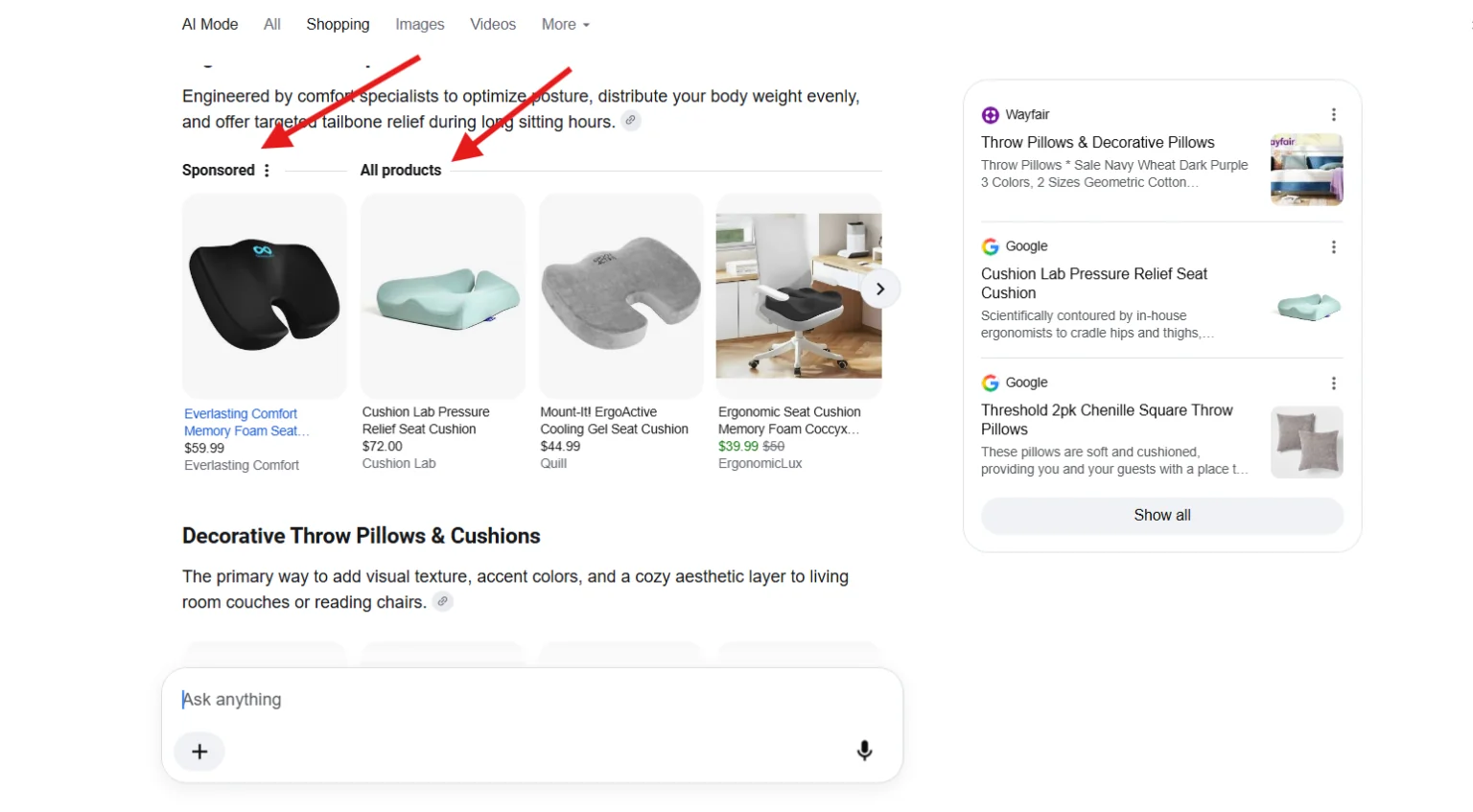
Google’s AI‑driven search experience, known as AI Mode, is currently being tested with a product carousel that interleaves paid listings (sponsored products) with the standard organic results. In the test screenshots, a thin line sits above the carousel and can read either “Sponsored” or “All products.” It’s not yet clear whether the entire block is treated as sponsored or only a portion of it, but the label makes it evident that advertisers can now pay to appear alongside the organic recommendations that AI Mode generates from the web.
The experiment is part of Google’s broader push to monetize its generative‑AI features while preserving a useful shopping experience. By embedding ad inventory directly inside the AI‑generated answer, Google hopes to attract more spend from e‑commerce merchants and brands that already use traditional Google Shopping ads.
Key Details
- Location of the blend – The mixed product list appears in the AI‑generated answer panel that shows up after a user asks a shopping‑related question, such as “best running shoes for flat feet.”
- Labeling – A small toggle can display either “Sponsored” or “All products,” suggesting Google is testing different disclosure methods.
- Target audience – The test seems aimed at high‑intent queries where product recommendations are expected, meaning retailers and local businesses that sell physical goods will feel the impact most.
- Potential rollout – Although the feature is still limited, a positive response from advertisers and users could see it expanded to all AI Mode queries.
What It Means For Your Business
1. **Visibility Shifts Toward Paid Real Estate**
If the blended format becomes permanent, paid product slots will sit side‑by‑side with organic AI answers. Relying solely on SEO may no longer guarantee a top‑of‑page spot for product queries. Small businesses that have depended on organic rankings to appear in AI‑generated snippets will likely need to allocate an advertising budget to stay front‑and‑center.
2. **New Opportunity to Appear in AI Answers**
The test also creates a new ad inventory that can place your products directly within the AI answer. For merchants already running Google Shopping campaigns, this offers an extra channel to capture high‑intent traffic without building a separate campaign.
3. **Importance of Structured Data & Product Feeds**
AI Mode still draws from product feeds, schema markup, and Merchant Center listings. Keeping your product data clean, up‑to‑date, and fully optimized will boost both organic AI placements and the relevance of any sponsored slot you win.
4. **Potential Impact on AI Citations**
VisibilityAI helps local businesses get cited by AI tools such as ChatGPT, Perplexity, and Google AI Overviews. When Google blends ads into AI answers, cited product information may increasingly come from paid sources. Being part of Google’s merchant ecosystem will therefore become a prerequisite for appearing in AI‑driven recommendations.
5. **Strategic Budget Allocation**
Because the ad slots will likely be limited and high‑value, budget efficiency will matter. Start with a modest bid, track impression share, and adjust based on conversion data. Pair this with strong organic SEO—especially local schema and reviews—to create a safety net if paid slots become competitive.
Action Steps for Small Business Owners
1. Audit your Merchant Center – Verify that product titles, descriptions, images, and availability are accurate.
2. Implement product schema on your website to help AI Mode surface your items organically.
3. Run a pilot Shopping campaign focused on the categories you expect to appear in AI Mode.
4. Watch the “Sponsored/All products” label in Search Console reports once the feature rolls out to gauge how many impressions come from the blended list.
5. Leverage VisibilityAI – Use our platform to monitor where AI tools are pulling your product data and to keep citations organic whenever possible.
What to Watch Next
Google has not announced a timeline for a full launch, but the test is already live for a subset of users. Keep tabs on industry newsletters, Google’s official statements, and the AI Mode UI itself. The sooner you adapt, the better positioned you’ll be to capture both paid and organic AI traffic.
---
Bottom line: The blending of sponsored products into Google’s AI Mode could reshape the search landscape for e‑commerce and local retailers. By polishing your product data, experimenting with Shopping ads, and staying on top of AI citation trends, you can turn this change into a competitive advantage rather than a threat.
Why It Matters
For businesses that rely on AI‑driven search tools to be discovered, the introduction of paid product slots inside AI Mode changes the playing field. Where a well‑optimized product page once earned a spot in an AI answer purely through organic relevance, the new blended format allows advertisers to purchase that prime real estate. This creates a dual‑track strategy: maintain strong SEO to earn organic AI citations and consider a targeted ad spend to secure a sponsored position when organic visibility falls short.
VisibilityAI helps local businesses get cited by AI platforms, but citation sources are increasingly drawn from Google’s own data pools. If Google’s AI starts favoring paid product data, being part of Google’s merchant ecosystem becomes a prerequisite for citation. Ensuring your product feed is accurate, your schema is correctly implemented, and you have a modest Shopping campaign in place protects your brand’s presence in both organic and paid AI contexts. This proactive approach safeguards discoverability, drives qualified traffic, and supports revenue growth in an AI‑first search world.
---
FAQs
[{"question":"Will I have to pay to appear in AI Mode product results?","answer":"Not necessarily. Google will likely continue to show organic product results alongside paid ones, but the test demonstrates that sponsored slots can appear within the same AI answer. To guarantee top placement, a paid campaign may become essential."},
{"question":"How can I tell if a product listing in AI Mode is sponsored?","answer":"Google is experimenting with a label that reads “Sponsored” above the blended product carousel. Look for that tag or any small disclosure indicating a paid placement."},
{"question":"What should I do right now to prepare?","answer":"Audit your Google Merchant Center feed, add product schema to your site, and consider a small‑scale Shopping ad test. Also, use VisibilityAI to monitor where AI tools are pulling your product data."}]
Why This Matters For Your Business
For businesses that depend on AI‑driven search to attract customers, the emergence of paid product slots inside Google’s AI Mode reshapes the visibility equation. Previously, a well‑optimized product page could earn a spot in an AI answer purely through organic relevance; now advertisers can buy that same prime placement, forcing marketers to blend SEO with targeted ad spend. VisibilityAI’s mission to secure organic AI citations becomes more challenging as Google’s AI may favor paid data. By ensuring your product feed is accurate, implementing robust schema, and running modest Shopping campaigns, you protect your brand’s presence across both organic and paid AI channels, turning a potential threat into a growth opportunity.
Frequently Asked Questions
Will I have to pay to appear in AI Mode product results?
Not necessarily. Google will likely continue to show organic product results alongside paid ones, but the test demonstrates that **sponsored slots can appear within the same AI answer**. To guarantee top placement, a paid campaign may become essential.
How can I tell if a product listing in AI Mode is sponsored?
Google is experimenting with a label that reads “Sponsored” above the blended product carousel. Look for that tag or any small disclosure indicating a paid placement.
What should I do right now to prepare?
Audit your Google Merchant Center feed, add product schema to your site, and consider a small‑scale Shopping ad test. Also, use VisibilityAI to monitor where AI tools are pulling your product data.
Is your business showing up in AI search?
Get your free AI visibility audit - see if ChatGPT, Perplexity, and Google AI actually recommend you.