
Home / News / Google Tests Direct Merchant Links in Product Listings – What It Means for Small Businesses
Google Tests Direct Merchant Links in Product Listings – What It Means for Small Businesses
Google is testing a new product‑listing format that bypasses the side‑panel overlay and sends shoppers directly to the merchant’s page. The change, currently limited to free listings in the U.S., could boost click‑through rates and give smaller retailers a clearer path to conversion.
Key Highlights
- ✓Google’s test sends product clicks directly to merchant sites, bypassing the side‑panel overlay.
- ✓Early data shows higher click‑through rates and potential conversion lifts for participating retailers.
- ✓Direct links increase the chance of AI assistants citing your exact product pages in answers.
- ✓Merchants must optimize landing pages, schema markup, and feed accuracy to capitalize on the change.
What Happened
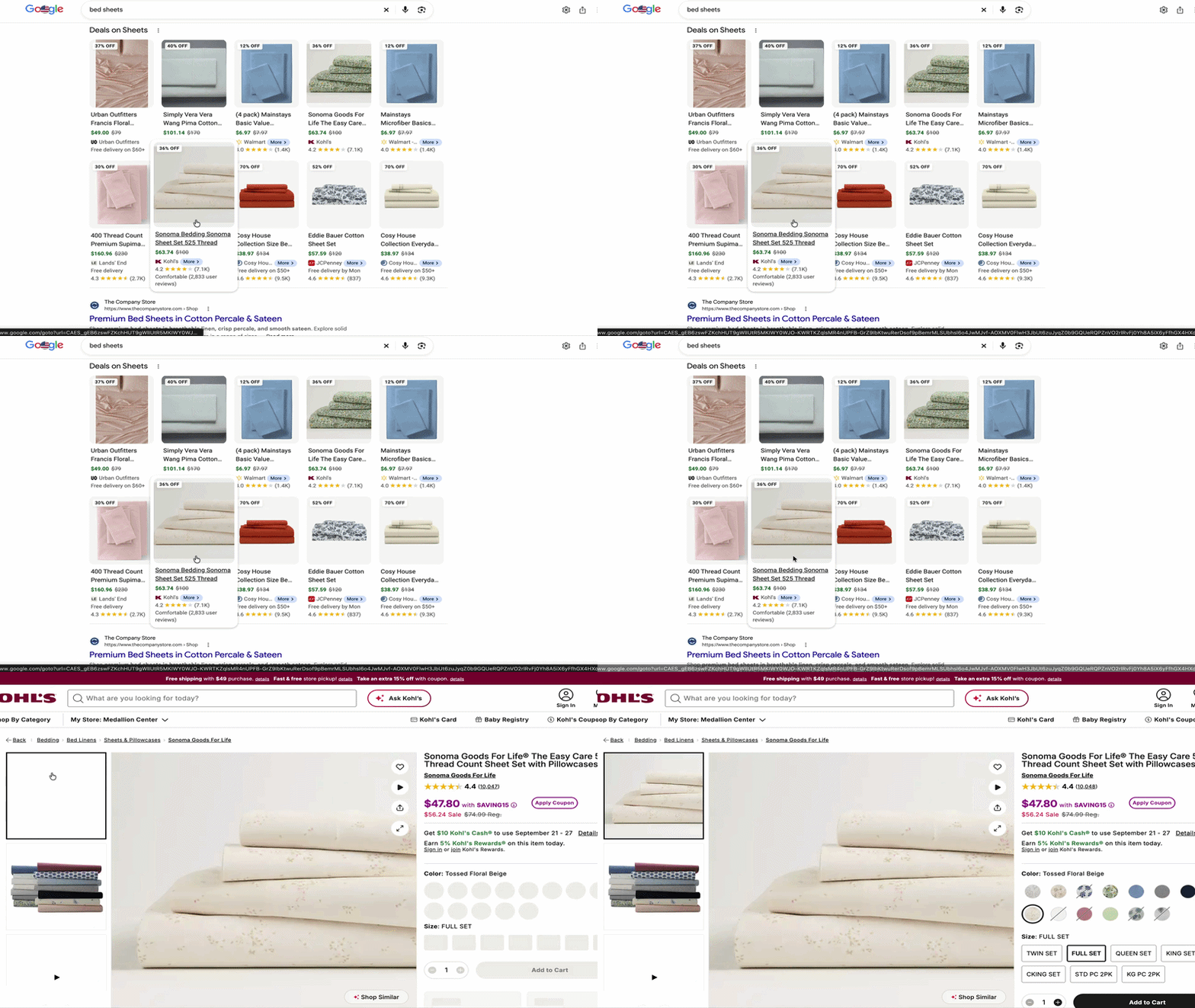
On September 16, 2026, Google announced a test that changes the way product listings behave in organic web search. Instead of opening the familiar side‑panel overlay that aggregates multiple retailers, the test sends the click directly to the merchant’s product page. The change mirrors a similar experiment rolled out in Google Shopping last June, but this time it’s being applied to core web search results.
The discovery was made by SEO analyst Brodie Clark, who shared a GIF on X (formerly Twitter) showing the new behavior. When users tap a free‑listing product grid result, they land straight on the retailer’s site, eliminating the extra step of the overlay that previously displayed price comparisons, reviews, and alternative sellers.
Key Details
- Scope of the test – The feature is currently limited to a subset of product listings in the United States, with plans to expand based on performance data.
- Eligibility – Only merchants with Google Merchant Center accounts that meet the standard product data quality thresholds are included. Free listings (non‑paid) are the primary focus.
- User experience – The click‑through rate (CTR) appears higher in early logs because users no longer have to dismiss the side panel. Google is still measuring bounce rates and conversion metrics to ensure the experience adds value.
- Impact on paid ads – Sponsored product ads (Google Shopping ads) remain unchanged; they already link directly to merchant sites. This test narrows the gap between paid and organic product results.
- Data collection – Google will monitor metrics such as time‑on‑page, conversion rate, and return‑on‑ad‑spend (ROAS) for participating merchants.
What It Means for Your Business
1. Faster Path to Purchase
When a shopper clicks a product listing and lands directly on your site, the friction of an extra overlay disappears. For local and niche retailers, that can translate into a measurable lift in conversions, especially for impulse buys where every second counts.
2. Greater Visibility in AI‑Powered Summaries
AI assistants like ChatGPT, Perplexity, and Google AI Overviews pull data from Google’s SERP snippets. Direct links make it easier for these tools to cite your exact product page, improving the chances that your inventory appears in AI‑generated answers and recommendations.
3. Need for Optimized Landing Pages
Because the side panel will no longer provide supplemental information (price, ratings, alternative sellers), the responsibility shifts to your own product page. Ensure that schema markup, clear pricing, high‑quality images, and mobile‑friendly design are in place to capture the visitor’s intent immediately.
4. Competitive Advantage for Small Merchants
Large e‑commerce platforms already dominate the side‑panel experience with multiple offers. Direct linking levels the playing field, giving smaller merchants a chance to win the click‑through when they are the sole listed retailer for a specific SKU.
5. Potential SEO Implications
Google’s algorithm may start weighting the relevance and quality of the landing page more heavily for product listings. Consistent product titles, accurate GTINs/EANs, and up‑to‑date inventory signals will become even more critical.
Actionable Steps for VisibilityAI Users
1. Audit your Merchant Center feed – Verify that all required attributes (title, description, price, availability, GTIN) are accurate and follow Google’s guidelines.
2. Implement structured data – Use Product schema (@type: Product) with offers, review, and aggregateRating fields to help Google understand your page.
3. Optimize page speed – Aim for a Core Web Vitals score of “Good” (LCP < 2.5 s, CLS < 0.1) to reduce bounce rates from direct clicks.
4. Create clear, conversion‑focused product pages – Include prominent “Add to Cart” or “Buy Now” buttons, concise benefit statements, and trust signals (reviews, secure checkout badges).
5. Monitor performance – Use Google Search Console and Merchant Center reports to track CTR, impressions, and conversion lift after the test rolls out.
6. Leverage AI citation tools – Services like VisibilityAI can help ensure that your product pages are referenced in AI‑driven knowledge panels and chat responses, amplifying the benefit of direct links.
Key Takeaways
- Google’s test removes the side‑panel overlay for free‑listing product results, sending users straight to the merchant site.
- The change can boost CTR and conversion rates, especially for small and local retailers.
- Optimized product pages and robust schema markup become essential to capture the visitor’s intent.
- Direct links improve the likelihood of AI assistants citing your exact product URLs, enhancing discoverability in emerging AI search experiences.
Bottom Line
If you’re a small business looking to stand out in an increasingly AI‑driven search landscape, this Google test is a signal that the search engine values direct, frictionless pathways to purchase. Preparing your product pages now will position you to reap the benefits as the test expands.
---
Stay ahead of the curve – Keep an eye on Google’s announcements and continuously refine your product data. VisibilityAI can help you monitor AI citations and ensure your listings stay accurate across all platforms.
---
For more insights on how AI tools like ChatGPT and Gemini pull data from Google’s SERPs, and how to get your business cited, subscribe to VisibilityAI’s newsletter.
Why This Matters For Your Business
The shift to direct merchant links aligns with the broader trend of AI‑driven search experiences that prioritize concise, authoritative answers. When AI tools such as ChatGPT or Google AI Overviews generate a response about a product, they often pull the most trusted URL from Google’s index. A direct link from a product listing positions your page as that trusted source, increasing the chance that AI will cite you instead of a competitor. For local and small businesses, the impact is especially significant. Historically, the side‑panel gave larger retailers an advantage by displaying multiple offers and reviews, which diluted the visibility of smaller merchants. By removing that overlay, Google hands the click directly to the merchant who appears in the result. This not only shortens the purchase funnel but also boosts brand exposure in AI‑generated snippets, voice assistants, and chat interfaces that increasingly rely on Google’s SERP data. In short, the test levels the playing field and offers a clear pathway for small businesses to be discovered, visited, and cited by the next generation of search technologies.
Frequently Asked Questions
Will my product still appear in the side‑panel overlay?
During the test, eligible free‑listing products will open directly on the merchant site. The side‑panel will still appear for paid Shopping ads and for products not included in the test.
Do I need to change my Google Merchant Center feed?
No major changes are required, but ensure all required attributes are accurate and up‑to‑date. High‑quality images, correct GTINs, and proper availability status are more important than ever.
How can I track the impact of this change?
Use Google Search Console and Merchant Center performance reports to monitor impressions, click‑through rate, and conversion metrics. Compare before‑and‑after data to gauge lift.
Is your business showing up in AI search?
Get your free AI visibility audit - see if ChatGPT, Perplexity, and Google AI actually recommend you.