
Home / News / Google Spam Update September 2026: Impact on Local Businesses
Google Spam Update September 2026: Impact on Local Businesses
Google’s September 2026 Spam Update triggered dramatic rank drops over the weekend, forcing local businesses to act quickly. The two‑week rollout means changes could still ripple across the market, so owners must audit, clean links, refresh content, and verify citations to stay visible in both Google and AI‑powered search.
Key Highlights
- ✓Weekend spike: major rank drops for many sites.
- ✓First stage focused on keyword stuffing, cloaking, doorway pages.
- ✓Local businesses with thin content most at risk.
- ✓Two‑week rollout means continued changes are coming.
What Happened
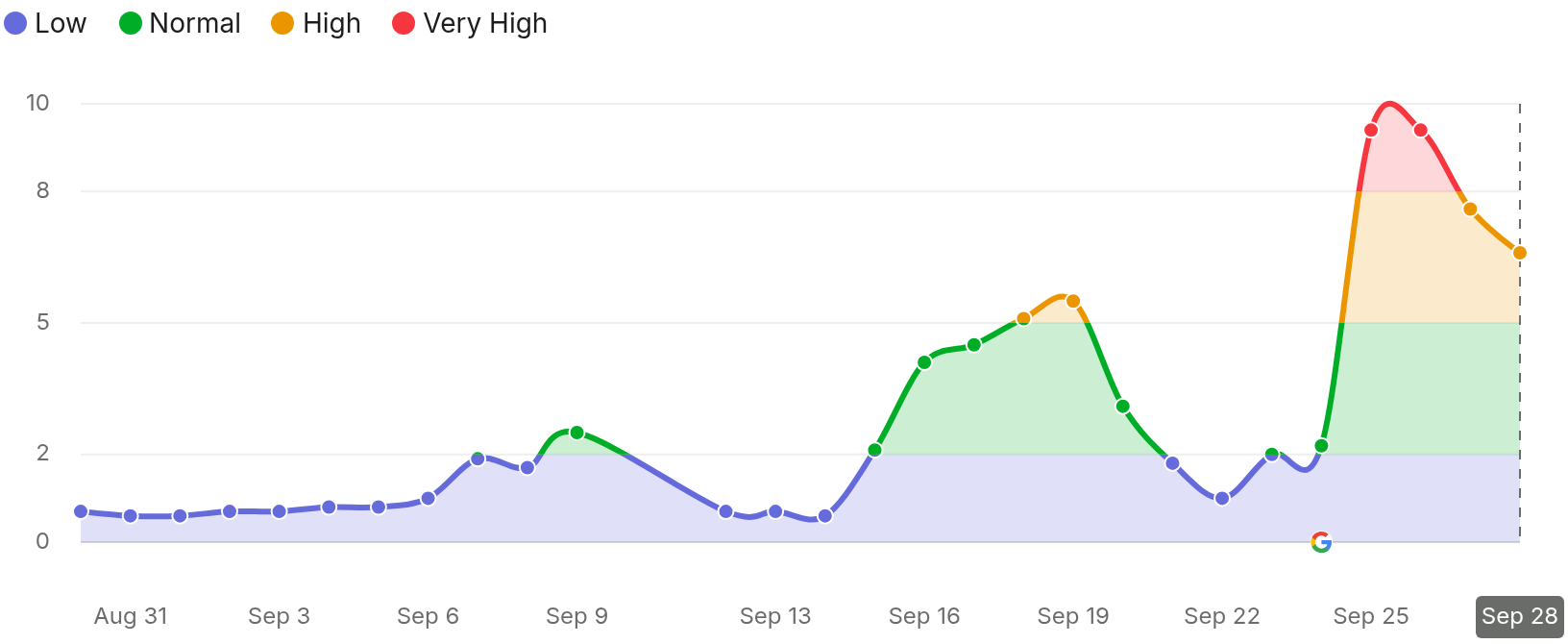
On Friday, September 25th, Google released the first phase of the September 2026 Spam Update, which quickly spread across the web.
The update targeted a spectrum of spammy tactics—keyword stuffing, cloaking, doorway pages, and other black‑hat methods that have historically pushed low‑quality sites up the SERPs.
The impact peaked over the weekend: many sites saw sudden rank drops or even removal from search results. By Sunday, September 27th, the initial wave had largely subsided, but Google has confirmed that the two‑week rollout is still active, so further changes are likely.
Key Details
- Timing: First stage launched Friday 25th, peak impact Saturday 26th, tapering Sunday 27th.
- Scope: The update focuses on spam signals across all industries, but local businesses with thin content or questionable backlinks are especially vulnerable.
- Signal Types:
- Keyword stuffing – over‑used or irrelevant keywords in titles, meta descriptions, or content.
- Cloaking – serving different content to users versus search engines.
- Doorway pages – pages designed to funnel users to a single destination without adding value.
- Unnatural link patterns – bulk link exchanges or low‑quality link farms.
- Detection: Google’s machine‑learning models have been fine‑tuned to flag these patterns, and the update is part of a broader effort to keep the web clean and user‑friendly.
- Impact on Rankings: Many small and local sites saw drops ranging from 10‑30% in keyword positions, while some were temporarily removed from the first page entirely.
What It Means For Your Business
1. Audit Your Site Now
If you haven’t already, run a quick audit with tools like Google Search Console, Screaming Frog, or VisibilityAI’s audit suite. Look for:
- Over‑optimized meta tags
- Duplicate or thin content
- Suspicious backlink profiles
- Cloaking or hidden text
2. Clean Up Backlinks
Disavow any link exchanges that look suspicious or are coming from low‑quality domains. Reach out to webmasters to remove any spammy links pointing to your site.
3. Refresh Content
Add fresh, high‑value content that addresses local search intent. For example, a “How to Choose the Right Plumbing Service in [City]” guide can help you rank for long‑tail queries and satisfy Google’s quality signals.
4. Focus on Citations
Google still rewards accurate, consistent citations. Verify that your business information (Name, Address, Phone) is correct across all directories and that your NAP data matches the content on your site.
5. Prepare for AI Search
AI tools such as ChatGPT, Perplexity, Gemini, and Google AI rely heavily on the same quality signals Google uses for SERPs. If your site is penalized for spam, AI assistants may refuse to cite you or provide lower rankings in answer cards. By ensuring your site is clean and authoritative, you increase the likelihood that AI tools will recommend you to users.
6. Monitor Progress
Google will continue rolling out the update over the next two weeks. Keep an eye on Search Console alerts and traffic fluctuations. A sudden drop can be a red flag that you need to act quickly.
Bottom Line
The September 2026 Spam Update is a reminder that quality still rules the day. Small and local businesses that prioritize clean, user‑centric content and maintain a healthy backlink profile will emerge stronger. Those who ignore the signals risk losing visibility not just in Google, but also in the emerging AI‑driven search landscape.
Why It Matters
For businesses that rely on discovery by AI assistants—ChatGPT, Perplexity, Gemini, and Google AI—clean signals are essential. These tools pull from the same quality data that Google uses to rank pages. If a site is flagged for spam, AI assistants may refuse to cite it or display it at all, cutting off a growing stream of traffic.
Moreover, citations are the backbone of local visibility. A penalized site will not only lose organic traffic but also lose credibility in local directories and map listings, which AI tools use to generate answer snippets. Maintaining accurate, authoritative citations keeps your business in the AI’s recommendation engine.
FAQs
1. What is the September 2026 Spam Update?
It’s Google’s latest effort to eliminate low‑quality, spammy sites from the search results by targeting tactics like keyword stuffing, cloaking, and doorway pages.
2. How can I tell if my site has been affected?
Check Google Search Console for manual actions or performance alerts, monitor traffic for sudden drops, and run a content audit to spot spam signals.
3. Will the update affect my local rankings?
Yes—especially if you have thin content or a weak backlink profile. Clean up your site, keep citations accurate, and you’ll likely recover and even improve your local rankings.
Why This Matters For Your Business
Businesses that depend on AI assistants for traffic—whether ChatGPT, Perplexity, Gemini, or Google AI—must understand that these platforms use the same quality criteria Google applies to its search rankings. A spam flag can cause an assistant to omit your pages from answer cards or even from its knowledge graph, effectively silencing a significant portion of potential visitors. Maintaining a clean, authoritative site therefore directly influences both organic and AI‑driven discovery. Local visibility hinges on consistent, accurate citations. AI tools pull data from directories and map listings to generate concise answers. If your NAP data is incorrect or your site is penalized, the assistant will either present a lower‑ranked result or none at all. By ensuring your citations are up‑to‑date, you not only safeguard your presence in traditional SERPs but also position your business favorably in AI‑powered search.
Frequently Asked Questions
What is the September 2026 Spam Update?
It’s Google’s latest effort to eliminate low‑quality, spammy sites from the search results by targeting tactics like keyword stuffing, cloaking, and doorway pages.
How can I tell if my site has been affected?
Check Google Search Console for manual actions or performance alerts, monitor traffic for sudden drops, and run a content audit to spot spam signals.
Will the update affect my local rankings?
Yes—especially if you have thin content or a weak backlink profile. Clean up your site, keep citations accurate, and you’ll likely recover and even improve your local rankings.
Is your business showing up in AI search?
Get your free AI visibility audit - see if ChatGPT, Perplexity, and Google AI actually recommend you.