
Home / News / Google May Withhold AI Click Data in Search Console: What It Means
Google May Withhold AI Click Data in Search Console: What It Means
Google Search Advocate Gary Illyes has indicated that upcoming AI reporting features in Google Search Console may omit granular click and query metrics. While site owners have repeatedly asked for transparent attribution in AI Overviews, Google seems hesitant to share traditional click logs. As direct reporting remains elusive, modern Generative Engine Optimization (GEO) tracking is becoming indispensable for small business discovery.
Key Highlights
- ✓Google's Gary Illyes implied that click and query data may be excluded from Search Console AI reporting.
- ✓Click and query metrics remain the most-requested data set by website owners and marketers.
- ✓Google's team reportedly prefers releasing 'data that makes sense,' which may exclude traditional click attribution.
- ✓Businesses must pivot to tracking brand citations, direct search lift, and Generative Engine Optimization (GEO) metrics.
Small business owners, digital marketers, and SEOs have spent months waiting for Google to pull back the curtain on AI Overviews. As generative responses occupy prime real estate in search results, operators want clear answers to basic performance questions: Which queries prompt AI answers, and how many clicks do those citations actually produce?
A recent comment from Google Search Advocate Gary Illyes, however, suggests those long-awaited details may never surface.
What Happened
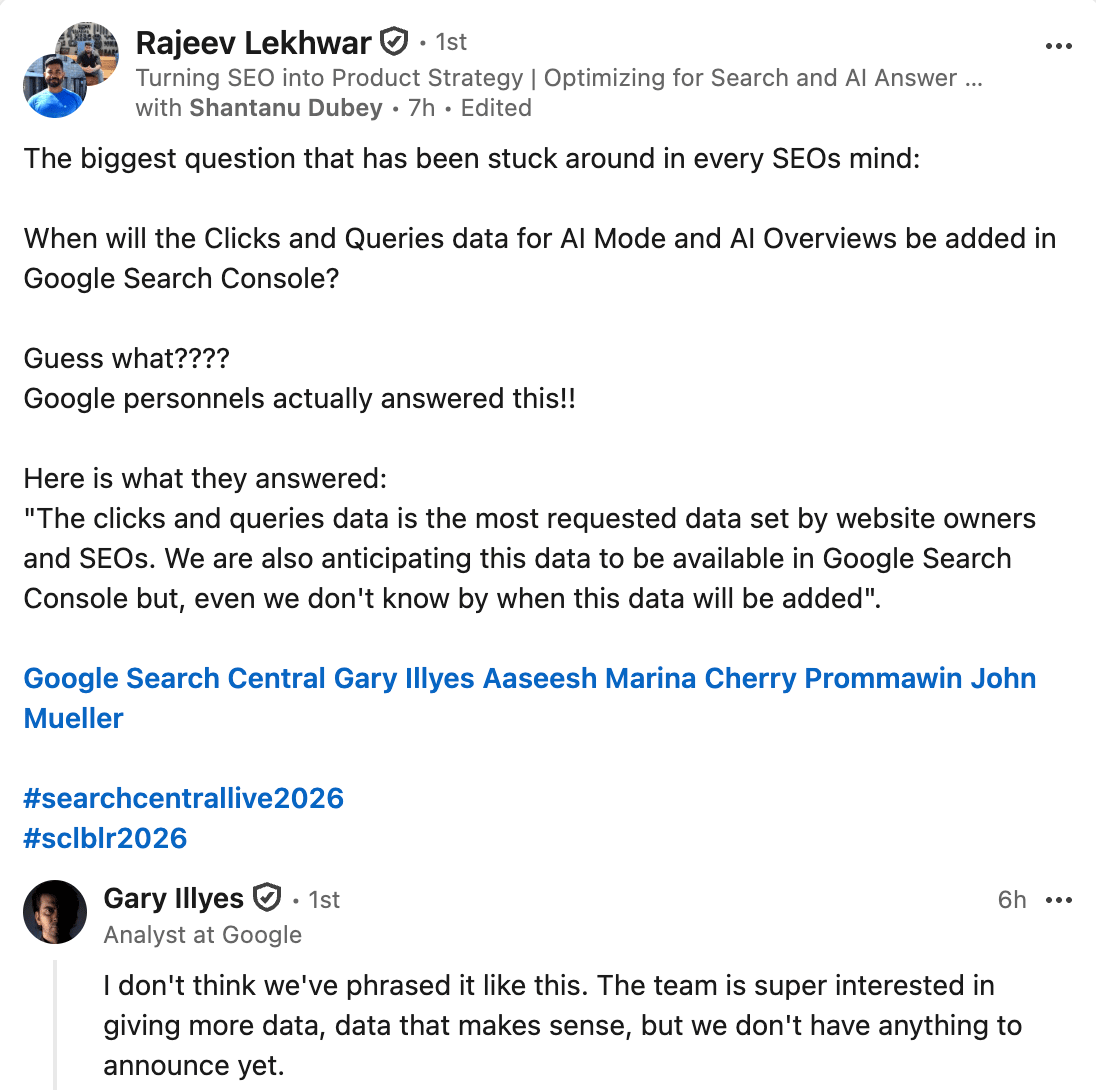
The conversation reignited after an attendee at a Google Search Central Live event highlighted that query and click metrics remain the most requested additions for upcoming Google Search Console (GSC) reports.
Weighing in on LinkedIn, Illyes pushed back on those expectations. Instead of confirming that site-level click logs or specific query data are in development, he noted that the Search Console engineering team focuses on surfacing "data that makes sense." Noticeably absent from his response was any confirmation that detailed click or query breakdowns meet that standard.
His remarks suggest Google may deliberately omit granular click data for AI features, leaving businesses without the clear attribution paths they have relied on for decades.
Key Details
- The Data Black Box Deepens: Since introducing AI Overviews, Google has blended generative impressions and clicks directly into general Search Console data. That setup prevents site operators from distinguishing AI-driven traffic from standard organic search results.
- "Data That Makes Sense": Internal priorities at Google rarely match the practical needs of search marketers. The search giant has historically curbed data sharing to protect user privacy, prevent automated reverse-engineering, and manage tensions with external publishers.
- The Zero-Click Dilemma: Because AI Overviews summarize information directly on the results page, users frequently find answers without visiting external sites. Publishing low click-through rates could spark friction with content creators and small brands losing direct referral traffic.
- A Broad Industry Shift: Closed reporting is not unique to Google. Competing generative platforms—including Perplexity, ChatGPT Search, and Gemini—also restrict access to granular site-level query logs, reinforcing zero-click summaries as the prevailing search standard.
What It Means For Your Business
The strategic lesson for small and local companies is straightforward: Google Search Console can no longer serve as your sole source of truth for search discovery.
If Google withholds AI click metrics, conventional keyword tracking will present an increasingly partial view of your reach. To adapt, consider shifting your workflow around these priorities:
- Shift Focus to Citation Share: Generative engines like Google AI Overviews, ChatGPT, and Perplexity synthesize answers using trusted web sources. Earning citations as the premier provider in your market creates lasting brand equity—even when prospective customers do not click an outbound link immediately.
- Monitor Brand Search Velocity: Customers frequently spot a business name or product recommendation inside an AI summary and open a fresh tab to search for it directly. Watch for upticks in direct traffic and branded queries as real-world indicators of AI visibility.
- Optimize for Answer Engine Optimization (AEO): Format your online assets so machine crawlers can interpret them without friction. Maintain updated business directories, deploy clear schema markup, publish targeted FAQ resources, and cultivate authentic customer reviews across external review sites.
- Diversify Beyond Google Ecosystems: Prospective buyers now discover businesses across an assortment of conversational engines. If Google restricts visibility data, focus on channels that offer clear engagement signals and track referral patterns across every major AI platform.
Why This Matters For Your Business
AI search platforms are quickly stepping into the role of automated concierges, deciding which businesses get highlighted and which stay buried. When prospective buyers prompt Google, ChatGPT, or Perplexity for a local specialist, these engines generate tailor-made summaries on the spot. Without detailed query and click reporting in Search Console, owners cannot trace incoming site visits back to specific generative summaries through conventional analytics. That shift demands a rethinking of digital performance. Rather than gauging success strictly through link clicks, brands must concentrate on broad ecosystem presence, high citation volume, and clear topical authority. Earning an AI platform's trust generates customer confidence, direct searches, and phone inquiries—whether Google logs the referral or not.
Frequently Asked Questions
Will Google Search Console ever separate AI Overview traffic from traditional search?
Google has committed to dedicated AI reporting controls, but Gary Illyes's recent comments suggest the upcoming reports will focus on broader trend metrics rather than granular query and click breakdowns.
Why would Google avoid providing click data for AI Overviews?
Google routinely limits reporting to protect user privacy, discourage algorithmic manipulation, and avoid highlighting how often AI answers resolve queries without sending traffic to external websites.
How can I measure my business's visibility in AI search without click data?
You can gauge exposure by tracking brand citation frequency across generative engines, evaluating changes in direct and branded search volume, monitoring review growth, and leveraging specialized GEO tracking tools.
Is your business showing up in AI search?
Get your free AI visibility audit - see if ChatGPT, Perplexity, and Google AI actually recommend you.