
Home / News / Google Expands Control Over Data Shared With Search – Guide for Small Biz
Google Expands Control Over Data Shared With Search – Guide for Small Biz
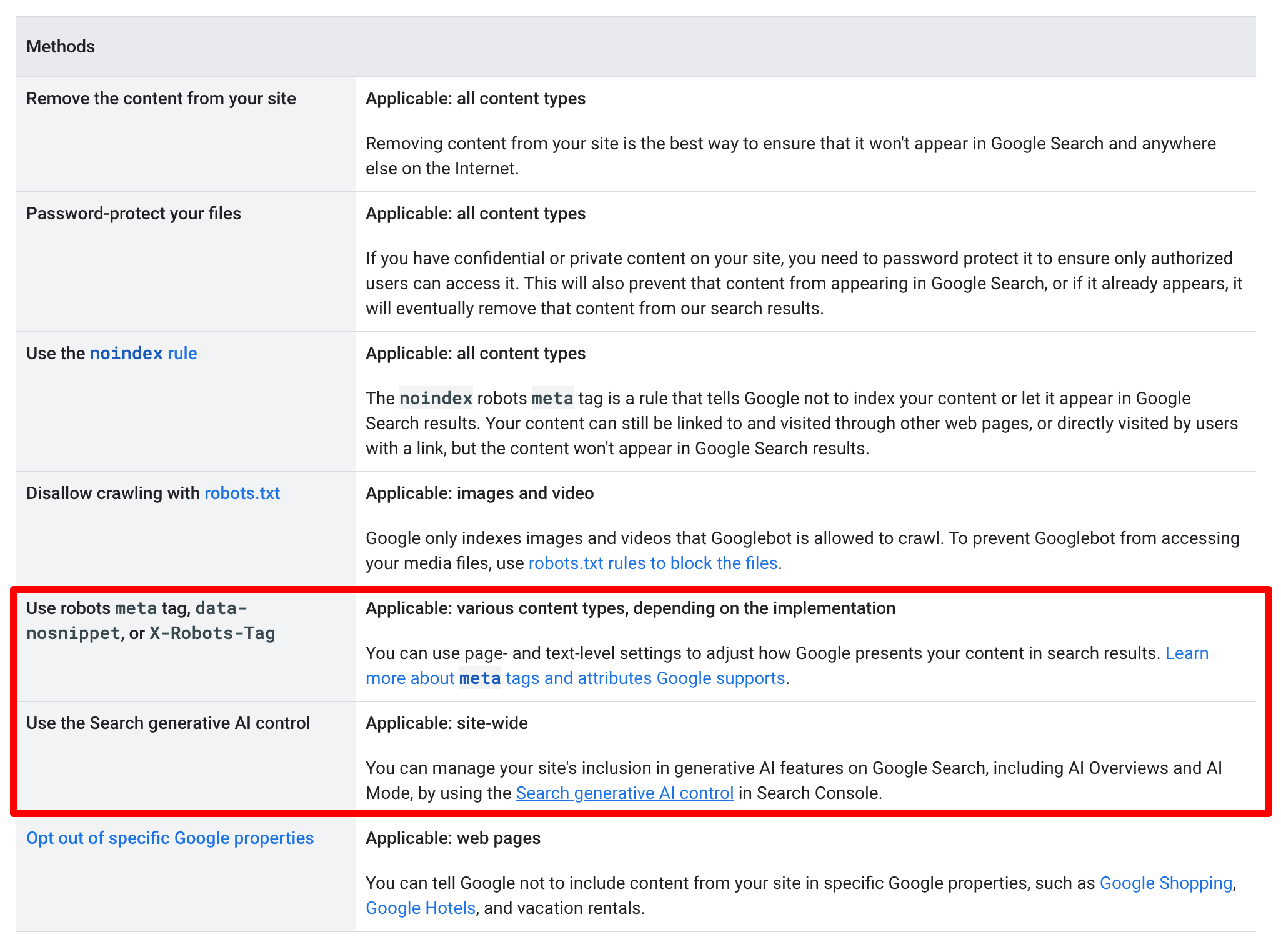
Google refreshed its “Control what you share with Google Search” guide, now listing the robots meta tag, data‑nosnippet, X‑Robots‑Tag and a new Search Generative AI control as ways to keep content out of search snippets and AI‑generated answers. The update gives small and local businesses finer control over what information AI‑driven results display, without taking entire pages offline.
Key Highlights
- ✓Google adds robots meta tag, data‑nosnippet, X‑Robots‑Tag to official guidance
- ✓New Search Generative AI control lets you opt‑out of AI training
- ✓Clarifies that controls apply specifically to Google Search
- ✓Provides a clearer roadmap for managing AI‑generated snippets
What Happened
On October 21, 2026, Google rolled out a modest yet noteworthy update to its Control what you share with Google Search help page. The revised documentation now spells out the existing options—the robots meta tag, data‑nosnippet, the X‑Robots‑Tag HTTP header, and the newer Search Generative AI control—as mechanisms webmasters can use to keep specific page elements out of search results and AI‑generated answers.
The change is primarily editorial, but it signals that Google wants site owners to lean on the tools they already have to shape how their content is indexed, displayed in snippets, and fed into generative‑AI features such as the AI‑powered search overview.
Key Details
- Robots meta tag – Insert
<meta name="robots" content="noindex, nofollow">to prevent a page from being indexed at all. - data‑nosnippet – Apply
data-nosnippetto individual HTML elements to keep those fragments from appearing in featured snippets or AI answers. - X‑Robots‑Tag – Use the HTTP header
X‑Robots‑Tag: noindex, noarchivefor non‑HTML assets (PDFs, images, etc.). - Search Generative AI control – A new toggle in Search Console that lets you opt‑out of having a page’s content used to train or power Google’s generative‑AI responses.
- Minor clarifications – The page now makes clear that the guidance applies to Google Search only, not to other Google products.
These updates arrived alongside a refresh of Google’s URL‑structure best‑practice guide, which again advises using hyphens instead of underscores and keeping URLs concise.
What It Means For Your Business
For local and small businesses, the biggest takeaway is greater precision over what information appears in AI‑driven search experiences. When a potential customer asks a ChatGPT‑style query, Google may pull from your site to craft a concise answer. If you have pricing tables, proprietary promotions, or outdated hours you don’t want surfaced, the new controls let you hide those bits without taking the entire page offline.
Benefits
- Protect brand reputation – Stop outdated or inaccurate snippets from showing up in AI answers.
- Control competitive intel – Keep strategic details such as service pricing tiers out of the AI’s knowledge base.
- Improve citation accuracy – By signalling which content is “canonical,” you help AI tools cite the most relevant, up‑to‑date page, boosting local SEO.
- Stay compliant – Industries with privacy rules (legal, medical, etc.) can use these tags to meet regulatory expectations.
Action Steps for Marketers
1. Audit your site – Run a quick crawl (Screaming Frog, Sitebulb, or similar) to locate pages that contain sensitive or outdated information.
2. Apply granular tags – Add data‑nosnippet to HTML blocks you want hidden (e.g., “Special Offer – expires soon”).
3. Use X‑Robots‑Tag for non‑HTML assets – Exclude PDFs with pricing sheets without editing the files themselves.
4. Enable the Generative AI opt‑out – In Google Search Console, go to Settings → Generative AI and toggle off pages you don’t want used for AI training.
5. Monitor performance – After implementing changes, watch the Performance report for shifts in impressions or click‑through rates. A dip may indicate over‑blocking; adjust as needed.
Bottom Line
Google isn’t unveiling brand‑new technology—just re‑emphasizing the tools already at your disposal and adding a clear path to manage generative‑AI exposure. For businesses that rely on being discovered through AI‑enhanced search results, this is an opportunity to fine‑tune the narrative that AI presents to prospective customers.
By proactively using robots meta tags, data‑nosnippet, X‑Robots‑Tag, and the Search Generative AI control, you can keep your most valuable content front‑and‑center while keeping the rest out of the AI spotlight. The result? More accurate citations, better local visibility, and a tighter grip on your digital brand.
Why It Matters
For small businesses, AI‑driven search means a single line from a webpage can surface as a concise answer in a chatbot‑style result. If that line is outdated or reveals pricing you’d rather keep private, it can damage credibility or hand competitors an advantage. Leveraging the newly highlighted controls lets owners dictate exactly which pieces of content are safe for AI consumption, ensuring the information shown to potential customers is both accurate and aligned with the brand.
AI citation engines such as ChatGPT, Perplexity, and Gemini pull from Google’s index to source their answers. When you signal the most authoritative page with the proper tags, those AI tools are more likely to cite the right page, strengthening local SEO signals and driving foot‑traffic or calls. In an environment where visibility is increasingly mediated by AI, managing the data pipeline is as critical as traditional keyword optimization.
Regulatory compliance adds another layer of urgency. Industries that handle sensitive data can now use these tags to keep personal or confidential information out of AI‑generated responses, reducing legal risk while still maintaining a strong presence in standard search results.
Why This Matters For Your Business
For small businesses, AI‑driven search means a single line from a webpage can surface as a concise answer in a chatbot‑style result. If that line is outdated or reveals pricing you’d rather keep private, it can damage credibility or hand competitors an advantage. Leveraging the newly highlighted controls lets owners dictate exactly which pieces of content are safe for AI consumption, ensuring the information shown to potential customers is both accurate and aligned with the brand. AI citation engines such as ChatGPT, Perplexity, and Gemini pull from Google’s index to source their answers. When you signal the most authoritative page with the proper tags, those AI tools are more likely to cite the right page, strengthening local SEO signals and driving foot‑traffic or calls. In an environment where visibility is increasingly mediated by AI, managing the data pipeline is as critical as traditional keyword optimization. Regulatory compliance adds another layer of urgency. Industries that handle sensitive data can now use these tags to keep personal or confidential information out of AI‑generated responses, reducing legal risk while still maintaining a strong presence in standard search results.
Frequently Asked Questions
Do I need to edit every page to use the new AI control?
No. The Generative AI opt‑out can be applied at the page level directly in Search Console, so you can select specific URLs without touching the HTML.
Will using `data-nosnippet` hurt my overall rankings?
Only the marked‑up sections are hidden from snippets and AI answers. The rest of the page remains indexable, so rankings should stay unchanged.
How does X‑Robots‑Tag differ from the robots meta tag?
X‑Robots‑Tag is an HTTP header that works for non‑HTML files (PDFs, images) and can be set server‑side, whereas the robots meta tag is placed inside the HTML of a page.
Is your business showing up in AI search?
Get your free AI visibility audit - see if ChatGPT, Perplexity, and Google AI actually recommend you.