
Home / News / Google Downplays Fresh Index Reporting – What Small Biz Must Know
Google Downplays Fresh Index Reporting – What Small Biz Must Know
Google’s John Mueller told SEOs to stop obsessing over the freshness of the Search Console index report. For local businesses relying on AI‑driven discovery, the takeaway is clear: focus on real‑world signals, not dashboard latency.
Key Highlights
- ✓Google says fresh index reports aren't a ranking factor.
- ✓Performance data updates faster than the Index Coverage report.
- ✓Focus on local citations, reviews, and structured data for AI visibility.
- ✓Allocate SEO resources to content and schema, not dashboard monitoring.
What Happened
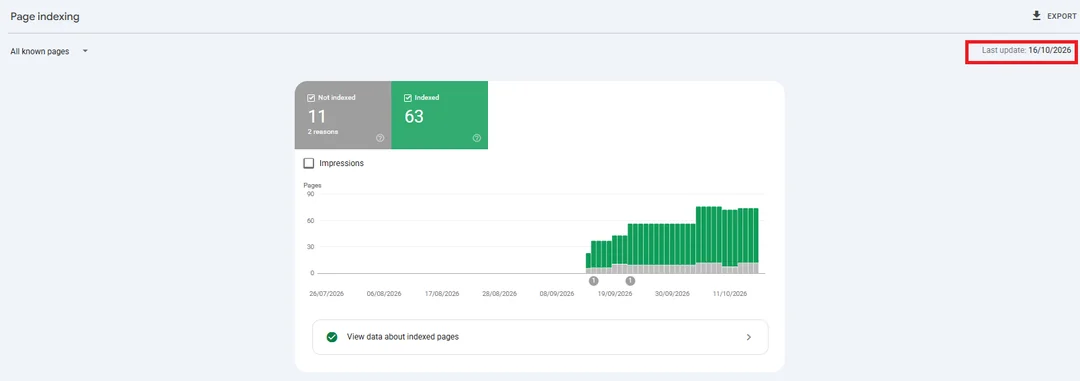
On October 27, 2026, Google’s John Mueller responded to a question on Reddit about the recent slowdown in the Search Console Indexing report. He down‑played the importance of the report’s freshness, saying:
> "It can feel like it’s important to focus on it, but honestly, save your energy. Indexing doesn’t change quickly, and when it does, you see that reflected in the performance reports first."
Mueller added that Google does not plan to comment on data freshness for every report because the system is complex and the dates shown are sufficient. In short, the freshness of the index report is not a ranking factor and should not be a primary focus for webmasters.
Key Details
- Report latency is normal – Google’s indexing pipelines can take hours or even days to update. The delay does not mean Google is ignoring your pages.
- Performance reports are the early warning system – If a page is newly indexed or dropped, the Performance tab will surface traffic changes before the Index tab catches up.
- No direct ranking impact – The age of the data shown in Search Console does not affect how Google ranks your site.
- Google’s message to SEOs – Stop spending time chasing dashboard numbers; invest that energy in content, user experience, and local signals.
What It Means For Your Business
1. Shift Energy to Real‑World Signals
Small and local businesses often monitor the Index Coverage report obsessively, hoping a fresh count equals better visibility. Mueller’s comment reminds us that real‑world signals—customer reviews, citations, and structured data—carry far more weight, especially as AI tools like ChatGPT, Perplexity, Gemini, and Google AI Overviews pull data from trusted sources.
2. Prioritize AI‑Ready Content
AI‑driven search engines scrape the web for authoritative content to cite in their answers. Keeping your site structured, up‑to‑date, and rich with local schema (e.g., LocalBusiness, FAQPage) is more valuable than watching a delayed index count.
3. Use Performance Data as Your Compass
When you see a sudden dip or spike in clicks/impressions in the Performance report, treat it as the first indicator of indexing changes. Investigate the underlying page, update the content, and watch the performance metrics settle.
4. Communicate with Your Team
If your marketing or SEO team is still fixated on the Index report, share Mueller’s quote. Re‑allocate budget toward:
- Local citation building (Yelp, Google Business Profile, industry directories)
- Customer‑generated content (reviews, Q&A)
- AI‑friendly schema and FAQ sections that AI models love to quote.
Actionable Checklist for Small Biz Owners
- ✅ Verify that your Google Business Profile is 100 % complete and regularly updated.
- ✅ Add structured data for address, phone, hours, and services.
- ✅ Encourage satisfied customers to leave reviews on high‑authority platforms.
- ✅ Publish FAQ pages that answer the top 5 queries your customers ask.
- ✅ Monitor the Performance tab weekly, not the Index Coverage daily.
- ✅ Allocate SEO budget to content refreshes and local link building, not dashboard watching.
Why It Matters for AI‑Driven Discovery
AI assistants such as ChatGPT and Gemini rely on trusted, up‑to‑date sources when generating answers. They pull from Google’s Knowledge Graph, local business listings, and structured data snippets. If your business is well‑cited, has fresh reviews, and provides clear schema, AI tools will more likely cite you in their responses—driving zero‑click traffic that bypasses traditional SERPs.
When Google tells us that the freshness of the index report isn’t a ranking lever, the implication for AI visibility is the same: AI models care about the quality and authority of the underlying data, not how quickly Google’s console reflects it. Therefore, focusing on real‑world credibility—citations, reviews, and schema—directly improves your chances of being quoted by AI, which is the new front‑line of discovery for local customers.
FAQs
- Q: Should I still check the Index Coverage report?
A: Yes, but treat it as a supporting tool. Use it to catch major errors, not as a daily KPI.
- Q: Does a delayed index report hurt my rankings?
A: No. Rankings are based on Google’s internal index, not the UI latency you see in Search Console.
- Q: How can I improve AI citation chances?
A: Keep your Business Profile accurate, add structured data, earn genuine reviews, and publish concise, answer‑focused content.
---
By shifting focus from dashboard freshness to tangible local signals, small businesses can better position themselves for both traditional search and the emerging AI‑driven discovery landscape.
Why This Matters For Your Business
For businesses that depend on AI assistants to surface their services, the credibility signals that AI models prioritize—accurate Google Business Profiles, strong local citations, and well‑implemented schema—are far more influential than the timeliness of a Search Console report. When Google downplays index freshness, it reinforces that **real‑world authority** drives AI citations. Small businesses that invest in reviews, local listings, and AI‑friendly content will appear more often in AI‑generated answers, capturing customers before they even click a traditional search result. Moreover, the shift in focus frees up marketing budgets. Instead of chasing a lagging metric, owners can spend on **customer experience enhancements** that directly impact AI citation likelihood. This strategic reallocation not only improves rankings but also positions the brand as a trusted source in the rapidly expanding AI‑first search ecosystem.
Frequently Asked Questions
Do I need to worry about the index report being a day old?
No. Google’s ranking engine works on its internal index, which updates continuously. The delay in the console UI does not affect rankings.
What metric should I monitor daily?
Watch the *Performance* report for clicks, impressions, and average position. Sudden changes often signal indexing updates before the Index Coverage report catches up.
How can I make my business more likely to be cited by AI tools?
Keep your Google Business Profile up‑to‑date, add local schema markup, earn authentic reviews, and publish clear FAQ pages that answer common customer questions.
Is your business showing up in AI search?
Get your free AI visibility audit - see if ChatGPT, Perplexity, and Google AI actually recommend you.