
Home / News / Google Ads New Report Links Search Terms & Ad Combinations
Google Ads New Report Links Search Terms & Ad Combinations
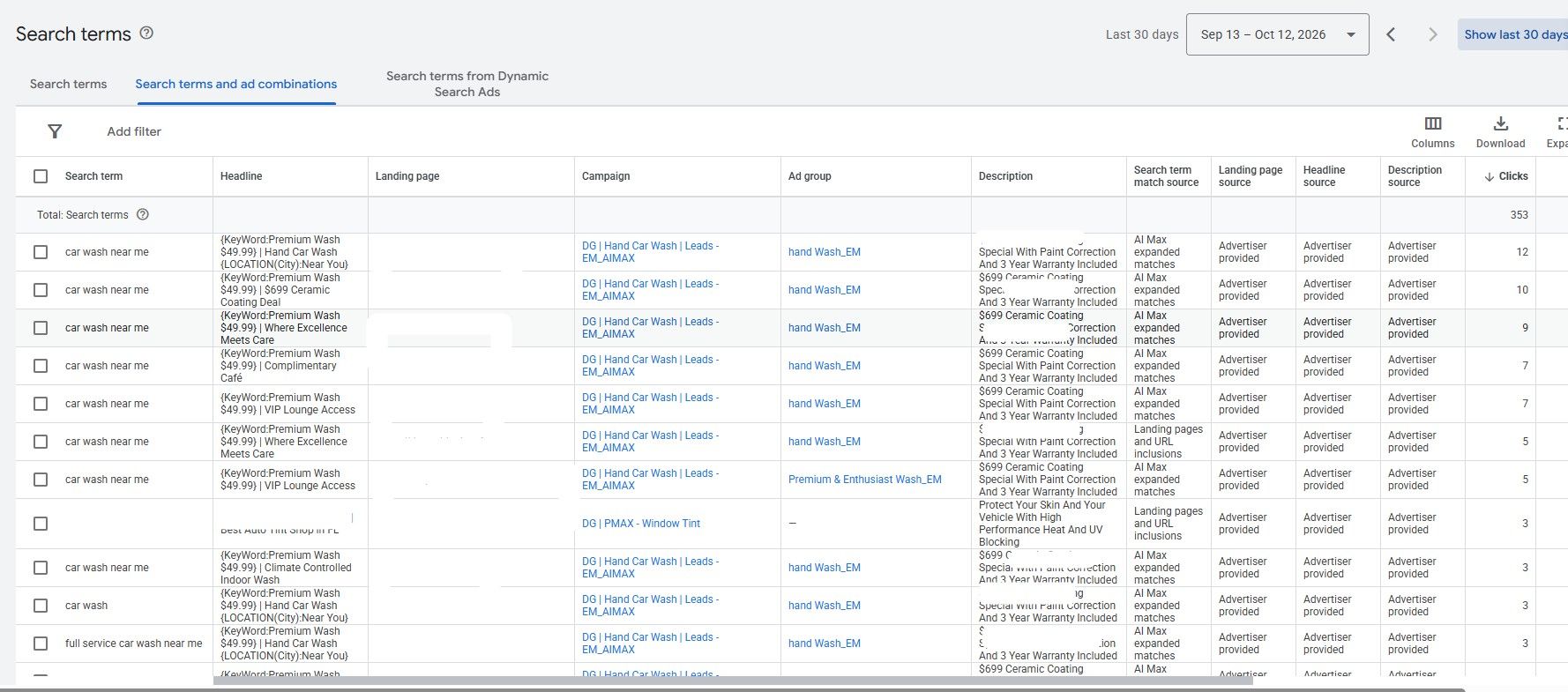
Google Ads has introduced a Search Terms & Ad Combinations report that unifies search queries, ad copy, and landing pages into one view, giving local advertisers clearer insight into what drives conversions. The new tool lets businesses refine keywords, test creatives, and optimize pages while boosting AI‑search visibility. Use the data to cut wasted spend and improve discoverability.
Key Highlights
- ✓Unified view of keywords, ad copy, and landing pages
- ✓Dynamic filtering and time‑series analysis
- ✓Exportable data for deeper dives
- ✓AI‑compatible structure for recommendation engines
What Happened
Google Ads has rolled out a new Search Terms & Ad Combinations report, as highlighted by Search Engine Roundtable. The report stitches together three critical data points—search queries, ad creatives, and landing pages—into a single, cohesive view. Instead of examining each element in isolation, advertisers can now trace how a particular query activates a specific ad copy and lands the user on a chosen page.
This update reflects Google’s broader strategy to give marketers deeper insight into the entire customer journey. By correlating search intent, messaging, and destination, businesses can identify the exact combinations that deliver the best results.
Key Details
- Unified Dashboard – All three data sets appear in one table, removing the need to juggle multiple reports.
- Dynamic Filtering – Filter by keyword, ad variation, or landing‑page URL to spotlight high‑performing combos.
- Time‑Series View – Track performance trends over days, weeks, or months.
- Export Options – Export to CSV or Google Sheets for sharing and deeper analysis.
- AI‑Tool Integration – Structured data feeds into AI recommendation engines that suggest optimizations.
These capabilities let local businesses move beyond guesswork, seeing the exact match between user intent, the message delivered, and the page that follows.
What It Means For Your Business
1. Sharper Targeting
By reviewing which search terms consistently pair with high‑converting ad copy, you can refine your keyword list and bid strategy. If a phrase always leads to a landing page that converts, prioritize it in your campaigns.
2. Better Creative Testing
The report shows which ad variations perform best for each keyword. This data allows you to run more focused A/B tests and reduce wasted spend on underperforming creatives.
3. Optimized Landing Pages
Seeing the landing page that follows each ad gives insight into user experience. If a high‑volume keyword leads to a page with low conversion rates, tweak the content or layout to better match the intent.
4. AI‑Search Discoverability
Search engines and AI assistants increasingly rely on signals of relevance and quality. When you align your queries, ads, and landing pages, you send a clearer message to these algorithms that your content is a good match for user intent. This can improve your chances of being cited in AI responses.
5. Data‑Driven Decision Making
Instead of relying on intuition, you now have hard numbers linking intent to outcome. That data can be shared with stakeholders or fed into marketing automation tools to drive continuous improvement.
Key Highlights
- Unified view of keywords, ad copy, and landing pages
- Dynamic filtering and time‑series analysis
- Exportable data for deeper dives
- AI‑compatible structure for recommendation engines
Why It Matters
Local businesses often struggle to stand out in AI‑driven search results. When AI assistants like ChatGPT or Gemini answer a query, they pull from a pool of cited sources. The more precisely your business signals relevance—through aligned keywords, compelling ad copy, and landing pages that fulfill the promise—the higher the likelihood your site will be cited.
This report gives you the granular insight needed to fine‑tune that relevance. By ensuring that every click from a search query lands on a page that delivers the promised value, you build trust with both users and AI algorithms. Over time, that trust translates into higher search rankings, more citations, and ultimately more foot traffic or online conversions.
FAQs
- How do I access the new report?
The Search Terms & Ad Combinations report is available in the Google Ads interface under the ‘Reports’ tab. Look for the new icon or name.
- Do I need a specific budget to use it?
No, the report is available to all advertisers regardless of spend. However, the more data you collect, the more actionable insights you’ll get.
- Can I combine this data with other tools?
Absolutely. Export the CSV and import it into Google Sheets, Excel, or BI platforms for deeper analysis or integration with AI recommendation engines.
Why This Matters For Your Business
Local businesses often struggle to stand out in AI‑driven search results. When AI assistants like ChatGPT or Gemini answer a query, they pull from a pool of cited sources. The more precisely your business signals relevance—through aligned keywords, compelling ad copy, and landing pages that fulfill the promise—the higher the likelihood your site will be cited. By providing a granular view of how search intent, ad messaging, and landing page content intersect, the new report lets marketers fine‑tune every touchpoint. Over time, this alignment builds trust with both users and AI algorithms, translating into higher search rankings, more citations, and ultimately increased foot traffic or online conversions.
Frequently Asked Questions
How do I access the new report?
The Search Terms & Ad Combinations report is available in the Google Ads interface under the ‘Reports’ tab. Look for the new icon or name.
Do I need a specific budget to use it?
No, the report is available to all advertisers regardless of spend. However, the more data you collect, the more actionable insights you’ll get.
Can I combine this data with other tools?
Absolutely. Export the CSV and import it into Google Sheets, Excel, or BI platforms for deeper analysis or integration with AI recommendation engines.
Is your business showing up in AI search?
Get your free AI visibility audit - see if ChatGPT, Perplexity, and Google AI actually recommend you.