
Home / News / Fixing AI Shopping Errors: How Brands Can Win Recommendations
Fixing AI Shopping Errors: How Brands Can Win Recommendations
As AI search engines like ChatGPT and Google AI Overviews become major shopping hubs, product misrepresentations and attribution errors threaten retail sales. Discover why AI shopping errors occur and how small businesses can audit their product feeds to secure direct buyer traffic.
Key Highlights
- ✓AI-driven retail traffic is projected to increase by 130%, making generative search a major commerce channel.
- ✓Common AI shopping errors include missing inventory, inaccurate product specs/prices, and attribution lost to resellers.
- ✓ChatGPT powers product discovery through its Agentic Commerce Protocol (ACP) and Shopify Catalog integrations.
- ✓Google AI Overviews leverages over 50 billion listings from the Shopping Graph and Google Merchant Center feeds.
What Happened
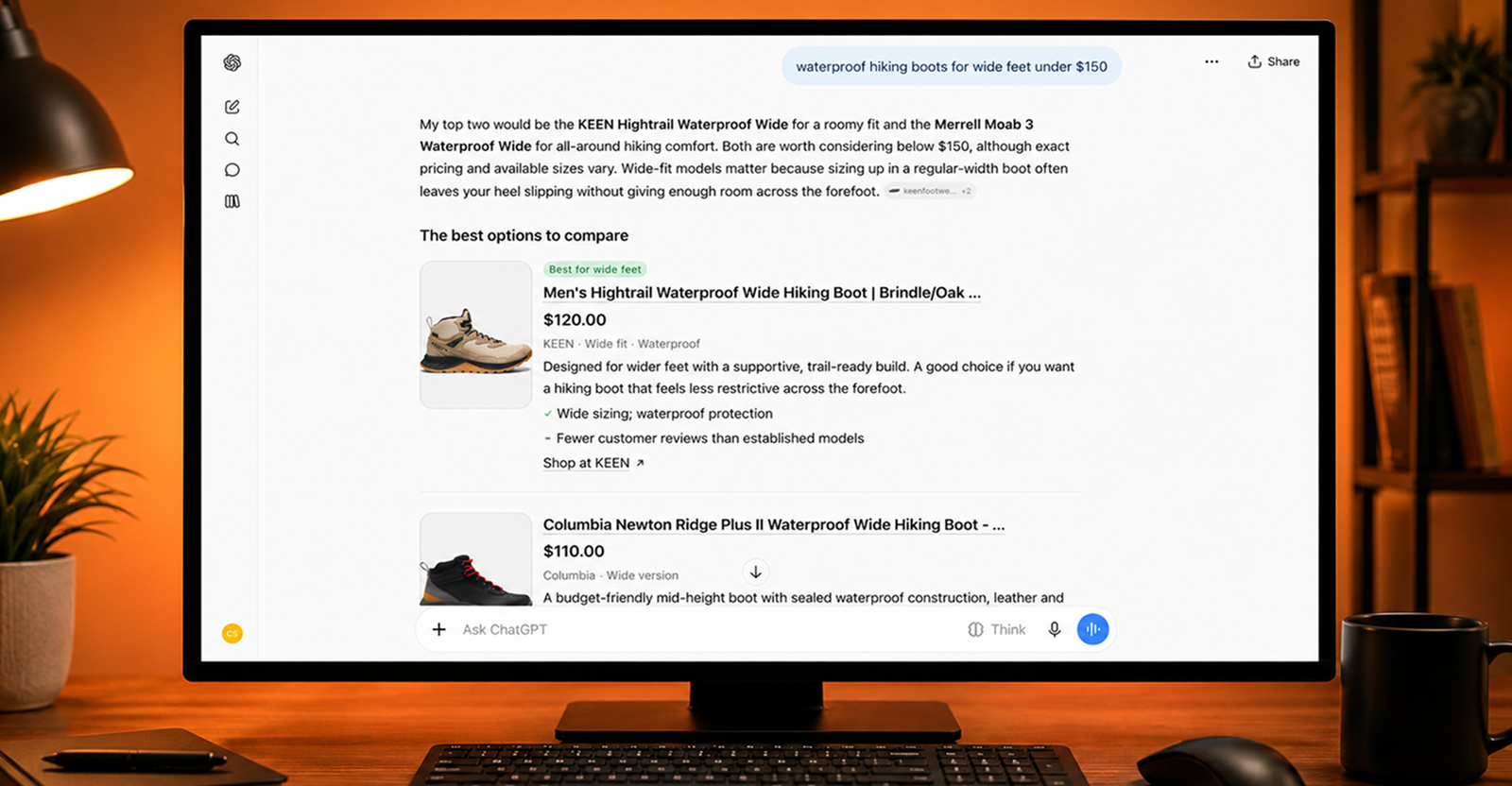
AI-powered shopping is rapidly transforming how consumers discover and buy products online. When shoppers ask tools like ChatGPT, Google AI Overviews, or Perplexity highly specific buying queries—such as "waterproof hiking boots for wide feet under $150"—the AI increasingly responds with rich product cards featuring prices, ratings, rationales, and "buy now" links.
However, a major blind spot has emerged for retailers: AI shopping errors. Brands frequently find that their products fail to appear, display outdated or incorrect pricing and specs, or lose the sale to third-party resellers and competitors. With Adobe forecasting a 130% surge in AI-driven traffic to retail websites, maintaining accurate product visibility inside generative search engines has become a critical business imperative.
Key Details
AI engines build product recommendations by crawling the web, synthesizing structured product feeds, and analyzing user reviews. The way these systems pull data creates specific technical and visibility hurdles:
- The Three Critical Failure Modes:
1. Omission: Your product does not appear when a consumer asks an AI for a recommendation matching your exact specifications.
2. Inaccuracy: The AI pulls outdated information—hallucinating incorrect specs, old prices, or inaccurate stock status.
3. Traffic Hijacking: The AI cites your product, but links out to a competitor, aggregator, or unauthorized reseller rather than your direct storefront.
- ChatGPT and the Agentic Commerce Protocol (ACP): OpenAI has expanded product discovery via its Agentic Commerce Protocol, enabling merchants to supply structured product feeds. Major retailers like Target, Wayfair, and Best Buy—along with Shopify merchants via Shopify Catalog—feed directly into ChatGPT. While ChatGPT assists in discovery, traffic directs back to merchant pages to complete checkout.
- Google AI Overviews and the Shopping Graph: Powered by Google's massive Shopping Graph containing tens of billions of listings, AI Overviews source real-time inventory, pricing, and ratings directly from Google Merchant Center data.
- Review Summarization Risks: AI models generate "why it fits" explanations and buyer sentiment summaries by scraping reviews across the web. Negative or unaddressed customer feedback can warp an AI's synthetic recommendation.
What It Means For Your Business
For small and local businesses, AI shopping engines present both a huge opportunity and a significant risk. If you rely on traditional SEO alone, you may lose potential customers before they ever visit an organic search results page.
Here is how business owners and marketers can audit and fix AI shopping issues:
- Audit Your Brand Across AI Engines: Regularly run high-intent, natural language queries related to your top products inside ChatGPT, Gemini, and Google AI Overviews to see how your items are positioned.
- Optimize Product Data Feeds: Keep your Google Merchant Center and Shopify product feeds pristine. Inaccurate prices or discontinued product lines lead AI tools to discard or mislabel your catalog.
- Implement Robust Product Schema: Utilize detailed Product, AggregateRating, and Offer structured data on your website. Clear schema helps AI web crawlers accurately extract your specs, availability, and pricing without guesswork.
- Claim Your Direct Attribution: Ensure your canonical URLs, branded landing pages, and primary merchant listings are well-indexed. This prevents unauthorized resellers or affiliate sites from capturing the final click on your products.
- Manage Brand Sentiment and Customer Reviews: Since AI engines summarize buyer sentiment to explain "why it fits," maintaining strong customer satisfaction and addressing critical product reviews directly impacts whether an AI recommends your items.
Why This Matters For Your Business
The transition from traditional keyword search to generative AI discovery means consumers no longer browse through dozens of links; they evaluate concise, AI-curated product recommendations. When an AI tool like ChatGPT or Google AI Overviews recommends your competitor—or surfaces your product with inaccurate pricing and a reseller link—you lose revenue at the very moment of highest buying intent. For small businesses and direct-to-consumer brands, Generative Engine Optimization (GEO) for shopping requires strict feed management and structured data. AI engines rely on consistent signals across product feeds, schema markup, and third-party reviews. Ensuring your data is clean, comprehensive, and up-to-date is the only way to safeguard your brand from AI hallucinations and reseller hijacking.
Frequently Asked Questions
What causes AI engines to show the wrong product price or specifications?
AI engines pull data from multiple scraped web sources, outdated cached pages, or mismatched product feeds. If structured schema markup is missing or third-party resellers list outdated information, the AI can synthesize incorrect details.
How can my small business get products featured in ChatGPT?
You can connect your product catalog through supported e-commerce platforms like Shopify, which integrates with OpenAI's discovery systems, or by supporting protocols like OpenAI's Agentic Commerce Protocol (ACP). Maintaining structured Product schema on your site also helps AI crawlers recognize your catalog.
Why does an AI recommend my product but link to a competitor or reseller?
AI models prioritize authoritative, easily parseable retail listings. If a marketplace like Amazon or an authorized reseller has stronger crawl signals, faster API updates, or better structured data than your direct website, the AI may award them the referral link.
Is your business showing up in AI search?
Get your free AI visibility audit - see if ChatGPT, Perplexity, and Google AI actually recommend you.