
Home / News / Creative Targeting Fragmenting Meta Audiences – Fix Your Strategy
Creative Targeting Fragmenting Meta Audiences – Fix Your Strategy
Meta’s machine learning systems now parse ad copy, imagery, and headlines to determine distribution, effectively turning each creative asset into its own audience segment. For small businesses, launching overlapping pitches risks bidding against themselves and fragmenting vital conversion data. Adopting a focused creative strategy eliminates redundant ad spend and keeps both paid reach and AI search visibility sharp.
Key Highlights
- ✓Creative is now Meta’s new targeting layer
- ✓Overlapping creatives inflate CPM and dilute data
- ✓Small businesses risk higher costs if they duplicate ads
- ✓VisibilityAI tracks AI citations to boost local discovery
What Happened
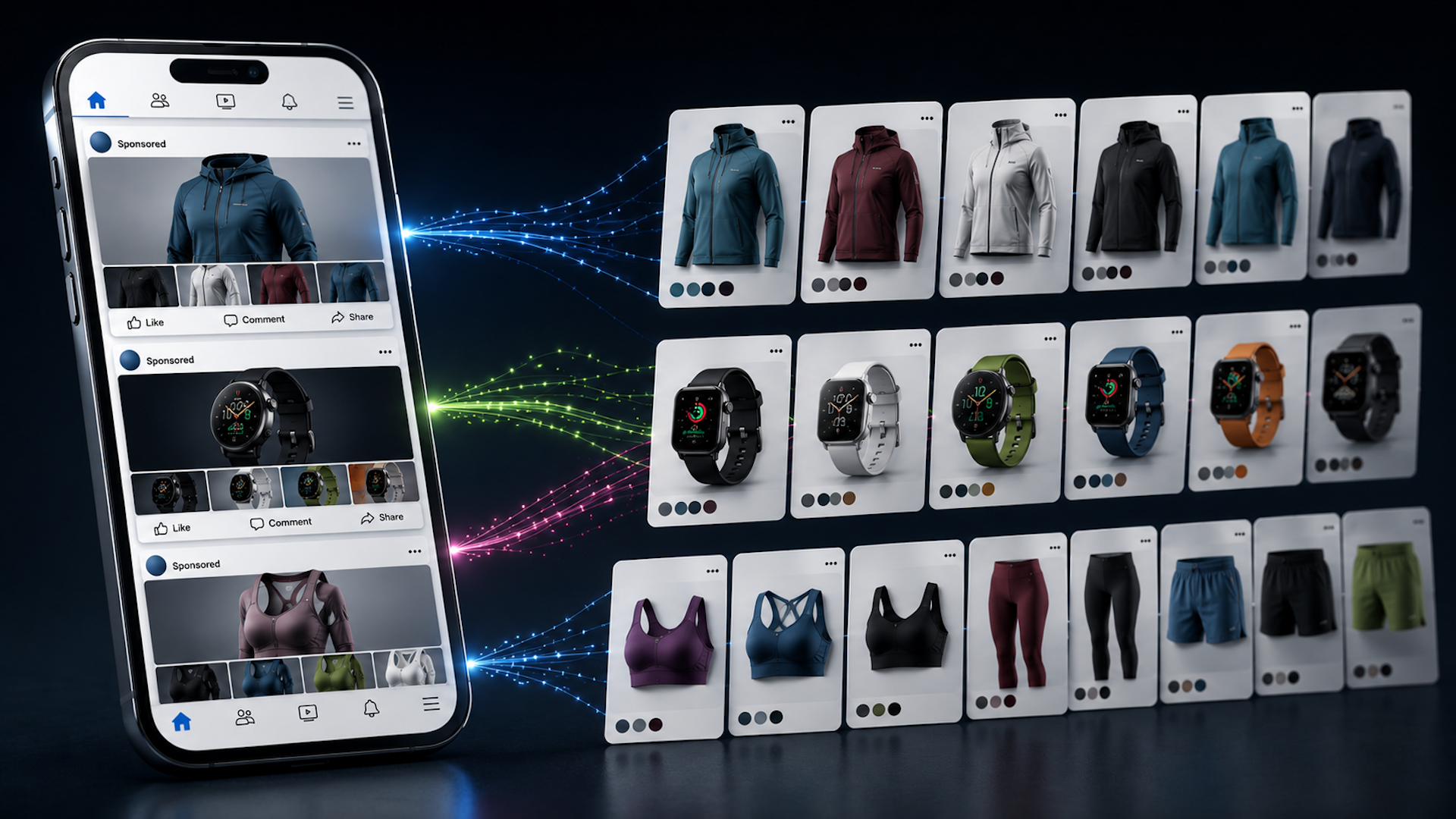
Meta has fundamentally changed its ad-delivery logic, moving away from hard-coded interest parameters toward a creative-driven system. Rather than relying strictly on ad set targeting criteria, Meta’s machine learning models now analyze your headlines, imagery, and body copy to identify which users are most likely to convert. In practice, every new creative you upload functions as a distinct audience segment.
Key Details
- Creative as Targeting: Ads centered on a specific pain point, promotion, or customer review automatically attract matching user profiles. When you deploy multiple ads built around similar messaging, they tend to compete for the exact same pool of users.
- Fragmentation Traps:
- Audience Overlap: Multiple creatives chase identical users, triggering internal auction competition that inflates CPMs.
- Learning Phase: Splitting budget across too many creatives keeps individual ads below the conversion volume required to exit Meta’s learning phase, leaving the algorithm without enough clean data to optimize.
- Meta’s Response: After scaling back interest targeting and shifting advertisers toward broader ad sets through Advantage+, Meta is now prompting brands to differentiate creative assets to avoid self-inflicted overlap.
- Impact on Small Businesses: Local storefronts, eateries, and service providers typically operate on tight campaign structures. A single redundant creative can quickly double acquisition costs and dilute conversion tracking.
What It Means For Your Business
1. Plan One Message per Audience – Treat each creative asset like an individual ad set. If you are pursuing price-conscious shoppers, build an ad specifically for that motivation rather than running minor variations of the same general pitch.
2. Consolidate Your Budget – Keep your roster of active creatives lean. Direct the bulk of your spend toward top-performing concepts so your campaigns gather enough conversions to exit the learning phase efficiently.
3. Use VisibilityAI to Track Citations – As you refine ad concepts, VisibilityAI monitors how frequently your brand appears across conversational AI engines. A consistent creative direction stabilizes audience signals, increasing the odds that AI assistants suggest your local business.
4. Test and Iterate Quickly – Experiment with alternate headlines and imagery, but ensure each concept delivers a clearly differentiated value proposition aimed at a distinct customer group.
Practical Steps
- Audit Your Current Ads: Review your ad library for overlapping copy, themes, or imagery. Consolidate redundant variations or sharpen their unique angles.
- Segment by Intent: Produce dedicated creatives for specific customer mindsets, such as first-time buyers, returning clients, and deal seekers.
- Leverage Meta’s Advantage+ Wisely: Deploy Advantage+ for broad distribution, but pair it with a single, high-impact creative execution to prevent fragmented delivery.
- Monitor ROAS by Creative: Evaluate return on ad spend at the individual creative level to pinpoint which message segments drive genuine profitability.
By treating creative as your primary targeting lever, you keep your local audience concentrated, curtail wasted ad spend, and generate the clean data signals AI platforms evaluate when surfacing local businesses.
Why It Matters for AI‑Driven Discovery
Conversational engines such as ChatGPT, Gemini, and Perplexity draw on an expanding index of cited sources to answer local queries. When your business appears across channels with disjointed headlines and conflicting value propositions, AI systems may interpret those variations as separate entities, diluting your overall brand authority. Fragmented creative strategies also inject noise into Meta’s conversion data—data that algorithmic search engines reference when evaluating local relevance.
Consolidating your creative assets around clear, well-defined messages gives your brand a cohesive, authoritative digital footprint. That uniformity strengthens your presence in AI search results, helping ensure your business stands out when users query recommendations like "best coffee shop in downtown."
VisibilityAI equips you to monitor these citations across major AI tools in real time. Maintaining a disciplined creative strategy reduces fractured citations, reinforces your authority profile, and protects your local search visibility.
FAQs
- Q1: Can I still use multiple creatives if I want to test different messages?
- A1: Yes, provided you keep the overall volume low and ensure each creative targets a genuinely distinct audience segment. Avoid running overlapping copy or near-identical visuals.
- Q2: How does this affect my use of Meta’s Advantage+?
- A2: Advantage+ delivers the best results when supported by a single, high-quality creative. Use the tool for broad distribution, but anchor it with a clear, focused value proposition.
- Q3: Will this change hurt my existing campaigns?
- A3: If your account runs overlapping creatives, you may already be facing inflated costs. Consolidating your assets will stabilize ad spend and improve optimization over time.
Why This Matters For Your Business
Every marketing dollar matters for a local business. Because Meta's AI evaluates creative assets to determine ad delivery, running duplicate concepts forces your ads to bid against each other for the same prospective customers. This dynamic inflates CPMs and divides conversion data, making it difficult for Meta's delivery systems—and the external AI engines monitoring web signals—to identify which offers genuinely resonate. A disjointed creative footprint also weakens your standing in conversational search. AI platforms like ChatGPT, Gemini, and Perplexity look for authoritative, consistent citations when recommending local services. When a business circulates under fragmented headlines or disconnected messaging, generative models can interpret those variations as separate entities, diminishing overall visibility. VisibilityAI tracks your citations across these platforms to ensure your brand maintains a unified, prominent presence. Treating ad creative as a disciplined targeting tool protects your budget, stabilizes your performance metrics, and presents a clear brand narrative—providing AI search tools with the exact consistency needed to recommend your business to local searchers.
Frequently Asked Questions
Can I still use multiple creatives if I want to test different messages?
Yes, provided you keep the overall volume low and ensure each creative targets a genuinely distinct audience segment. Avoid running overlapping copy or near-identical visuals.
How does this affect my use of Meta’s Advantage+?
Advantage+ delivers the best results when supported by a single, high-quality creative. Use the tool for broad distribution, but anchor it with a clear, focused value proposition.
Will this change hurt my existing campaigns?
If your account runs overlapping creatives, you may already be facing inflated costs. Consolidating your assets will stabilize ad spend and improve optimization over time.
Is your business showing up in AI search?
Get your free AI visibility audit - see if ChatGPT, Perplexity, and Google AI actually recommend you.