
Home / News / Bing Tests Dropping Favicons From Search Snippets – Business Impact
Bing Tests Dropping Favicons From Search Snippets – Business Impact
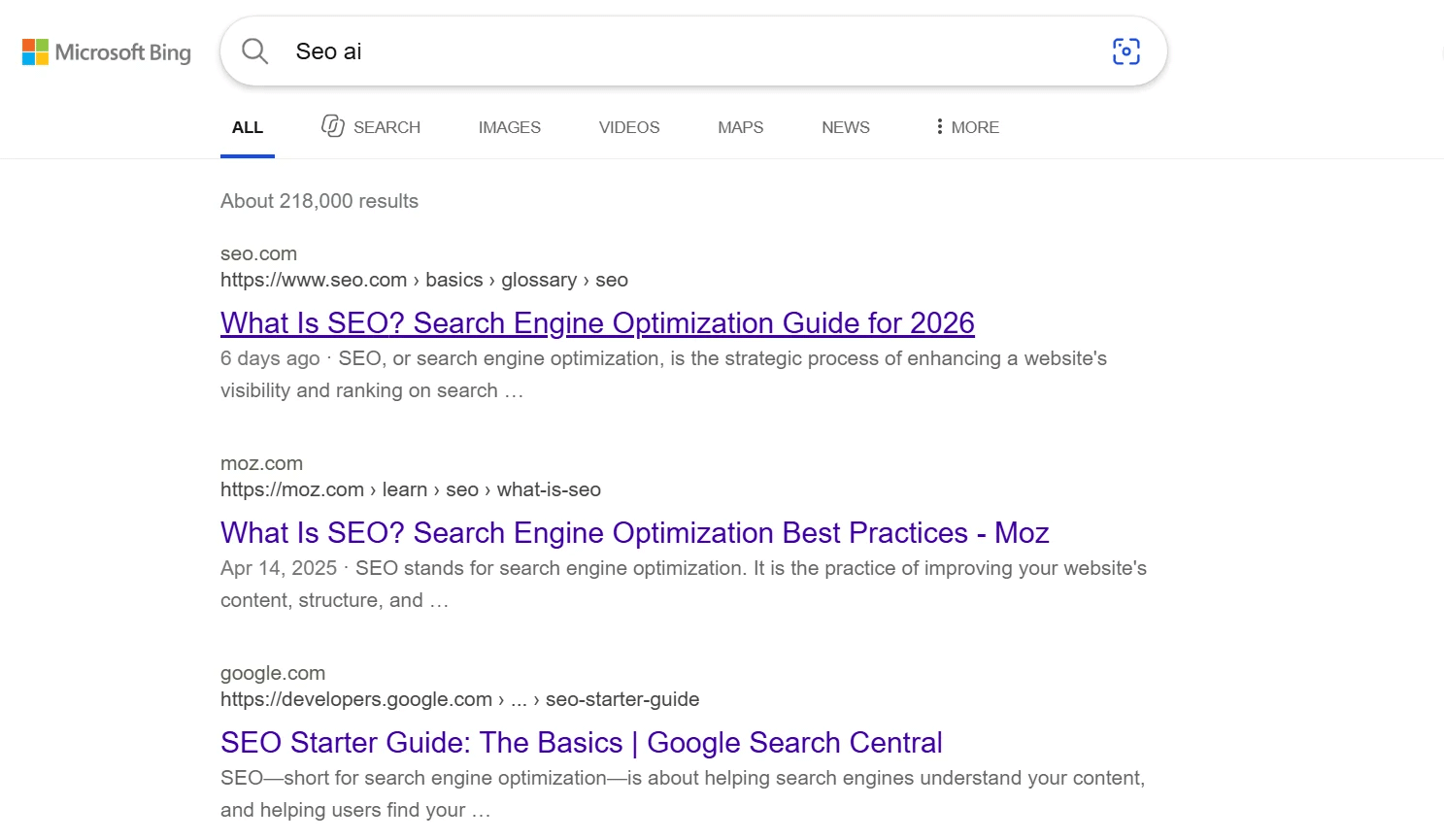
Microsoft Bing is testing a cleaner search results page by removing favicons, a small visual cue that helps brands stand out. The tweak could affect click‑through rates and the way AI assistants cite sites, prompting businesses to strengthen other on‑page signals.
Key Highlights
- ✓Bing is testing removal of favicons from search snippets.
- ✓Visual brand cues will be reduced, potentially lowering CTR.
- ✓AI citation tools may rely less on favicon signals for source ranking.
- ✓Businesses should strengthen titles, meta descriptions, and structured data.
What Happened\nMicrosoft’s Bing search engine has launched a live test that removes the tiny 16×16‑pixel favicons that normally sit beside each result. The change turns the results page into a more text‑centric layout. Although the experiment is still limited, many users are already seeing the new look.\n\n## Key Details\n- **Scope**: The rollout is confined to a subset of Bing users in the United States and a handful of other markets. Microsoft has not disclosed the exact percentage of traffic involved.\n- **Timing**: First reported in early October 2024, the test appears to be ongoing.\n- **What stays the same**: Title tags, URLs, and meta descriptions remain unchanged; only the favicons are removed.\n- **Why it matters**: Favicons have long served as a visual cue that helps users quickly identify a brand among a list of results. Their disappearance could make it harder for small businesses to stand out, especially when competing with larger, well‑known sites.\n\n## What It Means For Your Business\n### 1. Visual Branding Takes a Hit\nFavicons function as a miniature billboard, offering an instant visual cue that distinguishes a brand. Removing them turns the SERP into a plain list of text, potentially erasing that quick brand recall. Local shops, restaurants, and niche service providers that lean on visual differentiation may feel the impact most acutely.\n\n### 2. Click‑Through Rate (CTR) May Shift\nResearch shows that listings with favicons often enjoy a modest 2‑5 % boost in click‑through rates. Without the icon, users may focus more on title relevance and URL familiarity, which could reduce your click share.\n\n### 3. AI‑Powered Summaries Could Change\nAI assistants such as ChatGPT, Perplexity, Gemini, and Google AI Overviews extract data from search snippets to craft responses. The absence of favicons removes a quick visual identifier that these models use to assess source credibility, potentially affecting how often your site is cited.\n\n### 4. Opportunity to Double‑Down on Other Signals\nThe experiment underscores the importance of strengthening other on‑page elements:\n- Craft compelling, keyword‑rich title tags.\n- Write concise, persuasive meta descriptions.\n- Use structured data (Schema.org) to enhance rich results.\n- Optimize local SEO signals—Google Business Profile, Bing Places, and consistent NAP entries.\n\n## Actionable Steps for Small Business Owners\nHere’s a quick playbook to keep your visibility sharp:\n- **Audit title tags** to feature your brand name upfront—e.g., "Smith's Bakery – Fresh Pastries in Austin".\n- **Refresh meta descriptions** with a compelling call‑to‑action and a clear value proposition.\n- **Embed structured data**—LocalBusiness, Product, FAQ schemas—to give AI models richer context.\n- **Reinforce brand identity beyond the SERP**: keep your logo, colors, and messaging consistent across your site, social channels, and newsletters.\n- **Track performance** with Bing Webmaster Tools and Google Search Console, watching for any changes in impressions or click‑through rates as the test widens.\n\n## Bottom Line\nRemoving favicons may seem like a small UI tweak, but it ripples across visibility, click‑through performance, and AI citation. By fortifying textual content and structured signals, you can cushion the impact and keep your business discoverable in the evolving AI‑driven search landscape.\n\n## Key Takeaways\n- Bing is testing a cleaner SERP that omits favicons.\n- The loss of visual brand cues could shave 2‑5 % off click‑through rates.\n- AI assistants that pull from snippets may weigh other signals more heavily.\n- Boost titles, meta descriptions, and schema markup to maintain a competitive edge.\n\n## FAQs\n**Q: Will the removal of favicons affect Google search results?**\nA: No. This test is exclusive to Bing; Google continues to display favicons in its search results.\n\n**Q: Can I opt‑out of Bing's favicon test for my site?**\nA: No. The test is governed by Bing’s algorithm and applies uniformly to all sites in the test pool.\n\n**Q: Should I still use a favicon on my website?**\nA: Yes. Favicons remain valuable for browsers, bookmarks, and other platforms that display them.\n\n**Q: How can I track the impact on my business?**\nA: Use Bing Webmaster Tools to monitor impressions and clicks, then compare those figures to your historical data.\n\n**Q: Will this change affect local pack listings?**\nA: The test targets standard web results, not the local pack. Nonetheless, a shift in SERP design could influence how users interact with local listings.
Why This Matters For Your Business
Favicons serve as a rapid brand identifier that helps users sift through dozens of results in a split second. For small and local businesses, that visual cue can be the difference between a click and a missed opportunity. When Bing removes these icons, the SERP becomes a flatter, text‑heavy landscape, making it harder for lesser‑known brands to stand out.\n\nThe change also reverberates into the AI assistant ecosystem. Models that scrape snippets to generate answers rely on every visual and textual cue to rank sources. Without favicons, AI tools may give more weight to other signals—such as structured data or URL authority—potentially reducing the frequency with which a small business’s site is cited in AI‑driven overviews.\n\nUltimately, the experiment highlights a broader shift toward a more content‑centric search experience. As search engines trim visual clutter, businesses that focus on high‑quality titles, persuasive meta descriptions, and robust schema markup will be better positioned to maintain visibility in both human and AI‑mediated queries.
Frequently Asked Questions
Will the removal of favicons affect Google search results?
No. This test is exclusive to Bing; Google continues to display favicons in its search results.
Can I opt‑out of Bing's favicon test for my site?
No. The test is governed by Bing’s algorithm and applies uniformly to all sites in the test pool.
Should I still use a favicon on my website?
Yes. Favicons remain valuable for browsers, bookmarks, and other platforms that display them.
How can I track the impact on my business?
Use Bing Webmaster Tools to monitor impressions and clicks, then compare those figures to your historical data.
Will this change affect local pack listings?
The test targets standard web results, not the local pack. Nonetheless, a shift in SERP design could influence how users interact with local listings.
Is your business showing up in AI search?
Get your free AI visibility audit - see if ChatGPT, Perplexity, and Google AI actually recommend you.